In the months since Roeland Park’s anti-discrimination ordinance was introduced, the city council has been inundated with comments from the public at its meetings. Not surprisingly, those comments have been on both sides of the issue and have included a number of people who do not live in Roeland Park.
The significant issue in the proposed ordinance is making sexual orientation and gender identity protected classes and outlawing discrimination in employment, housing and public accommodations. Military service has since been added to the draft ordinance. Introduced in March, the council will take another look at a final draft during a committee meeting in July and then is on track for a vote later in the month.
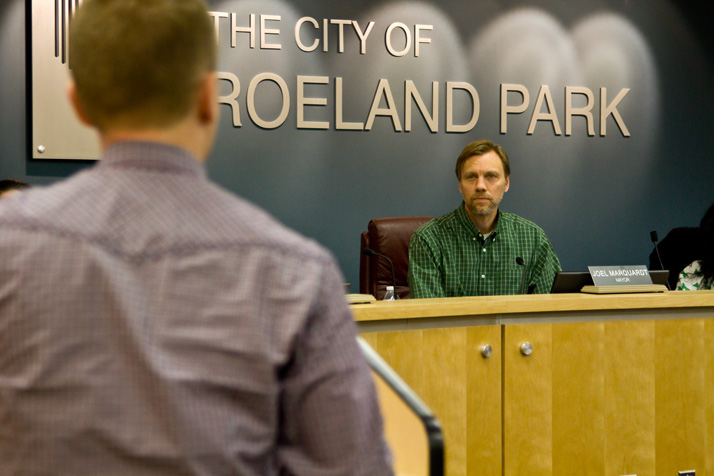
The sheer numbers of people lining up to speak has not diminished. At the last council meeting, nearly 30 people spoke to the council with almost all of the comments related to the ordinance. A community forum on the issue earlier also drew large numbers. Some of the speakers are repeats, showing up to talk at nearly every meeting, but a few new presenters also come on board at almost every meeting.
A sticker campaign to identify city residents attending the council and committee meetings started after non residents began testifying at the meetings. Over the course of the long debate, Roeland Park residents have been represented on both sides. In two meetings this month, more city residents have spoken for the ordinance than against it. Speakers from outside of Roeland Park have generally supported the ordinance and pushed the count of June speakers to significantly in favor of passing the new protections.
New to the discussion at the last council meeting were two ministers with United Church of Christ who both supported the ordinance. Rev. Holly McKissick said it would be “wonderful” for Roeland Park to be out front showing people what a welcoming community can look like. It was the first time clergy had appeared in the discussion. Early opposition came from people who questioned the ordinance’s effect on “religious freedom” and in particular fundraising activities at local Catholic churches. Religious organizations are now exempt in the current draft.
Madeline Johnson, an attorney in Lee’s Summit, also addressed the council in June to talk about the issue of sex offenders using the law to enter bathrooms. “I want to put rest this toilet terror,” she said. Johnson, a former public defender, said she had represented sex offenders in that job. A sex offender is a predator, she said. “Nothing is going to stop them. If they do commit a crime, there is criminal law.” She said 50 percent of her clients were from the LGBT community and discrimination is an issue that she deals with regularly. The issue of transgender bathroom use had been raised at an earlier meeting.
 Thanks for reading! If you value having an independent news outlet keeping tabs on local government, schools and taxes, we're asking you to contribute to our Education Reporting Fund.