Last month, we asked our readers what issues they wanted to hear the candidates running for office address ahead of November’s general election. Based on the input we received, we developed a five-item questionnaire for candidates running for Kansas State Board of Education.
We’ll be publishing the candidates’ responses to one item per day each day this week. See the candidates’ responses to yesterday’s question about critical race theory.
Today we’re publishing the candidates’ responses to item #2:
What steps can the state take to prepare Kansas students for the rapidly changing working world they’ll enter after graduation?
Sheila Albers (Democrat)
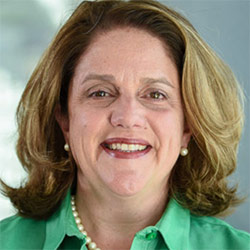 The first step to prepare Kansas students for a rapidly changing working world begins with our youngest learners. Ninety percent of a student’s brain is developed by age five, so it is imperative that we focus on early learning. Expanding early childhood education lays the foundation for future student success. Students who enter kindergarten with skills such as number and letter recognition will typically see greater academic growth. Currently, the demand for early childhood services far exceeds the availability. It is incumbent upon local and state governments to increase the accessibility of early childhood education.
As students matriculate through school, they need to be able to read, write, listen and speak appropriately so they are literate members of society. In addition, they should understand and are able to apply mathematical concepts while using problem solving and critical thinking skills. These foundational skills should be interwoven with real-world experiences and character development. Excellent examples of innovative programs that encompass these goals are Olathe’s 21st Century Academies and Blue Valley’s Center for Advanced Professional Studies. Additionally, Johnson County Community College has partnered with local school districts to offer courses in fire science, construction management, automotive technology and culinary arts for high school students. Students can take these courses as a part of their high school experience and receive college credit. It is exciting to see students explore and discover their own paths toward meaningful career options. School is no longer one-size fits all. Students and families are best served when systems are flexible and provide voice and choice in their educational program.
Kansas high school graduates should possess the knowledge, skills and character development, so that they can reach their full potential and be a lifelong productive member of our community. Completion of a Kansas high school diploma should reflect strong academic instruction paired with real world experiences, so that students discover their passions and purpose. Graduates should be prepared to be successful in postsecondary education or training and able to take their place in a globally competitive economy.
Michelle Dombrosky (Republican, incumbent)
Did not respond.
Tomorrow we’ll publish the candidates’ responses to item #3:
Test results have shown that students across the country have fallen behind in math and reading skills over the course of the pandemic years. What policies can Kansas pursue to help these students get caught back up?