Twenty-two Johnson and Wyandotte County mayors raised their collective voice this week in alarm about a proposal in the state legislature that would eliminate local sales taxes on food – a move they say could halt construction projects already in progress and endanger their cities’ bond ratings and budgets.
The mayors, members of the Johnson and Wyandotte County Council of Mayors, also warned that ending their ability to collect sales tax revenue on food would likely result in property tax increases to make up for lost sales tax revenue.
Mayors sent the letter to Kansas lawmakers
They voiced their concerns in a letter to the Kansas House Committee on Taxation, which held a hearing Monday on Senate Bill 248.
Included among the signatories are mayors of nearly every Johnson County city, including Leawood’s Peggy Dunn, Lenexa’s Mike Boehm, Prairie Village’s Erik Mikkelson, Overland Park’s Curt Skoog and Shawnee’s Michelle Distler.
Olathe followed up by sending city spokesman Tim Danneberg to tell committee members in person that ending the tax would hit his city’s general fund by about $8 million.
“It would be difficult to anticipate how we could absorb that $8 million hit but it would certainly limit us and it would absolutely have an impact on the way we provide service to our customers and our taxpayers,” he said.
State food sales tax is already being phased out
As lawmakers wrestle with what to do with a $2 billion budget surplus, several tax cut ideas have been proposed.
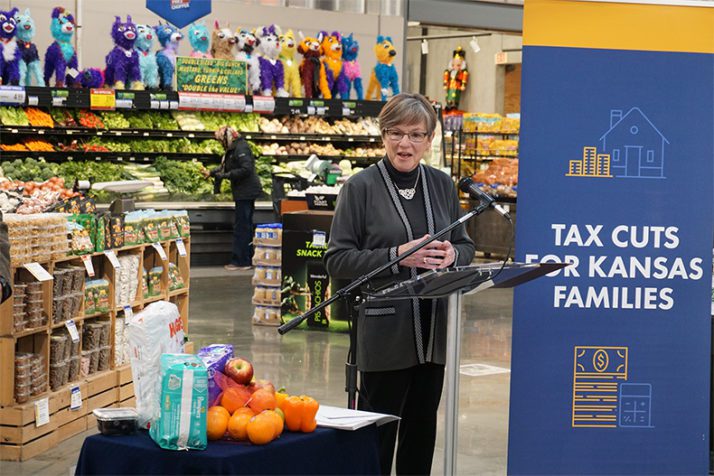
Among them is an effort to speed up the end of the state sales tax on food, something Democratic Gov. Laura Kelly has also called for.
The state food sales tax was already set to be completely phased out in 2025, but some in the Kansas Senate have proposed to end it a year early.
Their original bill called for the state food sales tax to be gone next year, with the exception of foods deemed unhealthy by lawmakers.
But the version that finally passed the Republican-dominated Senate last month instead ended all food sales tax — state and local, for food healthy and unhealthy — in 2024.
Cities say ending the tax could hurt development, bond ratings
The House committee Monday heard lengthy testimony – almost all of it in opposition to removing local governments’ ability to tax food sales.
Even the one proponent speaking in favor, John McCormick, CEO of the Retail Grocers Association of Missouri and Kansas, cautioned committee members to be mindful of the concerns of local governments.
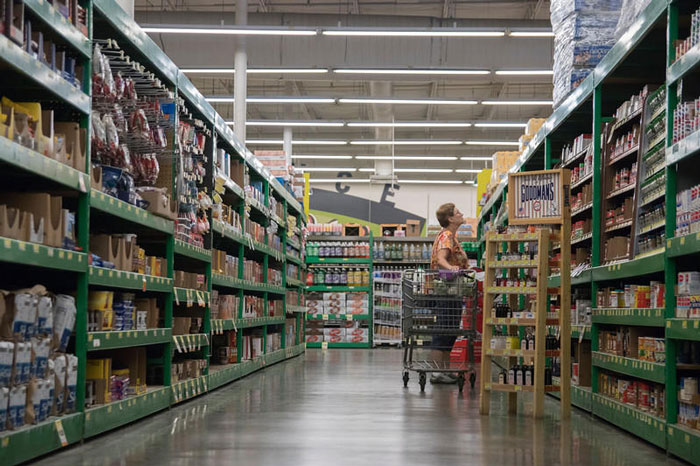
The problem, the opponents said, is that cities often use dedicated sales taxes as incentives to help pay for infrastructure and development.
Removing food sales taxes could endanger some of those projects and send shudders through bond rating agencies, which could result in higher interest rates, they said.
‘You cannot keep stealing our revenues’
The loss of local food sales taxes could end up costing millions each year, said several city officials.
Mark Manning, Wichita city finance director, said loss of food from the Sedgwick County sales tax could cost the city at least $11 million a year and would make it difficult to keep from raising property taxes and pay for public safety and road improvements.
Topeka City Manager Steve Wade said the bill would result in a loss of $5 million to $6 million to the city’s general fund.
Mike Taylor, spokesman for the Wyandotte County Unified Government, noted other revenue sources state lawmakers have taken away over the years.
“You cannot keep stealing our revenues and then complain about property taxes. It’s just not fair. It’s the only place we have to go,” he said.
Local property taxes may go up in response, officials warn
The Council of Mayors letter was neutral on the question of a state food sales tax, but “strongly opposed” to the state ending local ability to tax it.
The measure could eliminate “tens of millions of dollars of critical funding for our local police, roads and other important services.”
“If this bill is enacted, local governments will likely be forced to reduce staff,” including first responders, reduce services or raise property tax levies to make up the difference, the letter said.
It concluded by asking that the “troubling aspects” of the bill be removed.
Problems go beyond larger cities.
Rural areas would be especially hard hit because food sales are a bigger percentage of sales tax revenues, said state Rep. Brett Fairchild, who also testified against the bill.
Fairchild suggested that partisan politics may have played a role in the bill as a way to make things awkward for Gov. Laura Kelly when it comes time to be signed.
Read the letter from the local mayors:
 Loading...

 Reload document
  Open in new tab
 Roxie Hammill is a freelance journalist who reports frequently for the Post and other Kansas City area publications. You can reach her at roxieham@gmail.com.