Earlier this summer, the Post asked our readers what issues you wanted to hear candidates running for Johnson County Community College Board of Trustees to address leading up to the Nov. 7 election.
Based on that feedback, we developed a five-item questionnaire centering the issues most important to Johnson County residents.
Each day this week, we’ll publish the candidates’ responses to one question. (Note: This is an open ballot race in which the top three vote-getters will be seated.)
Today, we’re publishing candidates’ responses to the following question:
Tuition at JCCC for Johnson County residents currently stands at $97 per credit hour. That’s a slight increase from the year before, though the college held tuition flat during much of the COVID-19 pandemic. Should the college consider raising tuition or lowering it? Why? And how would doing either of those things impact JCCC’s budget?
Below are the answers the Post received from candidates on this issue:
 Beneé Hudson
As the only graduate of JCCC running for the board, tuition costs were integral to my ability to advance my professional aspirations. On average, tuition costs across the country are not commensurate to earnings compared to 1980.
Without seeing every budget line item, not just areas of spending, I am not prepared to answer whether to raise or lower tuition costs. Our state funding, which has been lacking for many years, needs to change. Once I am elected to the board, I will share fact-based, thoughtful, creative solutions and leverage relationships with state legislators for budget adjustments. I will put student outcomes and faculty/staff satisfaction at the forefront.
From a student’s perspective, I relied on the affordability of JCCC to build a foundation for my educational goals. I will work towards that outcome for all students while keeping our college a premiere institution and a magnet for top academic talent.
 Greg Mitchell
Budgets should reflect our values and tuition is a component of the budget.
Like the overall budget, I think tuition should be managed as a long-term proposition. That said, I would like to see tuition rates decrease to the greatest extent possible.
My first semester of college, in the fall of 1984, tuition was about $400 for a full course load (about $1,200 in 2023 dollars). If you attended a state college in the 1980s, the state funded your tuition at about an 80% rate for “in-state” students. In addition to that, many more students qualified for Pell grants and other programs to reduce or eliminate the tuition burden. I graduated with no college debt; I was lucky – but not entirely unusual. For those who did have debt, most had a relatively small amount of debt that was paid off in a few years.
When I started college, an educated and skilled workforce was a societal value shared by most Americans, and state funding reflected that. And it was a value that also had a good financial return. The amount of additional income taxes that I have paid as a result of my education and the impact on my income, has made my affordable tuition a very good investment with a high rate of return.
We need to make education and skills training attainable for all. It is not only the right thing to do, it is good public policy. And it comes with a decent return on investment. I believe we should do everything we can to make and keep tuition as affordable as possible.
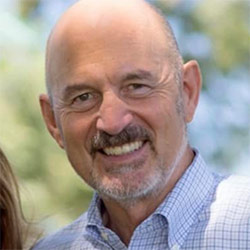 Ken Selzer
The College was established with the message to constituents that approximately equal funding would come from taxpayers, the state and student tuition.
It is now almost 70% from taxpayers and 15% each from the state and from student tuition.
JCCC has one of the very lowest tuition structures among the 19 community colleges in Kansas.
I will always make sure both students and taxpayers receive value for the dollars they spend at or for the college. It is one of my jobs as a trustee to make sure this happens.
That value will come from ensuring that courses and degrees and certifications offered to students enable the student to find meaningful and well-paying jobs or to gain access to four-year colleges and universities.
Likewise, for taxpayers, it means approving results focused budgets that are transparent and efficient.
Both students and taxpayers can win, and both should win!
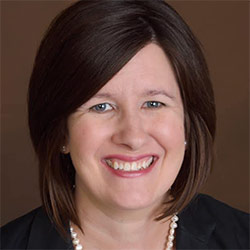 Laura Smith-Everett (incumbent)
Our tuition is among the lowest in the state and region. We have raised it by $3/credit hour in my first term so that students are paying $97/credit hour for classes.
When JCCC was first envisioned over 50 years ago, the funding was supposed to be a three-legged stool of: local taxes, state funding and tuition. As the state has contributed less and less of its share, our local taxpayers have picked up the deficit. In my next term, I believe we’ll have to evaluate our tuition rates in order to even out that three-legged stool.
I would also urge readers to reach out to our governor and their state representatives and ask them to do their part to increase the state’s share to all Kansas community colleges. With a $2 billion budget surplus, it seems reasonable that the state could relieve local tax payers by providing their fair share to our local community colleges.
 Mike Storm
One of the best things about JCCC is that its tuition rates are affordable. Keeping JCCC a place where everyone in Johnson County can attend without breaking the bank is one of the predominant reasons I am running for JCCC Trustee.
I will not support tuition increases during my four-year term on the JCCC Board of Trustees. Keeping JCCC’s tuition rates where they are now is the responsible decision for maintaining a healthy budget, keeping higher education affordable and doing the right thing for our Johnson County community.
 Cindy Green
The college is the most affordable college in the state of Kansas thanks to you, the taxpayers. It is important to review the college’s revenue percentages annually, including tuition. State funding has decreased so tuition and local property taxes have increased to fund the college. Just like all of you, the costs at the college have increased this past year. Salaries and benefits are 71% of the expenses, and it is important to retain the high-quality faculty and staff at JCCC. Property taxes make up 68%, tuition and fees 15%, state 15% and miscellaneous income 2% of the revenues. Over the past 10 years the tuition income of revenues has decreased by 7%.
If we need to raise tuition it is important to help students apply for Pell grants and private scholarships that help keep JCCC affordable for those who need assistance. We need help from the state Kansas, to help keep property taxes down. The state receives income taxes, sales tax and property taxes to fund the state. The college only has property taxes and tuition and fees.
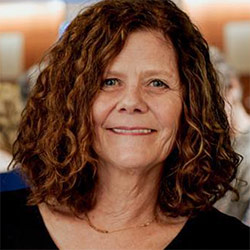 Valerie Jennings
Did not provide the Post with a response.
Tomorrow, we will publish candidates’ responses to the next question:
JCCC is in the early stages of forming what it has called a regional collaboration with other local entities to offer training for future workers at Panasonic’s new electric vehicle battery plant being built in De Soto. This is maybe the most visible way in which JCCC is trying to train students for careers right out of college. How else would you like to see JCCC have a role in developing Johnson County’s future workforce?