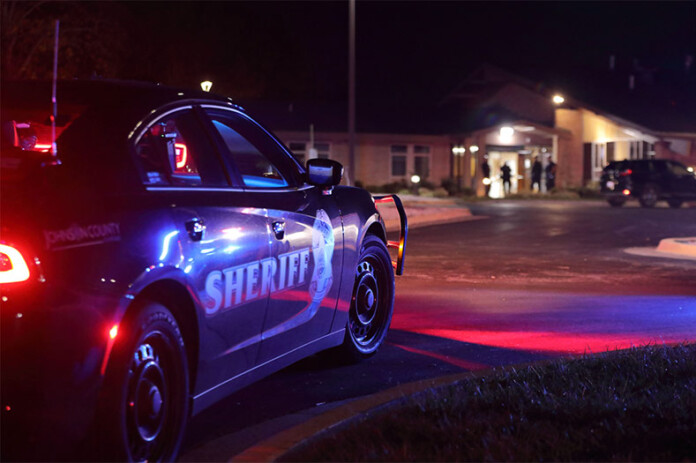
When a majority on the Johnson County Commission decided last spring to ask voters to continue the quarter-cent public safety sales tax beyond 2027, their hope was that revenue would reduce the reliance on property taxes for increasing ambulance, law enforcement and mental health costs in tough economic times.
Now the question is: Did the commission overstep its authority? Kansas Attorney General Kris Kobach thinks so. Commissioners disagree.
On Wednesday, they faced off in a Topeka courtroom and handed the decision over to Kansas Third District Judge Jay Befort.
If the county commission wins its case, then the voters will get the sales tax question on a March 3 special election ballot. A ruling would have to come by Dec. 9 in order to print ballots on time, should the county win.
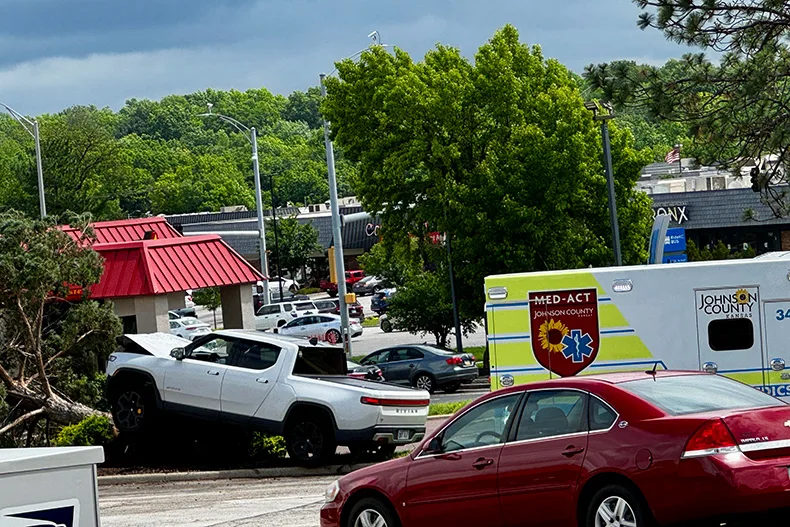
JoCo says renewing tax could accrue $54M a year
Commissioners have faced budget challenges for the past several years as the county has continued to grow and federal funding sources have become less certain.
Certain public safety items, such as the county ambulance servic,e have become strained due to increased call volume.
A continuation of the sales tax would generate about $54 million a year, according to staff estimates. The county’s share of that would be $35 million.
As the 6-1 majority approved the sales tax ballot proposal last spring, commissioners said it would be a more palatable option than increasing property taxes.
A renewal of the sales tax could help pay for capital and operating expenses for sheriff’s and district attorney’s offices, mental health crisis intervention and the ambulance demands of a growing and aging population, commissioners said at the time.
The public safety sales tax in question was approved by voters in 2016 to build and begin operating the new courthouse and medical examiner’s office and is set to expire in 2027.
Commissioners had hoped to put it on the November 4 election ballot, but that hope faded when Kobach, at the request of Kansas Sen. Mike Thompson of Shawnee, issued an opinion saying the move was “unlawful” and that the question was unlikely to survive a court challenge.
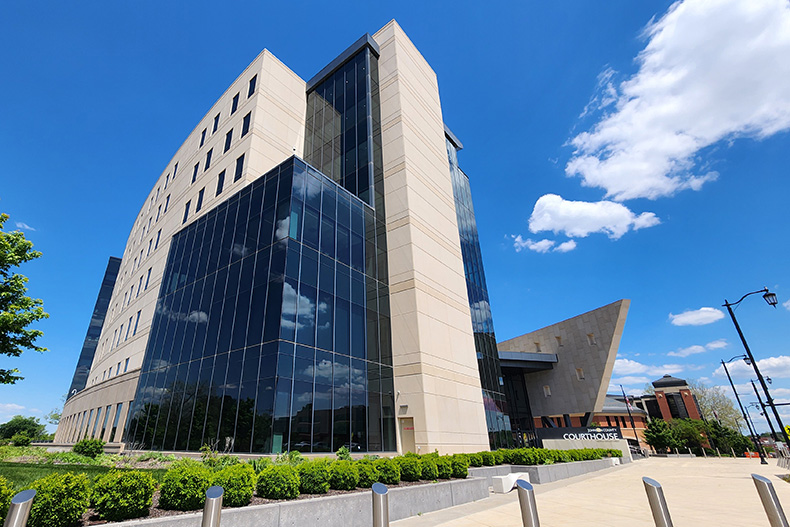
Defining the limits of a state law allowing JoCo to levy sales tax
On Wednesday, lawyers from both sides drilled down on the language of a state statute that gives counties the power to levy sales tax — K.S.A. 12-187.
The pertinent section of the statute says counties can, with voter approval, impose a countywide sales tax of a quarter of one percent “for the purpose of financing the construction and operation costs of public safety projects, including, but not limited to, a jail, detention center, sheriff’s resource center, crime lab or other county administrative or operational facility dedicated to public safety”.
Assistant Solicitor General Adam Steinhilber, representing the attorney general’s office, argued that the state set limited power to tax and took great care to delineate what types of projects might qualify.
The proposal at hand takes that too far, Steinhilber said, by not identifying a building project to tie the services to.
Designating the tax revenue for the support services is too broad a way to look at it and amounts to county officials asking for “carte blanche,” he said.
“The county is not limiting itself at all,” he said, adding, “it is seeking the authority to effectively say we can spend on anything we say is public safety.”
A copy of the attorney general’s full opinion can be found here.
The state gave counties a specific grant of taxing authority, Steinhilber said, and that means the specific language matters.
The county’s argument for the tax measure’s legality
Curt Tideman, a lawyer from Lathrop GPM who argued for the county, said the attorney general’s position requiring a building project to drive the sales tax request is too narrow.
The statute doesn’t specify that the revenue would have to go to both construction and operational costs. It only says “construction and operation costs,” he said.
“The word ‘and’ carries a lot of water for the attorney general’s opinion,” he said.
“One or the other or both, I think that’s the actual meaning the legislature intended.”
“The (Board of County Commissioners) is not asking you to believe ‘and’ means ‘or.’ The BOCC simply asks the court not to insert the word ‘both,’” into the interpretation, he added.
If both construction and operation costs are needed for a sales tax ballot question, he said, the original 2016 question wouldn’t have qualified because it didn’t spell out operational costs along with the courthouse and medical examiner building projects.
Tideman also said the statute’s list of projects was “including but not limited to” those named, hence there’s room for a broader take on what could qualify.
The lawyers also argued whether the ballot language could call it a renewal or extension of the 2016 tax, because the revenues would not be spent in exactly the same way as in the courthouse proposal.
What happens next?
Judge Befort did not say anything to indicate which way he was leaning, but said he would meet the Dec. 9 target for a ruling.
 Thanks for reading! If you value having an independent news outlet keeping tabs on local government, schools and taxes, we're asking you to contribute to our Education Reporting Fund.