By Chad Taylor, the Taylor-Made Team

If you live in Johnson County long enough, you’re going to hear the term ice dam. You may even experience one. And if you do, chances are it won’t be a small issue.
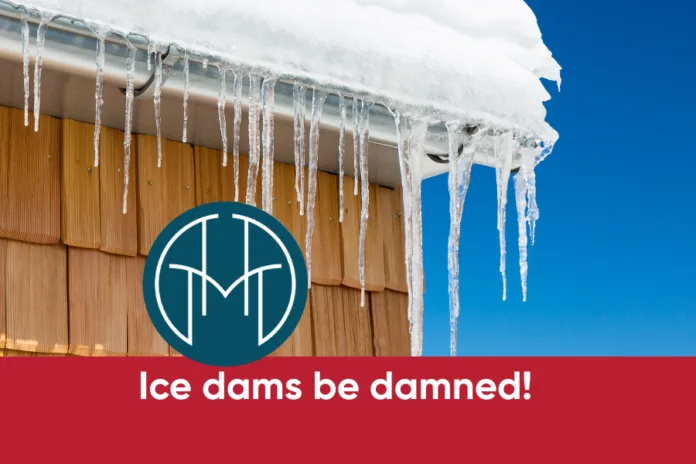
Ice dams are ridges of ice that form along roof eaves. They usually start innocently enough: snow melts on the warmer sections of the roof, then refreezes when it reaches the colder overhangs. Over time, that refrozen ice builds up and creates a dam.
Here’s where problems begin. Once drainage is blocked, melting snow has nowhere to go. Water backs up underneath shingles and finds its way into places it absolutely doesn’t belong. That’s when homeowners start seeing ceiling stains, wet insulation, peeling paint, or worse. Left unchecked, ice dams can lead to mold, damaged insulation, and long-term structural issues.
One of the most misunderstood parts of ice dams is this: they are rarely a roofing problem. In most cases, they’re a heat and airflow problem.
Many of the homes I see in Johnson County with ice dam issues share a few common traits:
- Inadequate attic insulation
- Poor attic ventilation
- Air leaks around recessed lights, attic hatches, or bathroom fans
Warm air escaping into the attic heats the roof deck just enough to melt snow unevenly. Add heavy snowfall, long cold stretches, and the number of homes here with pronounced eaves, and you have the perfect setup for ice dams.
Another contributor that often gets overlooked is clogged gutters. When gutters are full of leaves and debris, water can’t drain properly even before freezing temperatures arrive. Once that water freezes along the eaves, it accelerates ice buildup and makes dams form faster and thicker. Clean gutters don’t prevent ice dams on their own, but dirty gutters almost always make them worse.
When homeowners notice ice forming, the natural reaction is to attack it. Shovels, hammers, and rock salt tend to come out quickly. Unfortunately, I’ve seen more roof damage caused by removal attempts than by the ice itself.
If you’re dealing with ice dams right now, roof rakes can help safely remove excess snow, and calcium chloride products can reduce buildup when used carefully. Just remember those are short-term fixes.
The long-term solution is addressing the root causes:
- Evaluate attic insulation and ventilation
- Seal air leaks in the ceiling plane
- Ensure bathroom and kitchen fans vent fully outside
- Keep gutters cleaned out before winter sets in
The good news is ice dams are preventable. And the fixes often improve more than just winter performance. Homes with proper insulation, ventilation, and drainage tend to be more comfortable, more energy efficient, and less prone to moisture problems year-round.
Here in Kansas City, our weather extremes are tough on homes. Hot summers, sudden cold snaps, heavy snow, and freeze-thaw cycles all take their toll. Staying ahead of issues like ice dams isn’t about overreacting to one storm. It’s about understanding how your home performs in our climate and making smart, preventative adjustments before small issues turn into expensive ones.
As with most home maintenance items, the earlier you identify the cause, the easier and less costly it is to fix.
Follow Close-In KC on Instagram
Close-In KC is your window into the neighborhoods that define Kansas City’s urban/suburban edge: Prairie Village, Brookside, Waldo, West Plaza, and beyond. Local homes, local stories, favorite hangouts and restaurants, and the everyday vibe of the places that make KC feel like home. Click Here!