Walking and Pilates are two popular forms of exercise for adults. They’re accessible, low-impact, and great for staying active.
But a question I hear fairly often is:
Are walking and Pilates enough to protect bone density as we age?
The short answer: they’re helpful, but usually not enough on their own.
Bones stay strong when they experience enough stress. That stress signals the body to maintain or sometimes build bone tissue. When bones are not challenged enough, the body slowly begins to remove bone instead.
Walking is a weight-bearing exercise, which is better for bone health than activities like swimming or cycling. But most research shows walking mostly helps maintain bone density, not significantly increase it. This is especially true in areas like the hips, where bone loss commonly occurs as we age.
Research: https://pubmed.ncbi.nlm.nih.
Pilates shows similar results in research. It can improve balance, core strength, and mobility, which are all important as we age. But the resistance involved usually is not high enough to significantly increase bone density.
Research: https://pubmed.ncbi.nlm.nih.
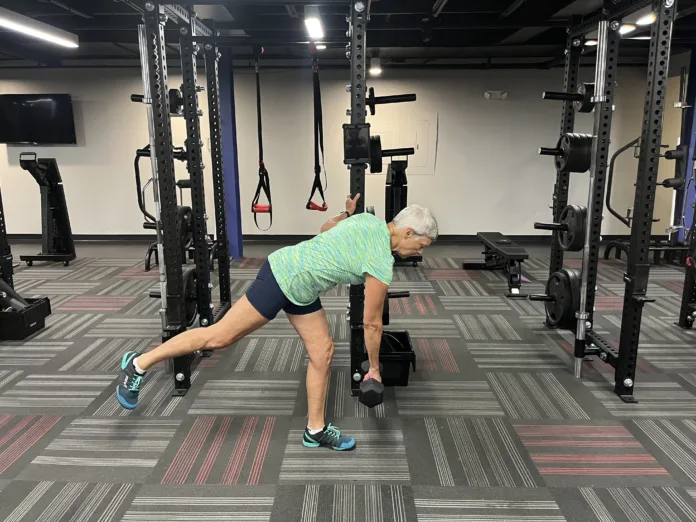
Strength training is different. Lifting weights places more stress on bones, which signals the body to maintain or build bone tissue. Because of this, research consistently shows strength training is one of the most effective ways to support bone density.
Research:https://journals.lww.
Don’t make these 3 mistakes in strength training when trying to improve bone density
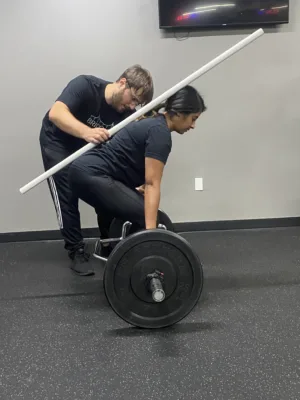
1. Don’t overlook your form.
When people hear that strength training helps bone density, they often just worry about lifting heavier weights. But form matters more than people realize. Even small adjustments in position can make a big difference in how an exercise feels. In a squat, for example, you should mainly feel your quads and glutes working, not your knees. If you do feel it mostly in your knees, it may simply mean your position needs a small adjustment, or that a different exercise would be a better fit. There are a lot of squat variations; we just need to find the one for you.
2. Don’t sacrifice your range of motion to lift heavier.
Something we often see is that when people hear they should lift heavier weights, they do exactly that, but their range of motion starts to shrink. Research shows that full range of motion exercises tend to be more beneficial for flexibility and muscle than short range of motion movements. Ideally, the range of motion in your heavier sets should look the same as it does with lighter weights.
3. Follow a plan that fits your body.
Everyone is different. Goals, flexibility, past injuries, health history, and strength levels all vary from person to person. That’s why at BridgeFit, we believe in a personal plan where every exercise is picked for you and meets you where you’re at, so you can get the most out of your strength training without banging up your body in the process.
BridgeFit is Overland Park’s Premier Personal Training Gym for ADULTS 35+. At BridgeFit we help busy adults lose weight, gain energy, and get strong… even if they are overwhelmed by their busy schedule, or haven’t found a solution that works long term. Find out more here.