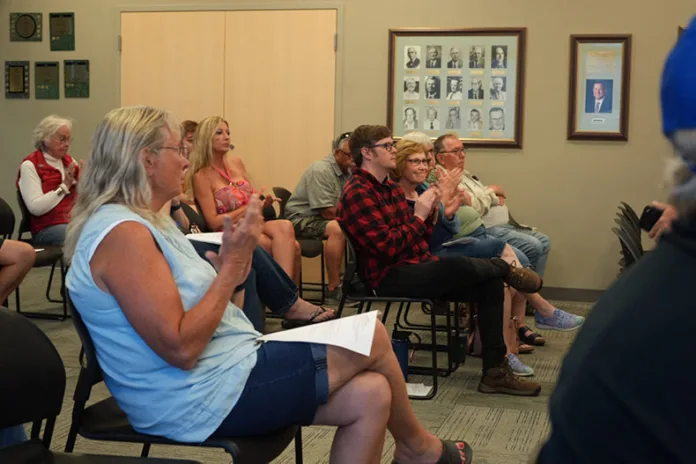
A motion to put a six-month pause on data centers in Gardner died Monday night, despite support from residents and the backing of one city councilmember.
The discussion comes as multiple Johnson County cities, including Gardner, have been weighing data center proposals in recent months.
Earlier this spring, a data center application was withdrawn in Spring Hill. Then, a California-based company withdrew its data center application in Gardner, following community pushback. And Edgerton currently has a data center application on the table, even as De Soto also moves forward with another.
On Monday night, the Gardner City Council discussed a measure to impose a six-month moratorium, which would’ve temporarily prevented applications for facilities where the primary use was a data center.
Councilmember Kelly Johnson made a motion to approve the moratorium, but no other councilmember offered a second, and the motion died.
Other councilmembers said they didn’t see any benefit from the moratorium even as residents who showed up pressed for the pause.
“I feel like they’re more concerned about money over people,” Gardner resident Carrie Schmidt told the Post after the meeting. “I don’t think that they are listening to their community. And I don’t think they care.”
Currently, the city has no formal regulations in its city code that directly address data centers. The moratorium would’ve directed city staff to conduct more in-depth research and consider potential changes to the city’s zoning code.
However, the city’s Community Development Director David Knopick said city staff is already doing some of that work. Research started when Beale Infrastructure proposed its data center in Gardner earlier this year, and though that proposal was withdrawn, city staff continue looking into the topic.
“Once we start looking at this research, we keep going,” Knopick said. “This is an item that’s going to be on the horizon. As you know, in the metropolitan area, it is a big topic. We’re going to keep ourselves informed.”
“We never get to hear the pros”
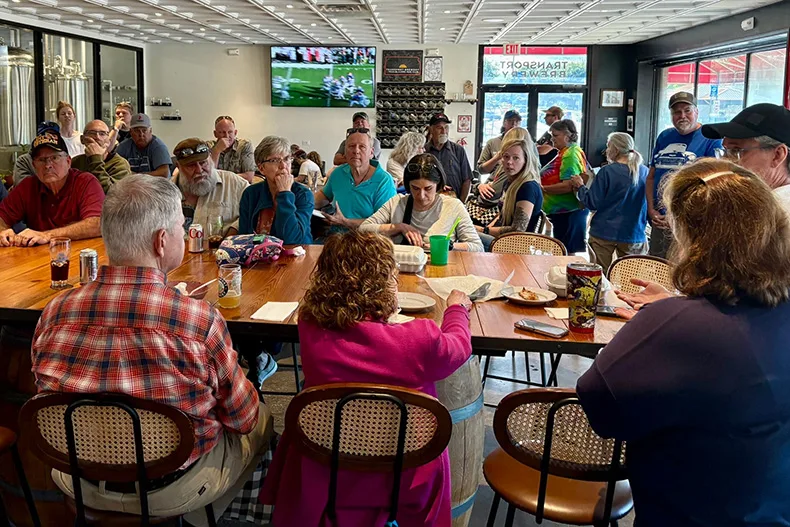
Council Vice President Kacy Deaton said that because the city is already doing the work of researching data centers, she didn’t see the benefit of a moratorium.
Based on the discussions around data centers and feedback from residents, she said, the expectation is to be thorough when an application comes through.
“We still have the flexibility to go stronger, to require more and to make sure that the developer is paying for a lot of that research,” Deaton said. “If we pay city staff, we do so much research and never get an application for another data center again — is that really the best use of taxpayer dollars?”
Both Mayor Todd Winters and Council President Mark Baldwin emphasized the positives data centers could bring, agreeing that much of the public conversation to this point has been focused on the negatives.
Baldwin added that the city never got the chance to consider the benefits of Beale’s 300-acre data center proposal near the northeast corner of 191st Street and South Clare Road, despite mitigation efforts already being discussed.
“We never got to hear the pros, right? Because we never got to a development agreement,” Baldwin said. “But, I can tell you that we were discussing all kinds of things to mitigate everything. Everything, right?
“I would get an email that says, ‘You know, you’re going to ruin the water,’” he added. “Before [Beale] even walked in the door, we said, ‘You can’t cool it with water. Off the table, never was going to happen.”
Beale’s proposal was for a closed-loop, air-cooled system. According to the company, its water usage would’ve been an estimated 15,000 to 20,000 gallons of water per day, a fraction of what many other data centers typically use.
Councilmember Steve McNeer and Baldwin said they’ve heard concerns from business owners and people in the development community following Beale’s withdrawal.
By not offering any incentives to Beale, Baldwin said, “We threw it in their face. That doesn’t show that Gardner wants to play ball with any development.”
“Growth doesn’t have to come with the expense of trust”
However, residents who spoke during public comment had a different take.
Gardner resident Kristen Schultz, a former Gardner Edgerton school board member who is also a candidate for a Kansas House seat this year, was one of four people who spoke against data centers and in favor of the moratorium Monday night.
“Nothing is preventing this council from conducting its due diligence, listening carefully to residents and ensuring that the public genuinely feels heard before moving forward,” Schultz said. “You have an opportunity to show the people that public input still matters, and that growth doesn’t have to come with the expense of trust.”
Johnson, the lone councilmember who showed support for a moratorium on Monday, shared similar sentiments of wanting to do the due diligence before moving forward.
For her, finding neutral, unbiased research and making considerations for the changing technology is important when looking at data centers, she said.
“A lot of the research that I found is traced back to either a proponent or an opponent of data centers,” Johnson said. “I found very little — I don’t think I found any — that’s just peer-reviewed, neutral research. And so because of that, I hesitate to say, ‘Yes, let’s move forward with not having a moratorium.’ I think we need that neutral, peer-reviewed research.”
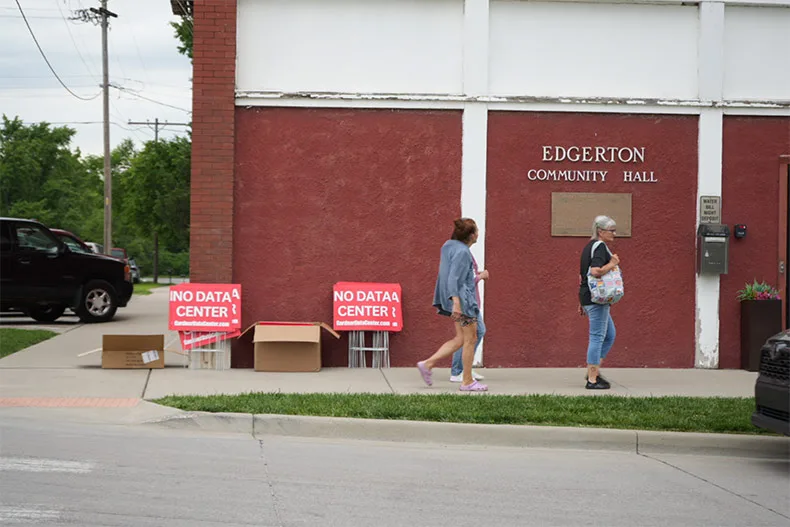
What’s happening in Edgerton?
Meanwhile, the Edgerton City Council will consider its own moratorium on June 11.
With that, however, Mayor Don Roberts said the current application for a data center from Dubai-based DAMAC Digital still stands, which would convert an existing 400,000-square-foot warehouse at Logistics Park Kansas City into a data center.
Several residents have called for a moratorium since the DAMAC application came to the planning commission. While the moratorium on future applications is a step in the right direction, residents said they still don’t want the DAMAC facility.
Nine people spoke against any data center development in the community during the Edgerton City Council meeting Thursday night, including two children who said they’d have to move if any data center is approved. Their parents wouldn’t want to raise them near that type of facility.
Residents, including Schmidt, who also spoke at Monday night’s Gardner meeting, outlined concerns about the company itself, water consumption, industrial waste and the lack of research on long-term health effects of living near data centers.
“An 18-month moratorium on data centers is vital to return control to the taxpayers, ensuring local resources are protected from predatory development before more irreversible damage is done,” she said.
Though a Gardner resident, she said she lives within a mile of the proposed DAMAC facility, too.
Schmidt requested of both Gardner and Edgerton that during a moratorium, city officials do two things: first, create a formal definition of a data center and second, “specify that data centers are neither permitted uses nor conditional/special uses in any zoning district unless and until the code is later amended again.”
“These data center operations are simply shoehorned into broad, outdated categories like general, industrial or commercial districts,” Schmidt said. “These codes were written long before anyone imagined facilities with such extreme power draws, water consumption, constant noise and industrial-scale operations. This vagueness leaves far too much open to interpretation.”