Two controversial drugs that were available over the counter at many convenience stores are now classified as illegal in Kansas. That’s a good thing, multiple Johnson County officials said.
On July 1, the possession and sale of kratom products, including its synthetic derivative, 7-hydroxymitragynine, or 7-OH, became illegal after Gov. Laura Kelly signed a bipartisan bill in April giving the drugs a Schedule I designation. That means they are classified as having a high potential for abuse and have no currently accepted medical use.
The move is a rare one in the United States, with only 8 other states having similar kratom bans, including Wisconsin, Alabama and Louisiana, according to the American Kratom Association.
Kratom, also known as Mitragyna speciosa, is a plant-based substance with a variety of natural compounds that can provide stimulant or sedative effects, depending on the dose.
7-OH is a concentrated alkaloid that occurs naturally in minimal quantities within kratom leaves but can be synthesized or extracted to create high-potency products, similar to opioids, according to the Recovery Centers of America.
Both are available in a variety of forms, including tablets, gummies, drink mixes and liquid shots. Officials locally and around the U.S. have become increasingly alarmed with the drugs’ prevalence, particularly at gas stations and convenience stores. The drugs collectively have earned the moniker “gas station drugs.”
Kratom and 7-OH are often used as a way to manage pain, stress and withdrawals from opium. Because they have been largely unregulated, not needing supervision or a prescription, they can become problematic, said Tim DeWeese, director of Johnson County Mental Health Center.
“We’ve seen too many people that have just become highly addicted to it, and then we see those severe withdrawal symptoms, and unfortunately, then I think sometimes people turn to other opioids to fill that void,” said Tim DeWeese, director of Johnson County Mental Health Center
Kratom-derived drugs have faced bans around the U.S.
During the past year, both kratom and its synthetic derivative 7-OH have been the subject of controversy both nationally, with the FDA targeting 7-OH in 2025 and locally, with Kansas City banning synthetic kratom earlier this year.
Because of its dangerous, opioid-like effects, the drugs have been on the radar of Johnson County officials, including the District Attorney, sheriff and medical examiner’s offices.
“Whether it’s teens or young adults, it was not a hard thing to buy. You could purchase it right over the counter and in a gas station, like you could a pack of cigarettes or something else. So (it was) very easy to get your hands on, and that is it. That is a concern,” Capt. Craig Walion of the Johnson County Sheriff’s Office said.
While Johnson County officials supported banning both substances, Mac Haddow, a
Senior Fellow on Public Policy for the American Kratom Association, argued that the state’s ban was too broad.
In testimony given in February to the Kansas House Committee on Health and Human Services, he said a state ban should focus on synthetic and chemically-manipulated 7-OH and drugs with more than 2% alkaloid content, and not naturally occurring kratom.
“The question before you is not whether dangerous synthetic opioids should be controlled. They should,” he said. “The question is whether, in doing so, we accidentally ban a natural botanical product used responsibly by millions of Americans — and in the process recreate the very harms of prohibition that history has repeatedly warned us against.”
Kratom and 7-OH have caused alarm in Johnson County
In the past six years, the Johnson County Medical Examiner’s Office says it has seen 36 deaths either caused by the drugs or listed as a contributor to death.
This year alone, they’ve seen six deaths where 7-OH was present, Diane C. Peterson, MD, Chief Medical Examiner and Coroner for the Johnson County Medical Examiner’s Office, said to the Johnson County Post in an email.
“It has been a ‘problem’ in that it is used along with other prescription and illicit medication and increases the risk of death when used with certain other drugs,” she said.
In 2025, Shawnee City Councilmember Kurt Knappen started hearing concerns from residents about stores in the city that sold the drugs. In December, before the issue was being debated in Topeka, he brought those worries to city staff to investigate what they could do.
“As I looked into it, I just realized that a lot of our smoke shops and many of our locally owned gas stations are profiting off of this,” he said.
In January, the city drafted a letter to the Kansas Attorney General expressing their concerns about the drug. He’s glad that the state responded, Knappen said.
With its new Schedule I designation, possession of the drugs is now a Level 4 felony, which has a punishment ranging from 14 to 51 months in prison. Selling the drugs is now a Level 3 felony, which has a range of 46 to 83 months in prison, according to the Kansas Drug Offense Sentencing Grid.
“We also knew about the dangers associated with those. So that’s why law enforcement and prosecutors asked the Kansas Legislature to outlaw those products,” he said to the Johnson County Post. “I am very happy that we were able to get that as a controlled substance.”
While he’s not sure if the city of Shawnee’s letter influenced Gov. Kelly in signing the bill, Knappen is happy state officials responded to residents’ concerns.
“I don‘t know that we can take credit for the law change. Things must have already been in the works. But I was really proud of the legislature for passing the ban this last session,” he said.
Sheriff, DA’s offices have warned local businesses of new designation
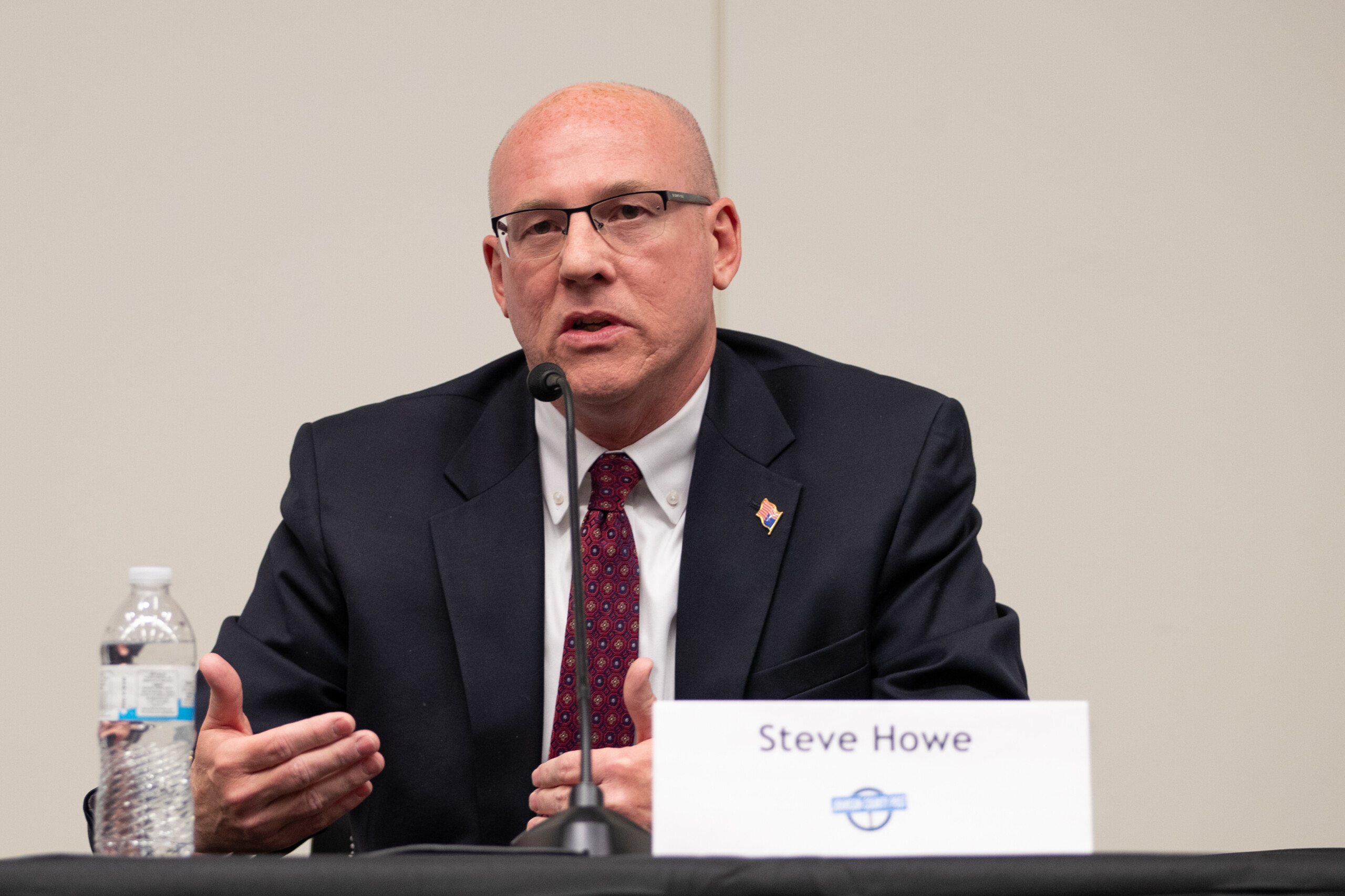
Since Kelly signed the bill into law in April, Howe said the sheriff and DA’s offices have been busy distributing notices warning local businesses to take the drugs off of their shelves by July or face legal action.
“Those were distributed out to the known businesses that were selling this stuff, and then, hopefully they took heed to that and pulled those things off their shelves,” Howe said.
The District Attorney’s Office does not expect the new law to cause an influx of new drug cases, as long as businesses comply, Howe added.
“I don’t see this as causing immediate stress on law enforcement or our office, at least that’s my hope. So we’ll just have to stay tuned and see how that works out,” he said.
Mental health officials are looking to help with withdrawal symptoms
Leading up to the July 1 ban, organizations like the Kansas Hospital Association have warned local mental health and medical facilities to prepare to help people going through kratom- and 7-OH-related withdrawal.
“With the ban on these substances effective July 1, 2026, it is anticipated this could result in increased patients experiencing withdrawal from these substances once they are no longer available, or potential overdoses if patients switch to other substances,” the KHA stated in a press release in May.
Facilities like Johnson County Mental Health Center want to be sure they can help people either dealing with withdrawals or helping others dealing with it.
“You may see people going without it, and family members may be wondering why they’re seeing these symptoms, and so I think it’s important for families to know the symptoms and signs of withdrawals,” he said.
When someone stops using kratom or 7-OH, they can experience anxiety, irritability, restlessness, muscle aches, nausea and difficulty sleeping, the center says.
If a friend or family member needs assistance with someone suffering from withdrawal, they should call the Suicide and Crisis Lifeline at 988.
“The easiest thing and the best thing they can do is to call 9-8-8 to ask for assistance,” Deweese said.
Drugs can be dropped off around the city
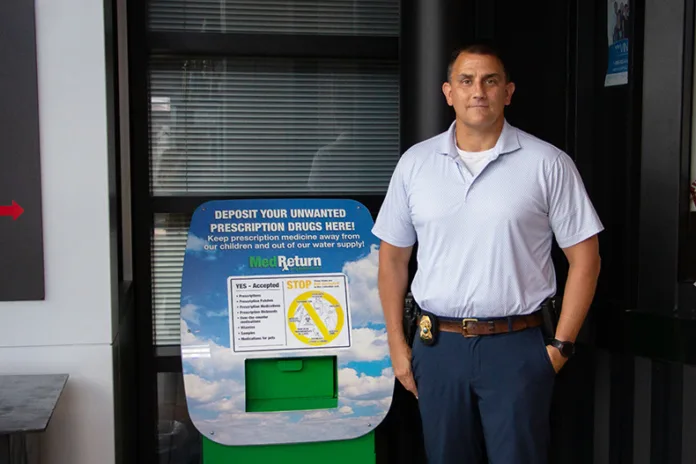
People who still possess kratom or 7-OH products can drop them off in drug disposal boxes around the city, including the Sheriff’s Operations Center lobby at 27747 W 159th St., in New Century.
Drop boxes are also available at the following pharmacies:
CVS locations at:
- 1075 W. Santa Fe St, Olathe 66061
- 22700 W. 55th Terr, Shawnee 66226
- 13502 W 87th St Parkway, Lenexa 66215
Hy-Vee Pharmacy locations at:
- 18101 W. 119th St, Olathe, KS 66061
- 14955 W 151st St, Olathe, KS 66062
- 13550 W. 63rd St, Shawnee, KS 66216
- 13400 W. 87th Pkwy, Lenexa, KS 66215
Wal-Mart Pharmacy at:
- 395 N. K 7 HWY, Olathe 66061
People can also request a drug deactivation pouch to be delivered to them by contacting [email protected].