Earlier this summer, the Post asked our readers what issues you wanted to hear candidates in contested races address leading up to the Aug. 4 primary election.
Based on that feedback, we developed a five-item questionnaire centering the issues most important to residents across Johnson County.
Each day this week, we’ll publish the candidates’ responses to one question. So far, we’ve published responses on property taxes and state tax policy, public schools, special education and vouchers, and housing affordability.
Today, we’re publishing candidates’ responses to the following question:
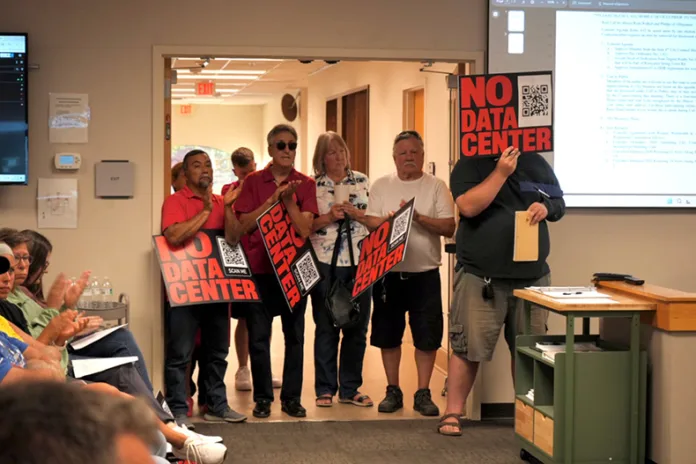
Readers repeatedly raised questions about large data centers proposed across Johnson County and tied them to concerns about their impact on local water and energy use. Currently, Kansas offers large data center operators sales tax exemptions in exchange for commitments on water conservation and energy grid preservation. But some readers are calling for a statewide moratorium on data centers. What is your stance on a statewide moratorium? Do you support incentivizing data centers to come to Kansas?
Below are the answers the Post received from candidates on the issue:
District 5 — Republican
Jon Chitwood
 The physical construction of data centers is a sign of what is coming. The workplace efficiency AI is bringing is similar to the invention of the tractor. Companies are going to require significantly fewer employees, and we are already seeing this happen. Because of this, we need to focus on expanding career and technical education so students have real skills and multiple paths to good careers in a changing economy.
I will oppose any statewide zoning rules that give developers the right to build and takes decisions out of the hands of local leaders. I will support legislation that protects taxpayers from rising energy, water, and natural gas costs. With the exception of agriculture, decisions about development should be made locally. Every community is different, and local leaders and voters are best positioned to decide what kind of growth fits their future.
Courtney Sappington (incumbent)
Did not provide the Post with a response.
Courtney L. Crawford
Did not provide the Post with a response.
District 26 — Democratic
Robert Collins
 One of the most bipartisan issues I hear when knocking doors is distrust and concerns regarding high scale data centers. Stories abound across the country of communities experiencing lost water pressure, spiked electricity bills, contaminated water, maddening noise pollution, and infuriating tax giveaways to billion-dollar tech companies that are being subsidized by struggling communities.
Other concerns have been raised by constituents about the potential of increased A.I. capacity from such data centers further displacing workers and jobs, and expanding surveillance capacity against Americans by governmental agencies and technology companies alike, which has added to people’s expressed apprehension.
The EPA then announced this week its proposal to end requirements for public comment and input regarding proposed data centers and other facilities, which only deepens the distrust many people already feel toward these projects, and about citizens’ ability to even be heard.
Unlike the federal government’s approach, we as state lawmakers should be expanding opportunities for the people who are and will be most directly affected by proposed data centers—or any other actions by the government—to be heard. And voters’ expressed concerns are exactly why Kansas needs clear statewide safeguards as we move forward.
Laura Johnson
Did not provide the Post with a response.
District 27 — Democratic
C. Edward Young
 There is no need to incentivize data center growth in Kansas. There is no need, no matter the promise of reusing the water or preserving the energy grid. Senate Bill 98 also contained language regarding the implementation of economic development rate schedules that provide discounts for new or expanded facilities for industrial and commercial customers. Senate Bill 98 also contained language that avoids transparency, if transparency creates a competitive disadvantage. Many of the citizens in towns across the state are mobilized because they believe in transparency.
I support a moratorium on data centers. Recently, I heard a politician say, without any irony in his voice, that the public is being overly influenced by the negative reports about AI data centers on social media. There are projects being suggested that have no cost benefit analysis and no economic impact statement. While there may be a positive economic impact during construction, this impact is limited if the products and labor are not locally sourced.
In the early 20th Century, the transportation boom resulted in drilling oil wells without sufficient environmental oversight. We call those oil wells zombie wells now, because they are alive (involuntarily pumping) but threaten drinking and irrigation water. The Kansas Corporation Commission caps them at our expense. During the cell phone boom of the early 1990s and 2000s, cell phone towers went up everywhere. As those towers reached the end of their useful life, they became orphaned. The single site LLC dissolved. There is no one left to take care of them. What happens when the AI Data Center boom ends? What happens when the size of the data processing unit is reduced to a suitcase? Who takes care of the massive center? Ultimately, it is that town and those citizens. We need a moratorium until we know what we need from those centers in the long run. We need a moratorium until we know if the return matches the investment.
Sara Kiewiet
 Technology and artificial intelligence are becoming increasingly important to our economy, and avoiding data centers altogether is neither practical nor in Kansas’ long- term economic interest. If planned responsibly, data centers can bring high-quality jobs, expand the local tax base, and create new opportunities for surrounding businesses and communities.
That said, economic development should never come at the expense of Kansas families, our natural resources, or the reliability of our electric grid. Any incentives offered to data centers should come with clear expectations for responsible water use, energy efficiency, and long-term community benefits. Companies receiving public incentives should demonstrate that they are good partners and that the benefits outweigh the costs.
I also believe Kansas should continue taking proactive steps to protect consumers. The Kansas Corporation Commission’s Large Load Power Service (LLPS) tariff is a good example of thoughtful policy. By requiring very large electricity users to bear the costs associated with serving their demand, the LLPS tariff helps protect residential and small-business ratepayers from subsidizing major infrastructure investments. That is the kind of balanced approach I support – welcoming responsible investment, while ensuring existing residents are not left paying the bill.
The question is not whether Kansas should allow data centers, but how we manage their growth. We should encourage projects that create economic opportunity while protecting our water resources, maintaining a reliable electric grid, respecting local communities, and ensuring the companies benefiting from Kansas invest responsibly in the places they call home.
District 30 — Democratic
Zachary Thomas Hawkins
 I support a 1-year mortarium on data center construction in Kansas. Around the country we are seeing data centers being greased through city governments by corporations with large pockets. If the legislature does not step up the same thing will happen in Kansas. It’s time to pass laws that make new data center construction transparent and give the public time to air their concerns about proposed developments before contracts are awarded at the city level. The reality is if you use the internet, you are interacting with a data center. Data centers aren’t going to go away, so the state needs to create a solid plan to build them responsibly. I don’t think that data centers should be subsidized by ratepayers through a higher electric bill, water bill, or property tax bill. While it’s important to promote economic development, I am concerned that current incentives benefit corporations more than citizens.
Tyler Holmes
 We need a national-level conversation about our digital infrastructure, but instead these issues are being pushed on state and local governments. The discussion has further been exacerbated by the process: decisions made for public benefit using taxpayer funds must be made in full public view. The use of non-disclosure agreements, third-party agents, and obfuscation breeds mistrust and has to stop. For now, data centers built with incentives should be developed in a manner which protects against any environmental harms, prevents increased utility costs to individual ratepayers, and gives clawbacks to local governments for failure to complete construction or generate expected jobs or revenues (e.g., if the AI bubble pops).
Amelia Wiederaenders
 Date Centers are a complicated issue and I think a statewide moratorium is too simple. Currently Kansas has data centers around and my understanding after talking with the Tri-State Union about this issue is that they use less water than the average golf course, pay taxes that help fund local schools and the building and maintenance of date centers are a source of well paying jobs. That being said I understand where the fear comes from when one is told that data centers are using too much water and are heating the area around them by 10 degrees, I understand where the concern comes from. However, living in the modern world, we need data centers to store our digital information. I trust that local communities know what is best for their communities as they understand their environmental and financial situations best.
District 78 — Democratic
Tim Lundberg
 Careful consideration of the impact a data center would have on the surrounding community is critical. Noise, power and water use, and the large footprint of these facilities have the potential to be more than a little harmful, but I believe a moratorium is unnecessary. I believe that halting consideration of these facilities will result in the eventual loss of good paying construction and other jobs, and that potential negative community impacts can be addressed by regulation. One idea I like would be to require the facilities to generate a minimum percentage of their own energy needs on site (rooftop solar or other renewable source).
KaMesha Bernard
Did not provide the Post with a response.
District 121 — Republican
Mike Storm (incumbent)
 I have serious concerns about the expansion of large data centers in Kansas. Before we continue offering taxpayer incentives, we need to fully understand how these projects will affect our neighborhoods, water supply, electric grid, and the environment.
Local communities deserve a meaningful voice in these decisions, and developers should be required to demonstrate that they can meet their water and energy needs without shifting costs onto existing residents and businesses.
Economic development is important, but it should never come at the expense of our quality of life. As a legislator, I would support stronger environmental reviews, greater transparency, and protections to ensure taxpayers and nearby neighborhoods are not left paying the price for these projects.
Thomas Palenske
 I don’t agree with a statewide moratorium and here is why: Building data centers has potential to bring economic development and high-paying tech and trade jobs to Kansas, and would also help to diversify our economy. I do, however, recognize that they come with water and electric requirements that we would need to assess the impact of — and see where and how the state of Kansas’ existing infrastructure, or where new infrastructure could support. I would oppose gratuitous tax incentives for data centers — much like our citizens, businesses need to pay their fair share to contribute to the services and infrastructure that Kansas provides. Data center development is happening fast, and our state needs policy sooner than later. I look forward to getting to Topeka to look at opportunities for economic growth in Kansas, while ensuring that growth does not constrain the resources our people require to live a comfortable and safe life, e.g, water and electric.
Coming up:
Tomorrow we will publish the candidates’ responses to the following question:
Immigration was the most-raised topic from readers this cycle, and they’re divided. Some asked whether candidates will “work with ICE” and back stronger enforcement. Others asked what lawmakers will do to “protect our immigrant neighbors from unlawful detainment.” The Legislature this year passed a law over the governor’s veto, allowing sheriffs to enter agreements with ICE without county commission approval. The same law created a 25-foot buffer around first responders, including ICE agents, that press and civil-liberties groups argue chills protest and reporting. Do you support such measures? More broadly, what role should the state play in federal immigration enforcement?
 Thanks for reading! If you value having an independent news outlet keeping tabs on local government, schools and taxes, we're asking you to contribute to our Education Reporting Fund.