
Incumbent Rep. Sharice Davids and Eric Jenkins will face off in November’s general election in the race for the U.S. House of Representatives seat for the 3rd District of Kansas.
That’s according to unofficial statewide election results from Tuesday night, which show both Rep. Davids, a Democrat, and Jenkins, a Republican, with sizeable leads over their respective opponents.
Davids, of Roeland Park, is currently serving her fourth term in the 3rd District seat, which represents Johnson County, as well as Miami, Franklin and Anderson counties and part of Wyandotte County.
“Our work is far from finished, and I’m ready to take this fight to November to keep delivering real results for Kansas,” she said in a news release.
During this election season, Davids has been outspoken about combating the growing affordability crisis, pointing specifically to the Trump administration’s tariffs and the rising cost of health care. She echoed that message after early election results were released Tuesday evening.
“Every single day, I hear from Kansans who are working hard, budgeting carefully, and doing everything right, but are still getting squeezed by rising costs on everyday essentials like groceries, healthcare, and housing,” she said. “Kansans don’t want political games or constant partisan bickering — they want practical, common-sense solutions.”
Davids saw her first Democratic primary challenger
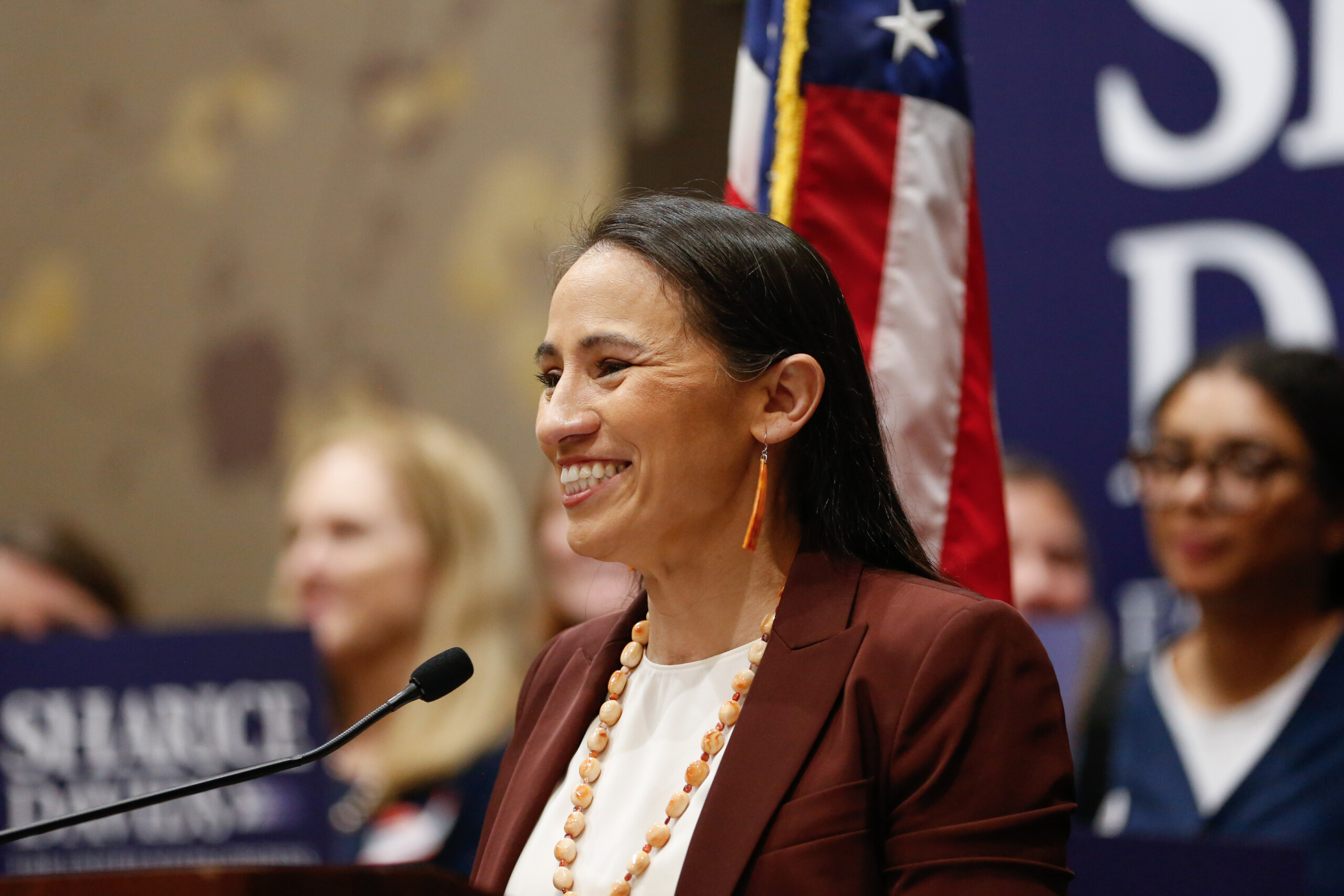
Over the years, Rep. Davids has beaten back challengers from the Republican Party, but hasn’t faced a challenger from her own party since defeating then-incumbent Congressman Kevin Yoder in 2018.
That was until this year, when Sarah Preu, a former Davids supporter from Fairway, mounted a campaign and staked out ground to the left of Rep. Davids on several issues.
Preu called for the abolition of ICE, while Davids has pushed for ICE reforms that include more border security as well as legal citizenship pathways. Preu was also critical of Davids’ acceptance of campaign money from the increasingly controversial American Israel Public Affairs Committee, or AIPAC, and supported an embargo on arms to Israel.
“I feel that my party has drifted so far across the aisle that I don’t recognize it as the party of (civil rights activists) John Lewis, Jesse Jackson and (former vice presidential nominee) Geraldine Ferraro. Those were my heroes growing up,” Preu said earlier this year.
Across the U.S. but particularly in the Midwest, moderate Democrats have faced off during midterm primaries with candidates from the left-wing of the Democratic Party as the Democratic Socialists of America political organization gains momentum.

In Colorado, for instance, 29-year-old Melat Kiros, who is part of the Democratic Socialists of America organization, beat the more moderate incumbent Rep. Diana DeGette in a Democratic Party primary earlier this year.
In recent polling, State Rep. Francesca Hong leads a four-way Democratic Party primary election to succeed outgoing Wisconsin Gov. Tony Evers. Hong, like Kiros in Colorado, is a member of the Democratic Socialists of America.
And in Michigan, some polling gives the more progressive candidate Abdul El-Sayed an advantage over moderate Rep. Haley Stevens in the primary election bid to replace fellow Democrat Sen. Gary Peters, who is not seeking a third term. On Tuesday night, El-Sayed had a narrow lead over Stevens, though the race is close.
Some have billed these races as a sign of a bigger battle for the future of the Democratic Party, as more left-leaning and often younger candidates challenge the hold that the older moderate establishment figures have on the party.
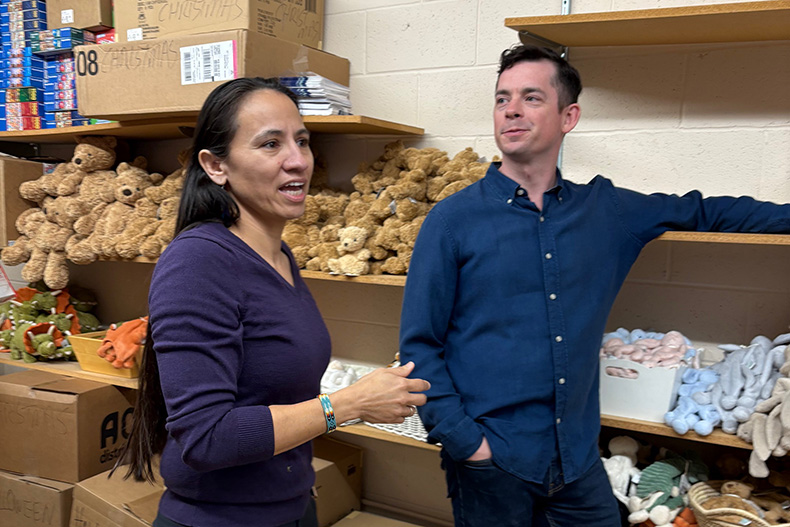
However, in the 3rd District, that same dynamic doesn’t seem to have played out as Rep. Davids, the more moderate of the pair, has come out on top. On election night, with around 95% of precincts reporting, Rep. Davids held quite an advantage, with 83% of the vote, or about 72,000 votes.
Preu, on the other hand, had roughly 14,300 votes, or 17%.
At the time of publication, a representative from Davids’ campaign had not returned the Post’s request for comment.
Former city councilmember leads in the Republican primary

On the Republican Party primary election side of things, Eric Jenkins, of Shawnee, is in the lead. He has 79% of the vote, or roughly 58,300 votes, with around 95% of precincts reporting on Tuesday night.
That means he’s most likely to be on the general election ballot in November as yet another Republican challenger to Rep. Davids.
Jenkins is a former member of the Shawnee City Council and a retired U.S. Army Colonel, who also worked for the Federal Emergency Management Agency for 30 years.
Throughout the campaign, Jenkins emphasized fiscal responsibility, tax cuts and national security issues. While on the city council, he was a frequent proponent of property tax rate cuts.
At the time of publication, Jenkins had not returned the Post’s request for comment.
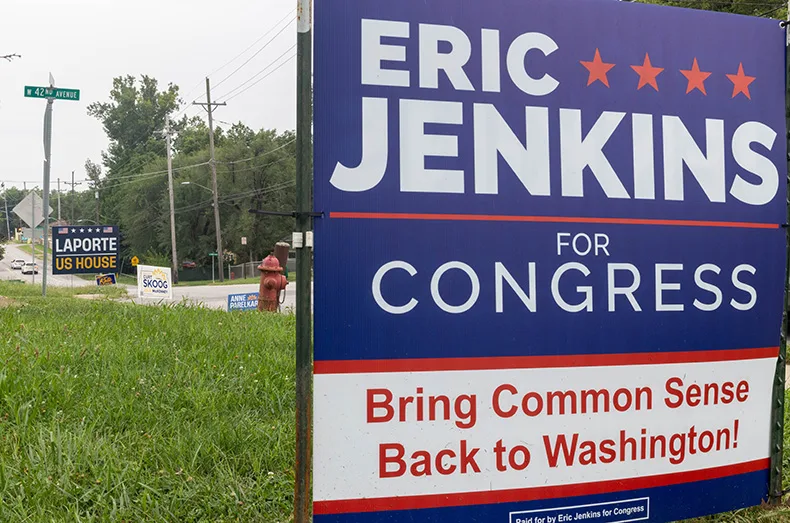
Chase LaPorte, of Mission, trails Jenkins in the Republican primary with 21% of the vote, or about 15,900 votes. A U.S. Army veteran and small business owner, he previously ran for Kansas Governor in 2022.
LaPorte has advocated for term limits on federal elected positions and for reducing the growing federal spending deficit. He has also been critical of how the U.S. has carried out the war in Iran.
What does this mean for November?
Based on unofficial election results Tuesday, Rep. Davids and Jenkins will face off for the 3rd District seat in November.
Steven A. Hohe, a Shawnee resident, will also appear on the ballot in November as a candidate for the Libertarian Party.
In the past, Rep. Davids has fended off the Republican Party’s attempts to unseat her with relative ease. In both 2020 and 2022, she defeated Amanda Adkins with 10-point leads or higher. Then, in 2024, she beat Dr. Prasanth Reddy by roughly the same margin.
Keep reading: ‘Unending anxiety’ — As midterms ramp up, some Johnson County voters worry about affordability