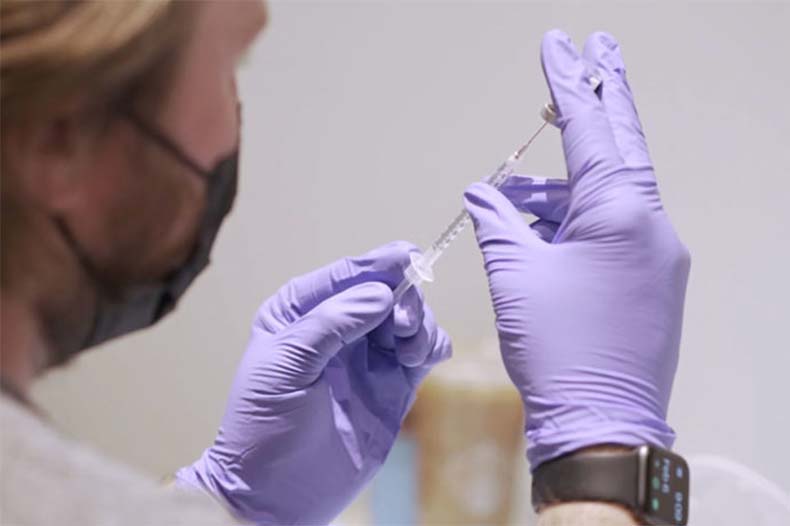
The summer vacation from thinking about respiratory illness is now officially over, and local health care providers say it’s time to begin making a plan to minimize or even stave off the COVID-19, influenza and RSV (respiratory syncytial virus) that have begun to circulate.
That plan should include the latest vaccines for those three threats, along with vigilance and early action if you do get sick, say the medical officers at Kansas City area hospitals.
Hospitalizations are ticking up again
The respiratory illness season is beginning already, with a return of COVID-19 and a few RSV cases.
In a question-and-answer session on the University of Kansas Health System’s Medical News Network last Wednesday, eight medical officers said they are beginning to see upticks in hospitalizations for these illnesses, though numbers are still small.
The University of Kansas Health System reported 19 patients admitted with COVID, which is up from 16 the previous week but much less than the 40 in October 2022, said Dana Hawkinson, director of infection, prevention and control.
Olathe Health has six COVID patients, which is the highest in several weeks, said Elizabeth Long, chief medical officer. That hospital also reported a COVID death in July.
So far, the number of cases has not mirrored the spikes seen a year ago, and patients have been doing well overall. But Steven Stites, chief medical officer for the University of Kansas Health System, said the diseases still need to be taken seriously because of the danger they pose to people with compromised immune systems and other health conditions.
“This is not something we can just blow off,” he said.
With the recent approval of updated flu and COVID vaccines, plus the development of an RSV vaccine, now is the time to prepare for the seasonal return of those viruses, they said.
Here are a few things to know:
Which vaccines are available?
- A new version of the COVID vaccine recently got federal approval and is being rolled out to local pharmacies and health care providers. The new version offered by Moderna and Pfizer is effective against the current variants, according to studies.
- Influenza vaccine is updated every year and is also widely available in the area.
- Respiratory Syncytial Virus has been around for years but this is the first year a vaccine for it is available. RSV has symptoms similar to a mild cold but can become severe, especially in very young children and older adults.
- Health care officials say it is safe to get more than one vaccine at a time.
Who should get vaccinated?
COVID-19
- The Centers for Disease Control recommends everyone at least 5 years old get one dose of the updated Pfizer or Moderna vaccine. Children aged 6 months to 4 years and people with compromised immune systems may need additional doses.
- People who have had COVID recently should still get the new vaccine, but should consider waiting three months, the CDC says.
- There is also a Novavax option for those 12 and older who cannot or choose not to get the Pfizer or Moderna vaccines.
Influenza
- With rare exceptions, everyone 6 months and older should get a flu vaccination, the CDC recommends. Different versions of the flu shot are available for different age groups.
- Exceptions include people who have had severe allergic reactions to an ingredient other than egg protein in the shot. However this year, no additional precautions are recommended for people who have had egg allergies and are getting an egg-based vaccine. More information on that here.
RSV
- The RSV vaccine is recommended for adults 60 and older, with consultation of a physician.
- Young children can get a monoclonal antibody that protects against RSV. Sold under the name Breyfortus, it protects babies less than 8 months old and those 8 months to 19 months old who are at risk for severe illness. It is expected to be widely available for this RSV season. No RSV vaccine has yet been approved for adults under 60.
Where are shots available?
- COVID and flu vaccinations are becoming available at major pharmacies and other commercial outlets in the Kansas City area. The RSV vaccine has also started to be offered in commercial locations, said the health care professionals at last week’s meeting.
- Vaccines.gov has an interactive map to help you locate a shot near you.
- Health care providers including hospitals and local health departments say their supplies will come in soon.
- The Johnson County Department of Health and Environment expects to receive doses in early October and will post information about availability on its website when that happens.
How else can you prepare?
Doctors on the KU call are so far not urging widespread masking. However, they did say they’ve seen more people voluntarily using masks after an exposure.
Getting a shot doesn’t necessarily guarantee you won’t get a respiratory disease, but it has been proven to make the outcomes less severe, they said.
Hawkinson advised people to make a plan to test themselves early in case of illness this season. Oral antivirals like Paxlovid can ease the symptoms if taken early enough.
Remember the ‘tripledemic’ last year? Here’s why you shouldn’t panic about ‘triple-demic’ in JoCo
Roxie Hammill is a freelance journalist who reports frequently for the Post and other Kansas City area publications. You can reach her at roxieham@gmail.com.