TOPEKA — Think-tank lobbyist Dave Trabert argued Kansas needed a state constitutional amendment to aggressively restrain property tax increases because local government officials were dishonest about why tax obligations tied to property were climbing faster than inflation.
Trabert, CEO of the Koch-connected Kansas Policy Institute, said too many local public officials deceptively tethered themselves to claims of “holding the line” on property taxes by asserting local mill rates had remained stable. He said such arguments were often spurious because local officials were relying on outsized residential property valuation increases, rather than votes to escalate property tax rates, to drive increases in revenue.
He offered a sample of the two-year rise in residential property valuations: Wyandotte County, 41%; Miami County, 37%; Butler County, 31%; Leavenworth County, 29%; Finney County, 26%; and Douglas, Lyon and Johnson counties, 25%. And, the corresponding two-year increases in property taxes in those counties: Wyandotte, 27%; Miami, 19.4%; Butler, 16.2%; Leavenworth, 22.8%; Finney, 17.7%; Douglas, 20.4%; Lyon, 20.2%; and Johnson, 15.6%.
“That’s what taxpayers are dealing with,” Trabert said. “They’re also dealing with a pretty steady beat of a lot of local officials not being honest about what’s happening.”
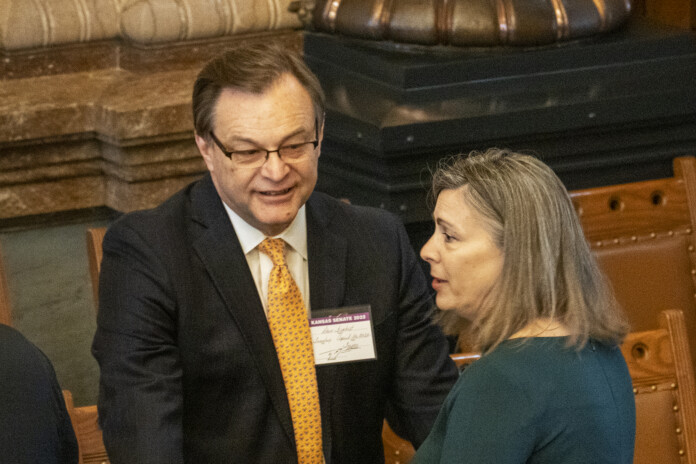
To put a finer point on it, Trabert told members of the Senate and House tax committees that Overland Park City Council member Melissa Cheatham was among local officials keen to mislead constituents. In an interview, Cheatham said Trabert presented a distorted interpretation of her views.
“In reality, what had happened was valuations went up 11% and there was a tiny, tiny, like three-tenths of a percent, reduction in the mill rate. And that resulted in their 10.5 percent tax increase,” Trabert said.
He went on to claim the solution to falsehoods perpetrated by local government officials was an amendment to the Kansas Constitution imposing a maximum 4% annual increase in property valuations for tax purposes. It would force city and county officials to raise mill rates to significantly boost property tax revenue instead of relying on rising property valuations to bring about spikes in property tax revenue, he said.
‘Doing her job’
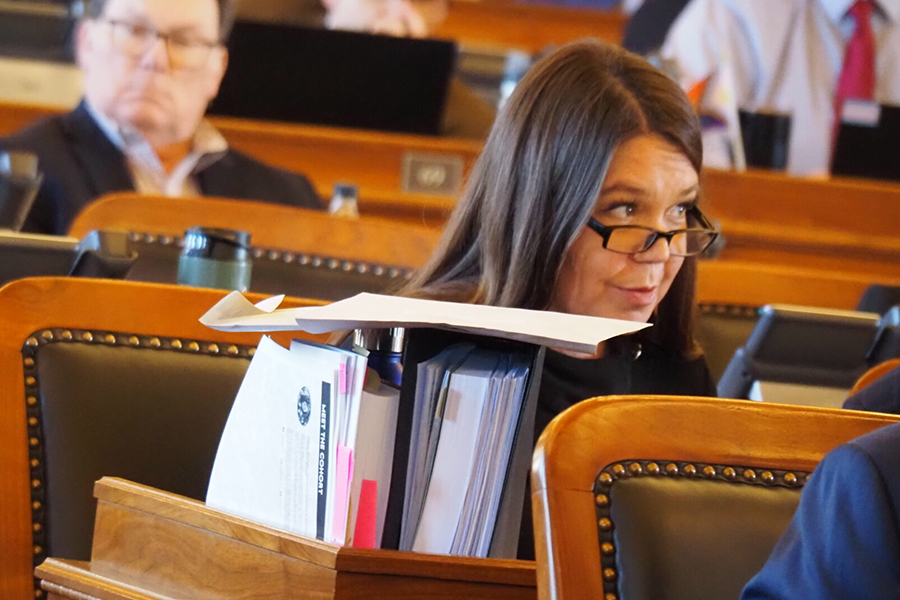
Before Trabert could sit down at the Capitol after testifying Monday on tax reform issues to House and Senate members, a trio of Democrats came to Cheatham’s defense.
Rep. Stephanie Sawyer Clayton, an Overland Park Democrat, said Trabert was out of line for denouncing locally elected officials dedicated to serving interests of their communities.
“Those local officials, just like us, stand and face the people for their own reelections,” Sawyer Clayton said. “I do think it is important that we pay them the proper respect. They run for office, just the same as we do, and they are accoutable to the people, just the same as we are.”
Trabert didn’t roll back his commentary on the honesty of local politicians, but affirmed the best way to control lies of government officials was to bind them to new limits woven into the Kansas Constitution. A constitutional amendment on property taxation would be placed on statewide ballots if two-thirds majorities of the House and Senate voted to take that step.
“You could force them to be honest,” said Trabert. “One of the biggest frustrations that taxpayers all across the state (have) is that local officials, not all certainly but a lot of them, refuse to be honest.”
Sawyer Clayton said Cheatham resided in her Kansas House district. She reminded Trabert that city council members were accountable to their constituents, rather than think tank staff at Kansas Policy Institute based in Wichita.
“I’m not going to stand for that kind of talk in regards to her. She is not a liar. She’s doing her job,” Sawyer Clayton said.
‘Disagreement is not dishonesty’
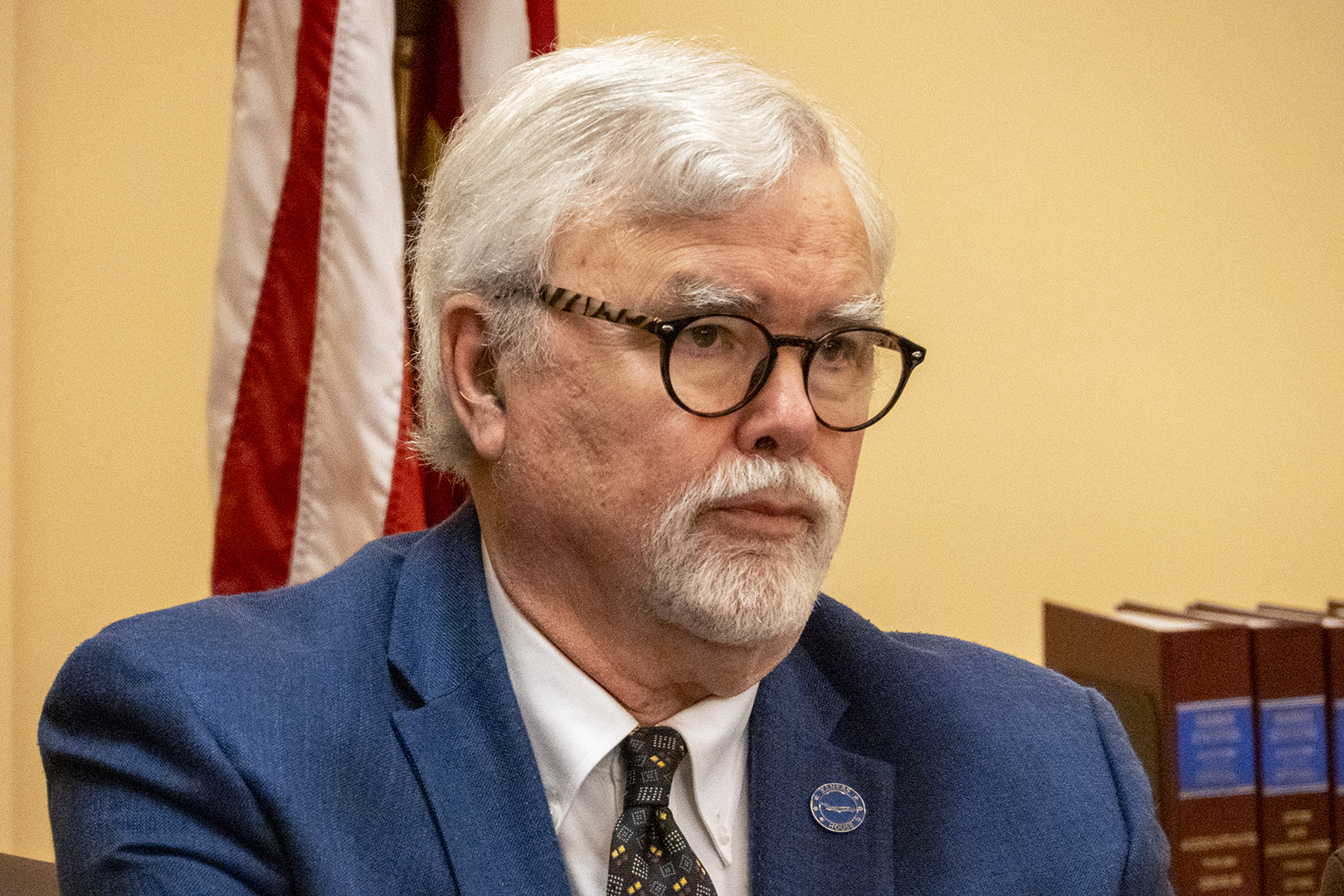
Rep. Jerry Stogsdill, D-Prairie Village, said he had worked with city council members for decades and believed they were motivated to serve in those unpaid government jobs out of sense of civil responsiblity.
“Disagreement is not dishonesty,” Stogsdill said. “I would highly disagree with your characterization of our city council and, I think, city councils across the majority of the state of Kansas. I personally think you own them an apology for that kind of characterization.”
Cheatham, an involuntary participant in Trabert’s presentation to tax committee members, said in an interview Trabert mischaracterized her comments made during an informal gathering with constituents. An individual drawing upon information provided by Kansas Policy Institute had raised concern about property taxes in Overland Park rising faster than growth in the city’s mill rate and expansion of the city’s population.
“We did have a good discussion, which I always appreciate,” Cheatham said.
She said her obligation was to represent interests of Ward 2, including delivery of services related to public safety, quality of life, infrastructure and other pressing matters.
“That really is my priority — to deliver services the people want,” Cheatham said.
In addition, she recalled saying during the constituent meeting that she wasn’t a fan of the 2021 Kansas law referred to as the “truth in taxation act” or the “revenue-neutral” law. It mandated taxing authorities within a county send a letter to constituents informing them of the current mill rate for property taxes, a revenue-neutral rate that would keep taxation at the same level as the prior year and the revised mill rate proposed by taxing entities.
If the objective of a local government taxing authority was to exceed the revenue-neutral level, a public hearing must be conducted and a public vote taken on the proposal.
Cheatham said she was disappointed that state law assumed funding tied to a city or county budget in the previous year would be sufficient in the upcoming year.
The golden shovels
During testimony to legislators Monday ahead of the special session called by Kelly, Trabert put an economic development spin on how government officials should perceive property and income taxation. On Tuesday, the Legislature approved a bill negotiated by GOP legislative leaders and the governor to reduce state taxes by $2 billion over the next five years. The deal followed intense clashes among legislators on tax policy and a series of vetoes by Kelly of tax bills.
After dust cleared in the House and Senate, the governor said she appreciated the Legislature’s quick work to pass the tax relief plan.
“Although this package is not perfect and emphasizes income tax reductions instead of property tax relief, it does provide significant relief while preserving our ability to continue fully funding our public schools, roads and bridges, and state water plan. I will sign this bill upon receiving it,” Kelly said.
In Trabert’s opinion, the bipartisan bill failed to move the needle on property tax relief and should have more signficantly trimmed the income tax burden. He told lawmakers Kansas was in the fifth consecutive decade of economic stagnation and was “falling farther behind national average increases in job growth, population and economic activity in terms of gross domestic product.
“High taxes and subsidies for a few businesses have proven ineffective at breaking economic stagnation and continuing down the same path will dig a deeper hole,” Trabert said.
Sen. Tom Holland, D-Baldwin City, noted the Kelly administration recently received Area Development magazine’s Gold Shovel Award for the fourth year in a row. The award was based on a state’s success in attracting business investment and increasing job opportunities.
“Isn’t that a good sign that we’re doing something good with economic development?” Holland asked Trabert.
“Awards like that, senator, are about as valuable as a high school diploma when you have 46% of high school kids below grade level in math and somehow they’re getting a high school diploma,” Trabert said. “It’s worthwhile with some people but not others.”
Since the start of 2019, when Kelly took office as governor, Kansas has created 1,180 economic development projects with private-sector investment of $19 billion. Those projects either created or retained 67,000 jobs statewide. In 2023, the Kelly administration said there were 255 projects totaling $3.1 billion in private investment associated with nearly 12,000 jobs.