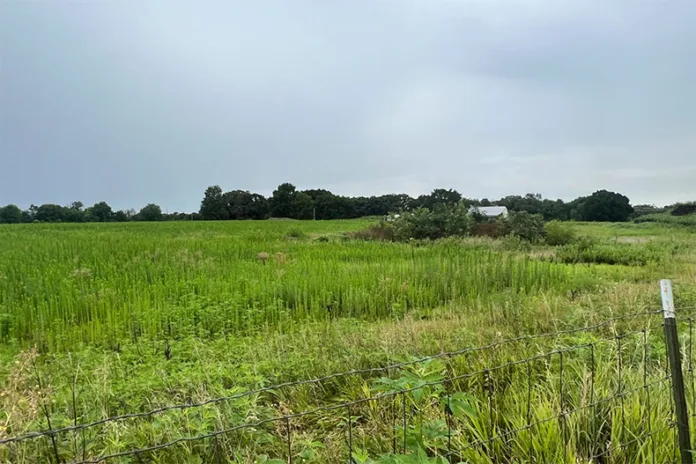
A developer is moving forward with plans for a large senior housing project just south of downtown Gardner, but without dozens of assisted living units that some officials say the city lacks.
Gardner established the Grand Street Reinvestment Housing Incentive District two years ago, intending to address a shortage of quality housing identified by the city and a countywide housing study.
Located on 44 acres between the BNSF railroad and Grand Street, just west of Moonlight Road (in an area locals sometimes call “The Donut Hole”), the original plans proposed by Gardner-based Grand Street Development LLC included hundreds of dwelling units dedicated for older adults, including 90 assisted living apartments.
The new plan, as approved by the Gardner City Council on July 21, nixes the assisted living units, replacing them with 42 senior living townhomes.
Overall, the project proposes to bring online nearly 450 new housing units, including 76 single-family homes that are separate from the senior housing component.
How the housing incentive district works
A Reinvestment Housing Incentive District captures incremental increases in property taxes from housing projects like the one proposed in Gardner. The revenue raised by those increased taxes is then used to reimburse developers for some project costs.
The district will reimburse the developer for private internal infrastructure improvements through a pay-as-you-go finance model, according to city documents.
Under the terms of the development agreement and incentive district, Grand Street Development could be reimbursed an estimated $6.6 million of the nearly $12.7 million in total project costs, according to city documents.
Thirteen years remain on the original 16-year term agreement, and even with the project changes, the base year assessed valuation remains at $8,409, the city says.

What’s in the proposal
In the proposal to the city council, project representatives said the proposed amendment to the project was a direct response to “changes in market demand,” according to a city memo.
The 44-acre project now includes:
- 87 senior villas on the western half,
- 110 senior townhomes on the eastern half,
- 132 independent senior living apartments in the northeastern corner,
- and 42 senior townhomes in the southeastern corner.
The Grand Street project also includes more than 75 estate-style single-family homes that are not part of the special incentive district.
Necessary public infrastructures such as building of public streets, storm sewer lines and streetlights are included in the project.
Outside of the senior living portion of the project, the housing incentive district also includes 27 acres already being developed for a separate residential plan.
Additionally, about $3 million in amenities for the senior housing side include a clubhouse with golf simulator, a pool, two pickleball courts, shuffleboard, a dog park, a putting green, walking trails and picnic shelters around the 7-acre lake.
“This is why the RHID is so important, because without that, there is no way we could put those amenities in,” Rock said.
“Gardner wasn’t ready for a project like this”
In May 2023, Gardner city leaders determined that the city faces a shortage of quality senior housing, which is deterring future economic growth and development in the city, according to city documents.
Still, developer Mike Rock with Grand Street Development told the city council on July 21 that a lack of demand for assisted living in Gardner — based his meetings with 10 different retirement and assisted living companies — prompted the proposed changes to the project.
“They all came back with the same answer: that Gardner wasn’t ready for a project like this,” Rock said, adding that some companies also raised concerns about challenges staffing a new facility with enough qualified personnel.
“The last three years it has been the same answer that Gardner is just not big enough yet. I found that hard to believe,” he said.
The city council ultimately approved the newly amended plan but not without two councilmembers voicing their reservations.
Councilmember Steve Shute countered Rock’s point, repeatedly stating that assisted living housing was a critical need for Gardner’s aging population. (The city currently has two options for assisted living, including Vintage Park and Villa Heights Living.)
“I understand the market realities, but I was hoping the city would still have seen a new assisted living facility,” Shute said.
Councilmember Steve McNeer added that he had concerns about rising housing costs forcing longtime older residents on fixed incomes to leave Gardner.
“If we have any compassion at all, we need to start looking at the lifestyles of the way we are affecting seniors instead of just tossing them out on the street simply because they don’t make enough money,” McNeer said.
Councilmember Mark Baldwin pushed back, saying the new housing project would merely add to the city’s population, not displace current residents.
“I think everybody still wants senior living in that spot,” Baldwin said. “Is this ideal compared to what we originally passed? No, but it is better than nothing.”
Rock said the highest interest for the development remained with the senior townhomes, which will be sold starting at $400,000. He added the single-family estate homes will start at $600,000 and could go up to a million.
“Which is a price point Gardner has never really seen,” Rock said.
McNeer said that when the assisted living companies state Gardner isn’t ready for “these types of facilities” they are actually saying Gardner is not ready to pay the price point because they want to attract the “high-end customer.”
“What I am seeing out of this is a reluctance on the part of the assisted living organizations to come in here at the price point that our citizens of Gardner can do,” McNeer said.
What’s next?
The Gardner Planning Commission this past Monday Monday voted 5-0 to approve a rezoning a portion of the project area where the plan replaces assisted living units with additional townhomes.
City staff said the development agreement will come back in August for final approval.
The planning commission will also consider a final development plan for the project at a meeting in the near future.
The developer is planning to start construction this year. The project’s timeline forecasts the development will be completely finished by 2030.