Editor’s note: This story was updated Aug. 11 at 10:03 a.m. to correct an error. Abortions are up 200% from 2020, not last year.
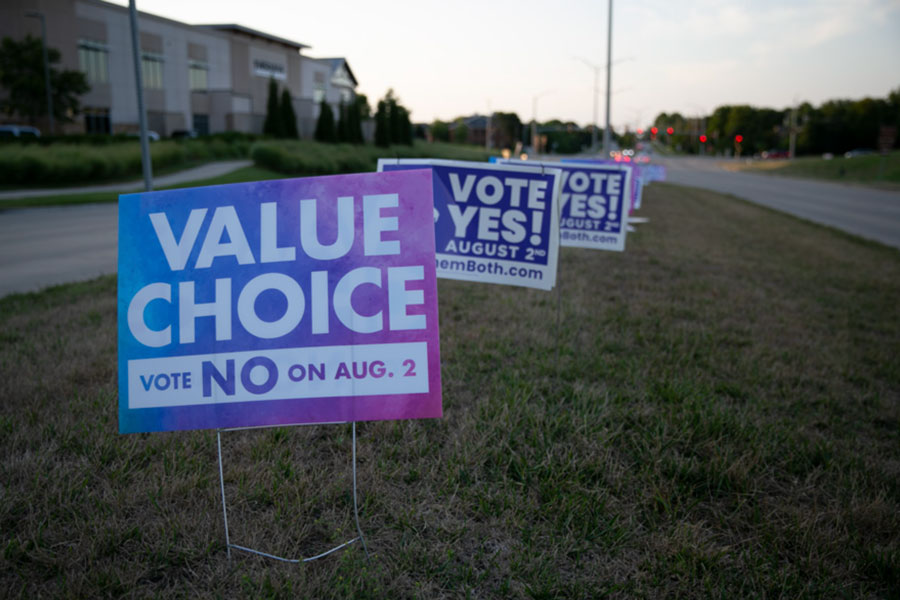
Things have changed in the three years since Kansans voted to preserve the right to abortion in the state constitution, say local abortion rights advocates.
The changes can be measured by the number of abortions Kansas providers performed. According to statistics presented at a Planned Parenthood Great Plains panel Tuesday, about 7,500 abortions were done in the state in 2020. Last year, that number was 22,000, an increase of over 200% from 2020, with many women driving hours from states where abortion is banned.
Iman Alsaden, a doctor at Planned Parenthood Great Plains and one of the panelists, described pregnant patients going to extreme lengths to get to Planned Parenthood, some of them leaving hometowns at 9 p.m. and driving overnight for 12 hours to make their appointments in Kansas. “That’s something that happens probably every week at least, if not every day,” Alsaden said.
But while Kansas’ vote to preserve abortion rights provided a sense of relief to women in surrounding states with restricted access or outright bans, fear still causes some to avoid seeking care that they need for birth control and other services besides abortion, said Sharla Smith, a birth equity researcher and another panelist.
Even before the Dobbs v. Jackson Women’s Health Organization ruling that overturned Roe v. Wade, women afraid of losing access to birth control had rushed to get long-acting contraceptives, she said.
They were also afraid of dying of pregnancy-related complications, she said, noting that Kansas has a Black maternal mortality rate higher than the rest of the country.
“A lot of people were already afraid to get pregnant and have a child, which is the best joy in the world, before this decision came down,” Smith said. Although some found comfort in the vote to preserve abortion rights, “the fear never changed. People are still afraid to access these services because of that fear.”
The fear persists because of confusion over various state laws and misinformation, Alsaden said. It’s common for emergency rooms to be reluctant to take patients who need pregnancy care because of fear of running afoul of state laws, she said.
“We are seeing more misinformation and people not treating patients appropriately because of fear and obviously patients are afraid to go get that care,” she said.
At the same time, anti-abortion activists have been eyeing Kansas’ increased rates with alarm.
“Anyone who says this is what Kansans voted for is a liar and on the wrong side of history,” Kansans for Life spokesperson Danielle Underwood wrote several months ago on the anti-abortion group’s website. “The surge of abortions in Kansas is a heartbreaking reminder of the abortion industry’s relentless targeting of vulnerable women,” she said, while decrying what she viewed as a lack of enforceable informed consent laws and facility inspections.
Although voters made the decision three years ago to keep abortion rights, panelists warned that state and federal lawmakers are still trying to limit access and there are still plenty of battles to be fought. Attorney Katie Baylie, another panelist, said Kansas is one of 30 states that exclude pregnancy from advance directives, meaning hospitals don’t have to follow a patient’s wishes for life-saving measures if she is pregnant.
That legal angle came into play in Georgia recently, when Adriana Smith, a pregnant brain-dead woman, was kept on life support for four months to allow the fetus to continue growing, despite her family’s wishes. Smith’s baby boy was born in June.
Meanwhile Kansas lawmakers continue to write new bills affecting reproductive care, Baylie said. “The ultimate goal is to ban abortion. They are going to chip away at access until they are able to do it.”
Baylie said to expect more proposed restrictions on medication abortions and more money targeted to crisis pregnancy centers that try to steer people away from abortion.
Kansans also will be voting in 2026 on a constitutional change that would appoint judges by partisan election, rather than the nominating commissions and judicial retention votes now in practice.
U.S. Rep. Sharice Davids spoke at the end of the panel discussion. “I don’t think any of us thought we’d be here in 2025,” she said. “It’s really wild to think that three years ago we saw Kansas make history in this way.”
The federal budget bill recently adopted adds to the danger because its cuts to Medicaid have the potential to shut down rural hospitals, she said. “When a rural hospital shuts down, it doesn’t matter if you are on Medicaid or not on Medicaid. You have lost your hospital.”
Meanwhile Planned Parenthood continues to be attacked, with 200 clinics across the country in danger of or in the process of shuttering, Davids said. She vowed to push back.
“Politicians should not be involved in decisions that should be between a woman and her doctor or a family. At the federal level, I will continue to fight for everyone’s ability to make their choices.”