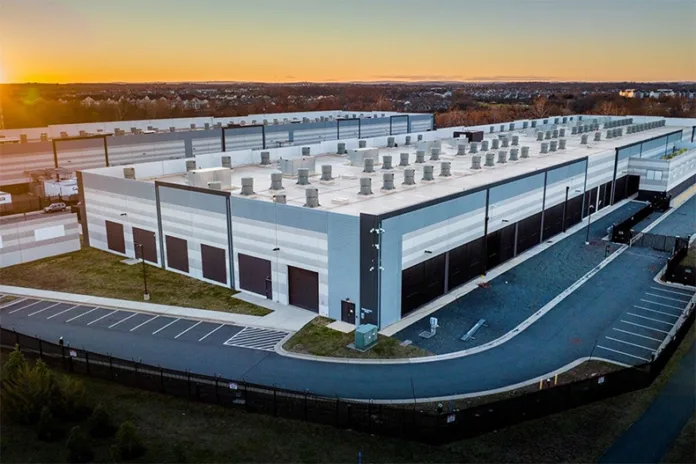
A new $3.1 billion large-scale data center campus will be built near the new Panasonic electric vehicle battery plant in De Soto starting next year.
On Thursday, the De Soto City Council approved the proposed 290-acre development backed by industrial revenue bonds, with little opposition voiced from the public.
Data centers house computer servers and networking equipment and provide the infrastructure for storage and processing of large amounts data.
Although the entity (or entities) that will ultimately use the data center is publicly unknown at this time, city documents name-checked several prominent tech giants that use such facilities, including Google, Meta (which owns Facebook), Amazon and Microsoft. Meta also just opened a $1 billion data center in Kansas City, Missouri.
Korb Maxwell, an attorney for Kansas City-based Polsinelli, which is representing the project’s developer, said on Thursday that the companies that will end up using the data center “are very common names that everyone in this room would know.”
“Those companies are the strongest, most financially profitable companies in the world out there,” Maxwell said.
Project backed by up to $50 billion in industrial revenue bonds
The De Soto City Council also approved up to $50 billion in industrial revenue bonds for the project, which is led by developer Mount Sunflower Properties LLC, managed by California-based Beale Infrastructure.
Whitney Lange, the city’s communications director, told the Post via email prior to the meeting that the eye-popping $50 billion figure is the ceiling on the total private investment that could qualify for incentives, such as temporary property tax abatements and sales tax exemptions on construction materials. Lange added that that figure does not constitute a guaranteed amount that will be spent or a total project cost.
Nancy Mays, a local consultant providing communications assistance for the city, further clarified in an email to the Post that the $50 billion in bonds would allow sales tax exemptions to cover computer servers as well as replacement of the servers, which take place every two to three years.
“It is designed to cover any fluctuations, due to tariffs, or anything else that may impact the economy,” Mays added.
City Administrator Mike Brungardt said during Thursday’s meeting that the $50 billion in bonds is the maximum amount of private investment over 10 years. No public funds from the city are dedicated to the project.
“We are not considering $50 billion of incentives for this project,” Brungardt said. “This is potentially a $50 billion investment in our community, and we are considering much smaller, specific incentives to incentivize that investment over time.”
Sales tax exemptions for data center equipment are permissible under Kansas Senate Bill 98.
Project details
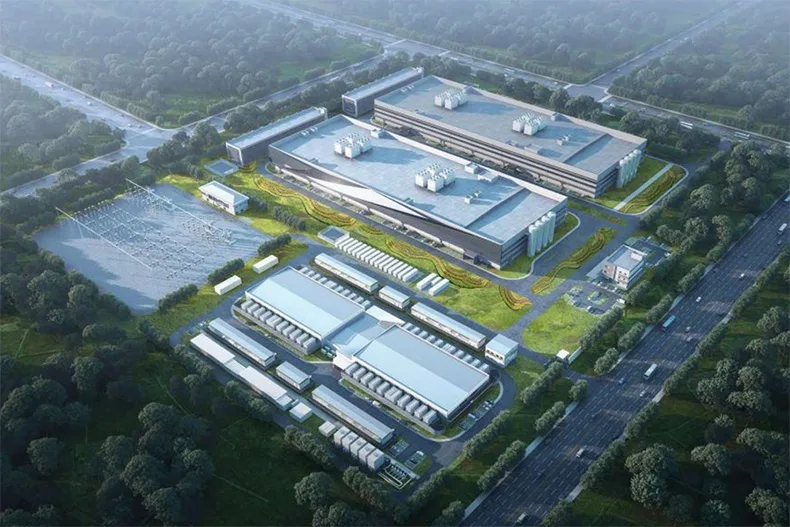
Located at the northwest corner of 103rd Street and Edgerton Road, the four-phase project known as “Project Pilot” will take seven to nine years for “full build-out”, officials said, with the first building in the southwest corner of the site completed by 2027.
The four buildings of the project will each be 285,000 square feet for a total of 1.14 million square feet.
Development agreement incentives include:
- a 25% franchise fee reduction rate for power use
- $1.5 million franchise fee collected for Phase 1/Building 1 (based on power usage)
- $5.5 million franchise fees cap with 1.5% annual increases to the city of De Soto annually after complete construction
- Sales tax exemption on construction materials
- Developer pays sales tax on energy usage
- Each building is eligible for a 10-year property tax abatement
City Attorney Patrick Leavy emphasized that industrial revenue bonds are not the city’s money, but “the vehicle” by which Kansas cities and counties can issue tax abatements and sales tax exemptions.
“The city’s finances or revenue are not in play here,” Leavy said. “All the money associated with the project is being paid for by the developer.”
As part of the project plans, the data center takes over the adjacent remaining one million square foot property on the land formerly known as the Flint Commerce Center and receives a property tax exemption similar to the city’s 2002 tax abatement “payment in lieu of taxes” with the Flint Commerce Center.
Brungardt said the Flint Commerce Center agreement was approximately 23 cents per square foot of building and the data center agreement will range from 40.5 to 44.95 cents per square foot of building. The city also noted that De Soto Unified School District 232’s 8 mills capital mill levy is protected from abatements.
“We think it will not only be a transformational investment in our community, but transformational revenues to our city,” Brungardt said. “It lowers the neighborhood impacts associated with the development of the remaining Flint Commerce Center.”
The site for the data center campus is already zoned for industrial use, but officials said it is not expected to create some of the heavy truck traffic typical of industrial uses like warehouses. Located near Kansas Highway 10, the campus will also be tucked away from major residential neighborhoods.
Center will use millions of gallons of water per day
Some of the discussion at Thursday’s city council meeting also centered around the data center campus’ projected water usage. The “Project Pilot” data center will rely on the nearby Kansas River for its main source of water.
Large data centers like this proposed project use millions of gallons of water per day for operations and to cool their facilities, equivalent to a town of 10,000 to 50,000, according to the Environmental and Energy Study Institute. (De Soto’s current population is a little mover than 6,000, according to the 2020 U.S. Census.)
The “Project Pilot” data center campus needs to collect water from the Kansas River, treat it, then cycle it through its systems for operations and cooling, and then treat the resulting wastewater as it exits the campus, in order to prevent corrosion of equipment and harm to public water systems.
Brungardt said the “significant” amount of treated water will require a new industrial wastewater treatment facility to serve the campus, and the water infrastructure improvement costs will be borne directly by the developer. The city of De Soto plans to work in close coordination with Rural Water District #7.
“No city funding will be used to implement [water infrastructure improvements],” Brungardt said. “And when done, they (infrastructure improvements) will provide additional resiliency, redundancy and reliability to the city system.”
Brungardt said De Soto’s current water rights through the Kansas River Water Assurance are now allowed to expand from 2.5 to 3 million gallons of water to 6.5 to 8 million gallons of water a day.
A few people spoke during the public hearing about their concerns in regard to how the data center would affect their personal water availability, quality and rates, along with possible ecological impacts on the Kansas River.
“The river is not as mighty as it was at one time around here,” said Terri Wilke of Lawrence.
Another Lawrence resident, Pam Houston, said data centers are well known for destroying neighboring water tables, and she had read that the water usage was equivalent to a small town.
“Is De Soto all of a sudden going to be using twice as much water daily?” Houston asked.
Brungardt said the volumes of water being used for the data center project will put downward pressure on water rates and not increase residents’ water bills. The city noted, however, an analysis on how water rates would be affected hadn’t been conducted at this time.
“The expectation is that rather than the worry that this might increase your water bill, I think the opposite is true,” Brungardt said.
Who will use the data center?
Building the project is Mount Sunflower Properties LLC, which is managed by California-based Beale Infrastructure. The project is represented locally by Kansas City-based Polsinelli Law Firm.
Sunflower Redevelopment, LLC purchased the 9,000-acre former Sunflower Ammunitions Plant now known as Astra Enterprise Park in 2005 and has been working in partnership with the U.S. Army’s Restoration Advisory Board to clean up the former plant site.
Maxwell, the attorney representing the developer, projected that over 100 long-term jobs paying six figures and hundreds of temporary construction jobs for the data center will not only be a “significant” tax revenue generator but attract other high-end businesses to the area.
“This project is critical,” Maxwell said. “We think it fits great at the site, and we think we are going to be an unbelievable community partner to De Soto over the very long-term.”
Lauren Harvey, Beale Infrastructure Director of Development, said “Project Pilot” represents a multi-billion-dollar investment in the city of De Soto that supports technology services that power banking, health care, education and emergency systems.
Harvey said Ad Astra Park was intentionally selected as the data center site due its distance from residential communities, compatibility with higher volume manufacturing and industrial facilities in the area, limited demand on municipal services and proximity to resources needed for operations.
“It positions De Soto as a forward-thinking community supporting America’s infrastructure and digital economy needs,” Harvey said.