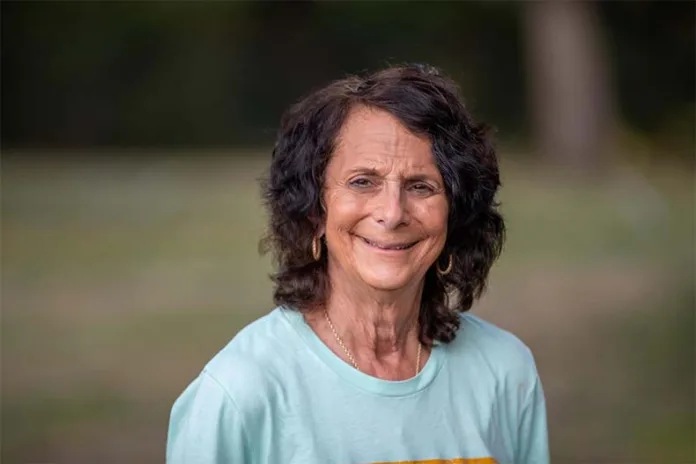
Editor’s Note: This story is part of our series “Helping Hands”, which aims to spotlight Johnson Countians doing good in the background of their community. If you have an idea for someone to spotlight in a future “Helping Hands” story, email us at [email protected].
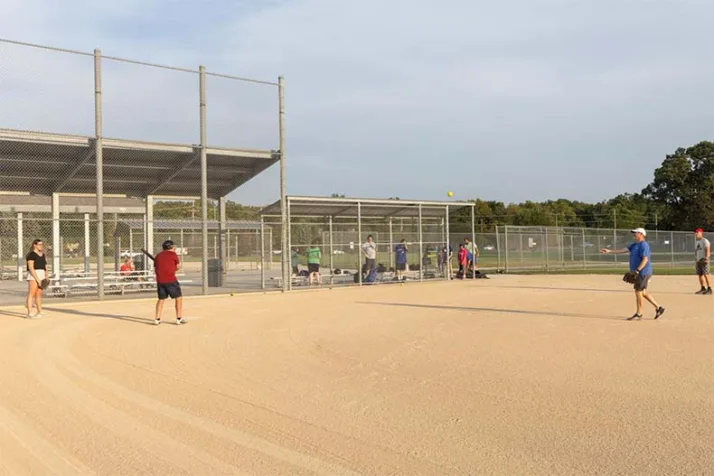
In a typical week, Nan Kanter spends 10 to 15 hours of her time cheering athletes on — whether they’re swinging the bat in a softball game or picking up new steps at a dance class.
It’s enough to create a full-time job — and once upon a time, it was one. Through her position with the Blue Valley Recreation Commission, Kanter helped launch and oversee the Blue Valley Special Olympics program.
More than three decades later, that effort has grown into a program (now called the Blue Valley Blue Streaks) with more than 100 athletes. And though she is now retired from her full-time position, Kanter continues to spend time lending a hand with the program whenever she can.
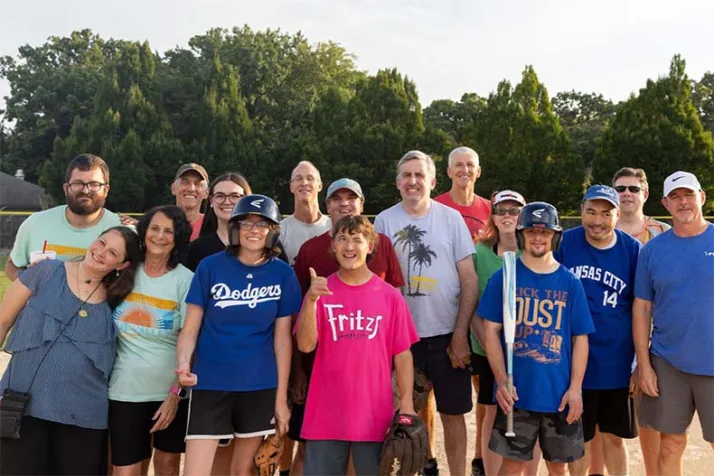
The program offers multiple sports and activities
When the Blue Valley Special Olympics program first got off the ground in the late 1980s, Kanter said it started out with roughly 10 athletes and a focus on basketball.
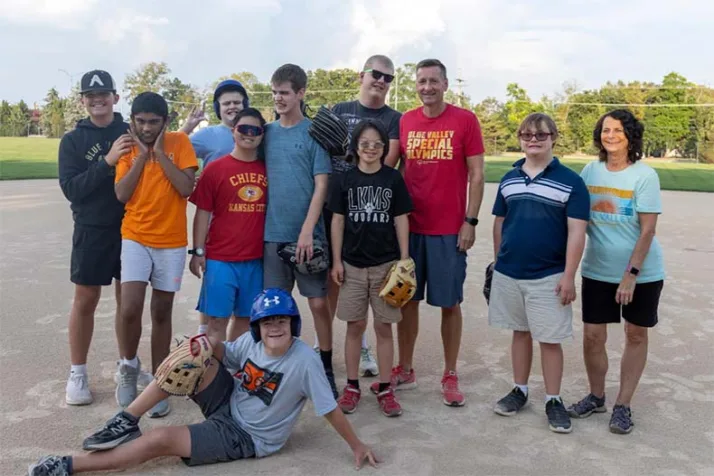
Today, roughly 160 athletes participate in at least one sport in the program, and its teams compete at local, state and regional events throughout the year. It’s a wide range of ages, with some participants as young as 8 years old and some in their 60s.
Kanter’s work with the Special Olympics program started out as voluntary, and it eventually evolved into a paid position overseeing the program’s activities.
Following the launch of the competitive side of the program, Kanter later launched a social component (now called Inclusive Rec) that involves social activities like movie nights, bingo nights, dance classes and walking clubs.
“It’s a wonderful opportunity for anybody,” Kanter said. “I have some (participants) in our group that are still in our group that started from the very beginning, which is amazing.”
The program’s mission is personal for Kanter
Kanter and her family have lived in the Blue Valley School District for roughly four decades.
At the time of the Blue Valley Special Olympics’ inception, she’d been looking for a way for her son, who has a disability, to get more involved in the Blue Valley community.
Unable to find many extracurricular activities for people with disabilities, she set out to create a new option.
“I had talked to some people in Olathe who had already started their Special Olympics program, so I thought that might be a really good start,” she said. “Not just for my son, but I knew there were a lot of other people in the community who were looking for some activities for their children with special needs.”
Today her son, Michael Kanter, now 49, is still an active participant in the Blue Valley Blue Streaks. He’s one of many athletes who Kanter said has thrived in the new community he found there.
“My son goes to movies with lots of friends that he’s made through Special Olympics, and I know there’s a lot of others that do that as well,” she said. “I think that it goes back to the very basic (idea) that being involved in something, it makes them feel important.”
While the benefits of community are apparent for the athletes and participants, Kanter said there’s also a strong connection factor for the parents (like herself) navigating the ups and downs of their position.
“I think it’s sometimes very difficult for parents to accept the fact that their child has some special needs, and they’re limited in resources around the area,” Kanter said. “They’re out there trying to find someone else in the same situation.”
Passing the torch
Kanter retired from her full-time Blue Valley Rec administrative role in 2022, after nearly 35 years.
Roman Pearson, who now holds that role, already had experience as a basketball coach and a paraprofessional in the Blue Valley school district. So he wasn’t new to the world of athletics, or the population that Special Olympics serves.
And yet, he said, it quickly became clear that he had a lot to learn from Kanter. Even after she stepped away from the role, he said she’s helped him navigate the different needs that each athlete can have.
“She kind of took me under her wing and kind of showed me the ropes on how to run a program like this,” he said.
Being a participant in Special Olympics has the potential to give its athletes a new community, but Pearson said it also can teach them to be more active and lead healthier lifestyles. Imparting that lesson, he said, has been one of Kanter’s biggest impacts.
“She loves Special Olympics, and she loves the aspect of helping those with special needs live a healthy lifestyle so they can live a longer life,” he said. “I think our participants have really responded well to that as well.”
Kevin Higginbotham, a parent of a Blue Valley Blue Streaks athlete, said his own child is one of the people who have benefited from Kanter’s efforts.
He and his son, Ryan Higginbotham, have been involved with the program for more than 25 years. In that time, he said, it’s become a bright spot in Ryan’s week.
“Socially, it’s been just fantastic,” Kevin said. “Those kids or young adults, they gravitate toward (Kanter), the coaches and the other kids. I think they look forward to seeing their friends.”
Ultimately, he said, that’s thanks to the culmination of Kanter’s work shaping the Blue Valley Blue Streaks community into what it is today.
“It’s hard to find people (that are) dedicated, but she is a tireless worker,” he said. “She goes out of her way to make everybody in the program feel wanted or needed.”
Kanter said she hopes that if participants and parents learn anything from the Blue Valley Blue Streaks, it’s to shed their preconceived notions that an athlete can’t be someone with a disability.
“That’s so not true, because they have so many varying abilities,” she said. “They’re very capable of doing so many things. We never turn anybody away.”
More Helping Hands: She grows veggies and students alike at a Shawnee school