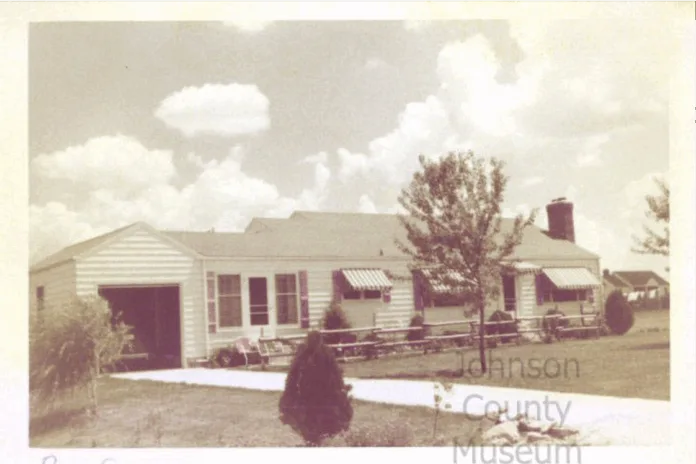
By the Johnson County Museum
Building the suburbs brought many changes to Johnson County’s landscape. Homes, shopping centers, and roads all required changes in the natural topography, vegetation, and streamways. Creeks were straightened or buried in concrete, lawns replaced native plants, and heavy machinery reworked hills and valleys. These changes had lasting effects on the county’s streamways. Read on to learn what happened to our streamways – and what you can do today to help protect them.

Building the suburbs
After World War II, federal programs like the Federal Housing Administration (FHA) and Veterans Administration made homeownership more affordable, fueling suburban growth across the nation. In Johnson County, this era marked a dramatic shift from a rural, agricultural landscape to bustling neighborhoods and commercial developments designed to accommodate a rapidly growing population.

In the 1940s and ’50s, developers utilized new machinery to extensively reshape the land. They flattened hills, filled valleys, and redirected creeks with concrete. Forests were cleared, plains were leveled, and construction surged; often encroaching upon wetlands, hills, and flood-prone areas. This rapid development changed the county’s water systems in ways we still experience today.
- Creek channels straightened and concreted – reduced local flooding but pushed flood risk downstream into Kansas City, Mo.
- Streamways buried underground – destroyed natural habitats for aquatic and plant life.
- Soil compacted and stripped of vegetation by bulldozers – caused erosion and increased sediment in creeks and storm sewers.
- Lawns replaced native vegetation – shedding more runoff, carrying fertilizers, pesticides, and herbicides into waterways.
- Hot runoff from pavement and lawns – sometimes 10 degrees warmer than streams, harming aquatic life.
- Faster, more forceful flows – scoured stream banks, deposited debris, and degraded habitats for fish and insects.
The cost of a perfect lawn

The lush, green lawn – long a symbol of the American Dream – comes with hidden environmental costs.

- Chemicals and care: Lawns often require fertilizers, herbicides, pesticides, and constant upkeep. Many grasses aren’t suited to Kansas’ climate, leading to soil erosion and vulnerability during droughts. HOAs often enforce lawn standards, further encouraging unsustainable practices.
- Runoff and pollution: Lawns behave more like concrete than sponges, sending runoff with fertilizer and chemicals into creeks. This pollution fuels harmful algal blooms, depletes oxygen in water, and endangers aquatic life. Even grass clippings swept into storm drains add to the problem.
- Water consumption: Sprinkler systems can use 12–16 gallons per minute. On hot summer days, WaterOne’s daily usage jumps by 150 million gallons – mostly to keep lawns green. Overwatering also increases the risk of chemicals leaching into groundwater.
A healthier water future

The scale of suburban water challenges can feel overwhelming – but individuals can make a difference. Here are seven actions recommended by local water experts:
-

This rain barrel is on display in the museum’s special exhibit. Rain barrels come in all types of styles, colors, and designs. Learn more about Contain the Rain at: https://www.jocogov.org/department/public-works/stormwater-management/contain-the-rain. Plant native species – Deep-rooted plants prevent erosion, filter toxins, and withstand drought.
- Create a rain garden – Johnson County’s Contain the Rain program offers 50% reimbursement for adding native trees, flowers, and shrubs.
- Install a rain barrel – Collect runoff for reuse and get 50% reimbursement through Contain the Rain.
- Rethink your lawn – Swap some water-hungry Kentucky Blue Grass for native plants.
- Limit chemicals – Reduce fertilizers and pesticides and try alternatives to sidewalk salt in winter.
- Clear your gutters – Keep chemicals, lawn clippings, and debris out of storm drains.
- Protect the soil – Maintain groundcover in gardens, fields, or construction sites to reduce erosion.
Learn more – visit the special exhibit!
Want to learn more about what in the area? Visit the Johnson County Museum to explore the special exhibit, “Ripples: Water, Community, and You.” You can plan your visit at JCPRD.com/Ripples!
Thank you to our exhibit sponsors!
We’re grateful for the generous support of Black & Veatch, Burns & McDonnell, HDR, The Parks & Recreation Foundation of Johnson County, and TREKK Design Group. Their partnership helps us bring the vital story of water to life — for you, your family, and our entire community.