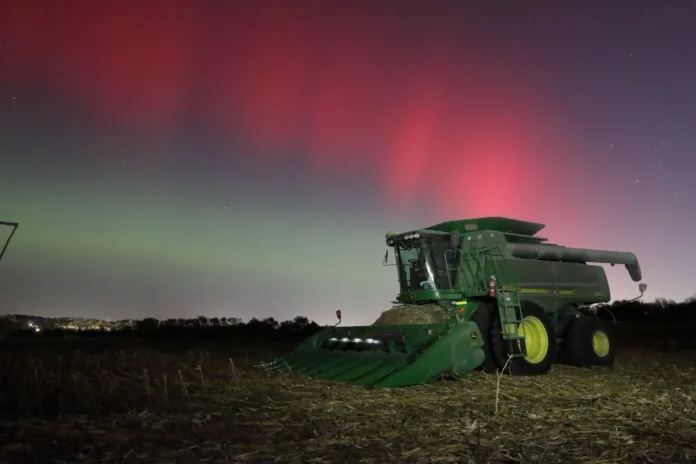
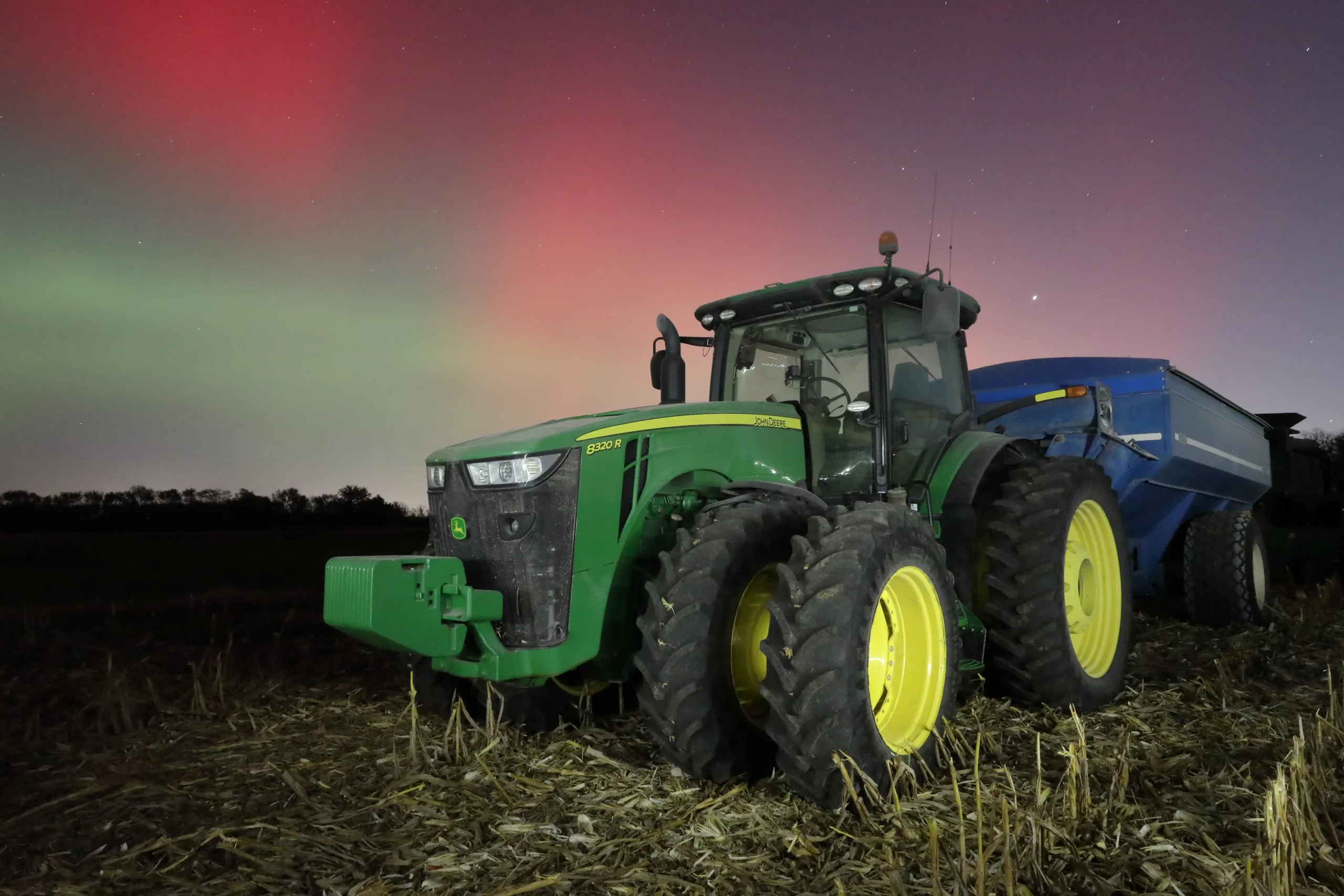
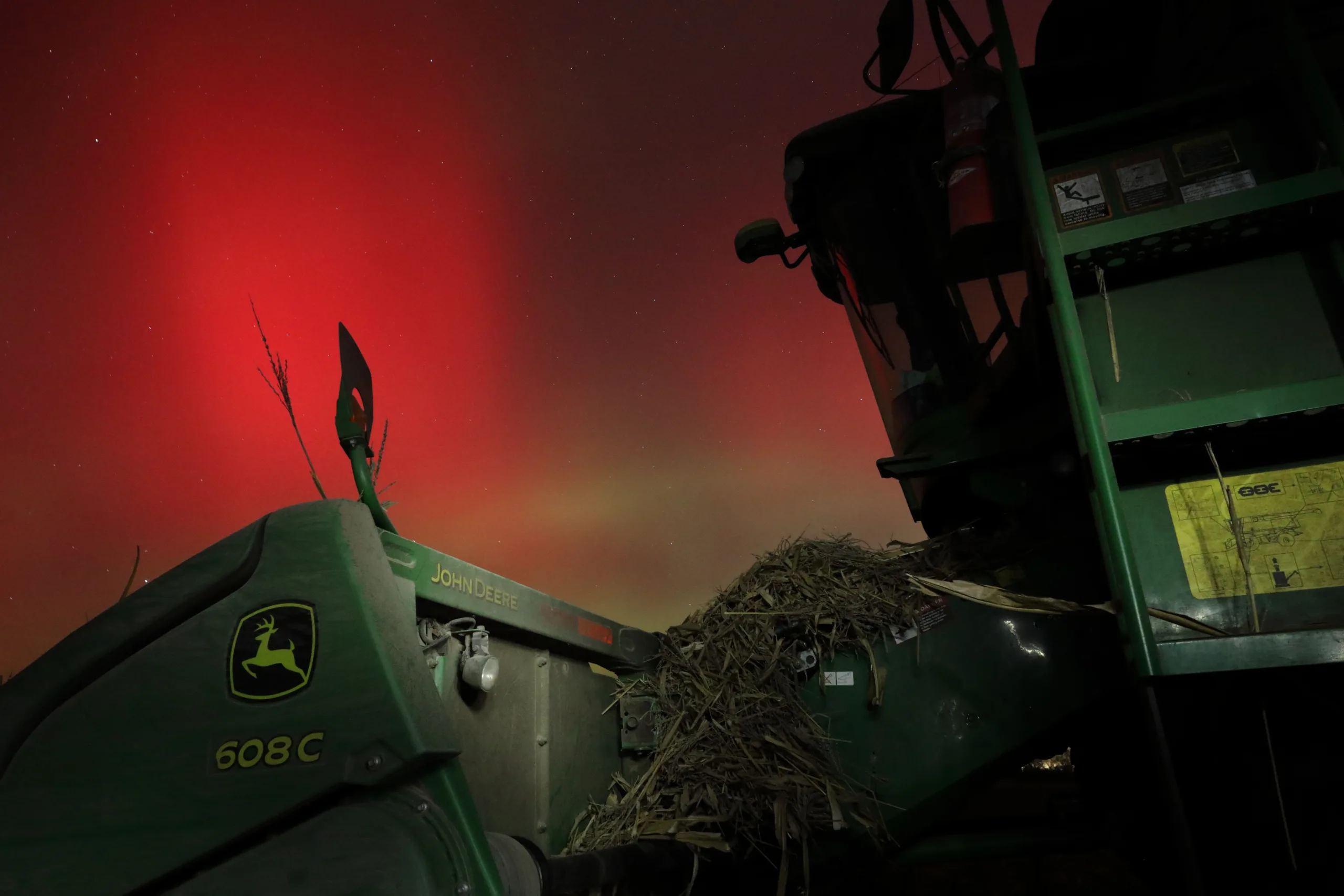
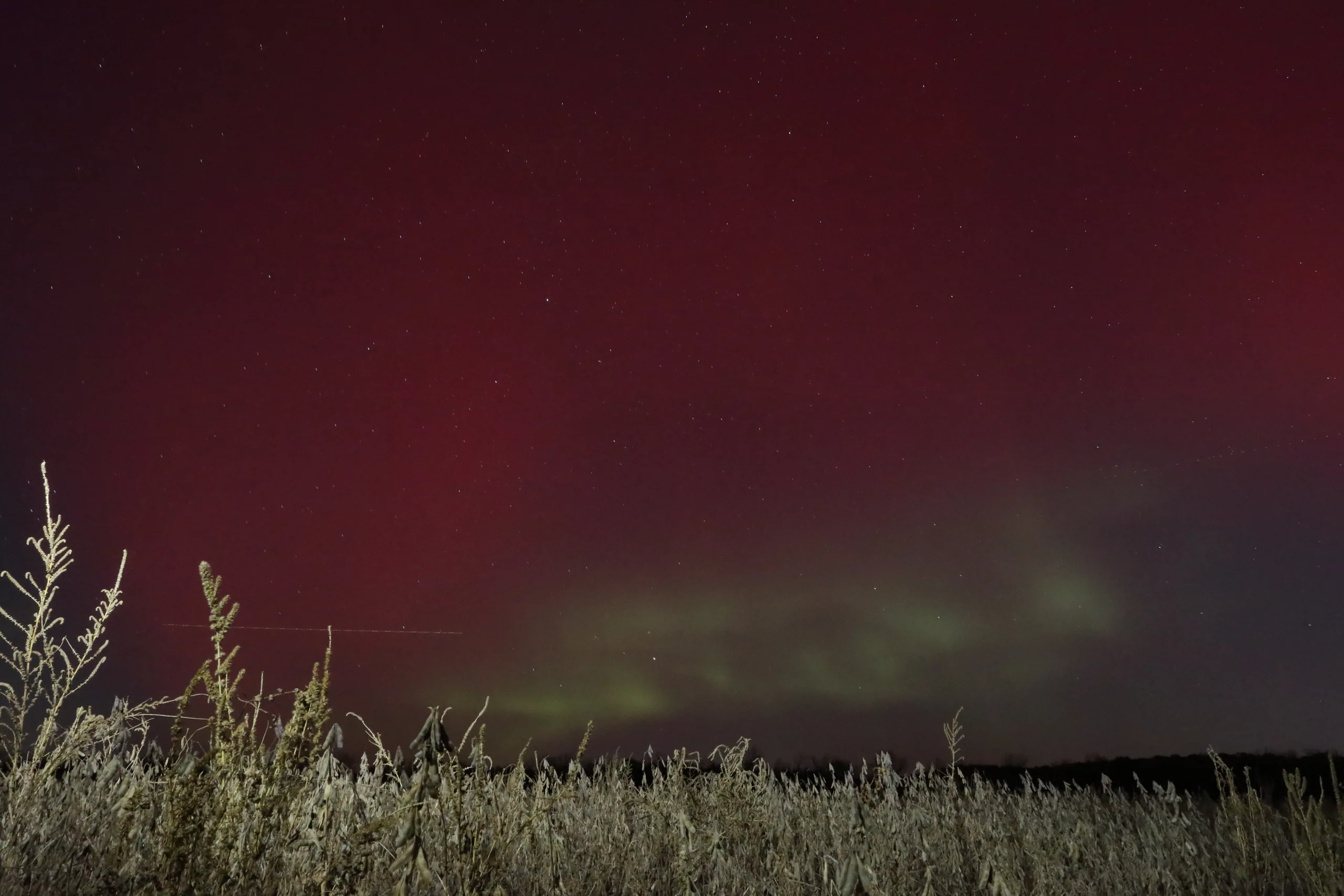
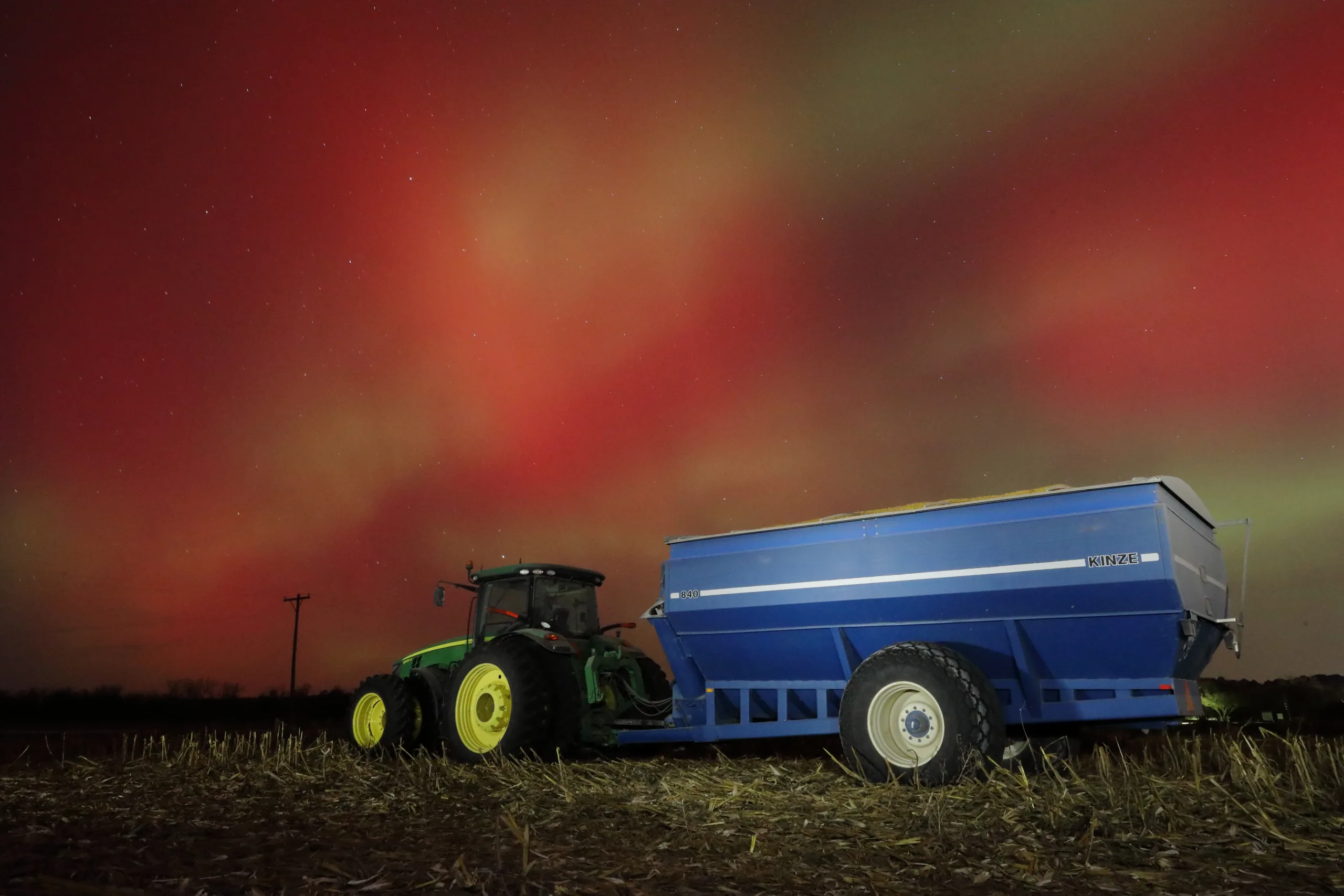
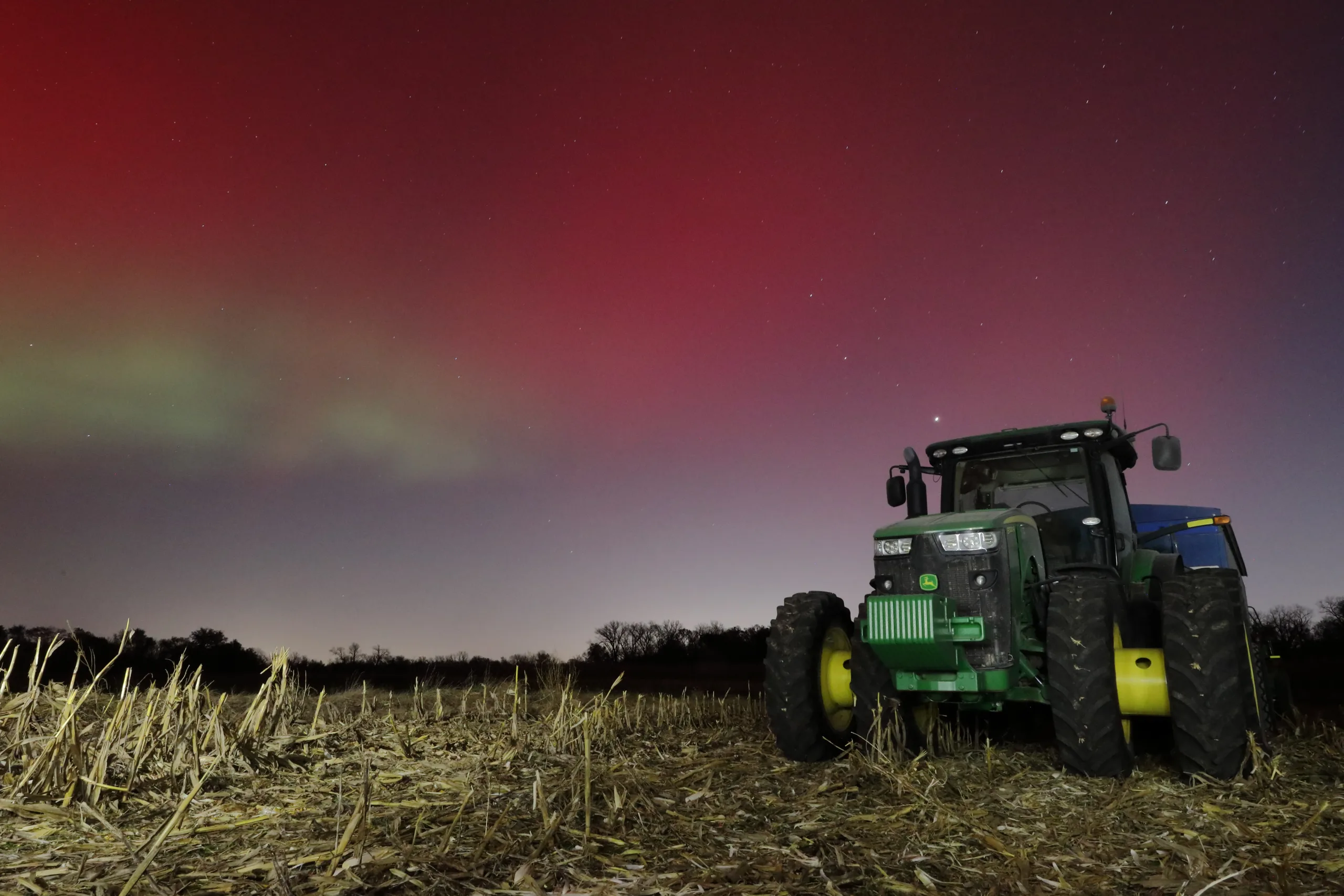
If you were up late Tuesday night in Johnson County and looked up at the sky, you may have seen something like what our freelance reporter and photographer Mike Frizzell witnessed.
He parked himself at a spot in De Soto near 79th Street and Gardner Road between 10:15-11:15 p.m. for a rare local appearance of the aurora borealis.
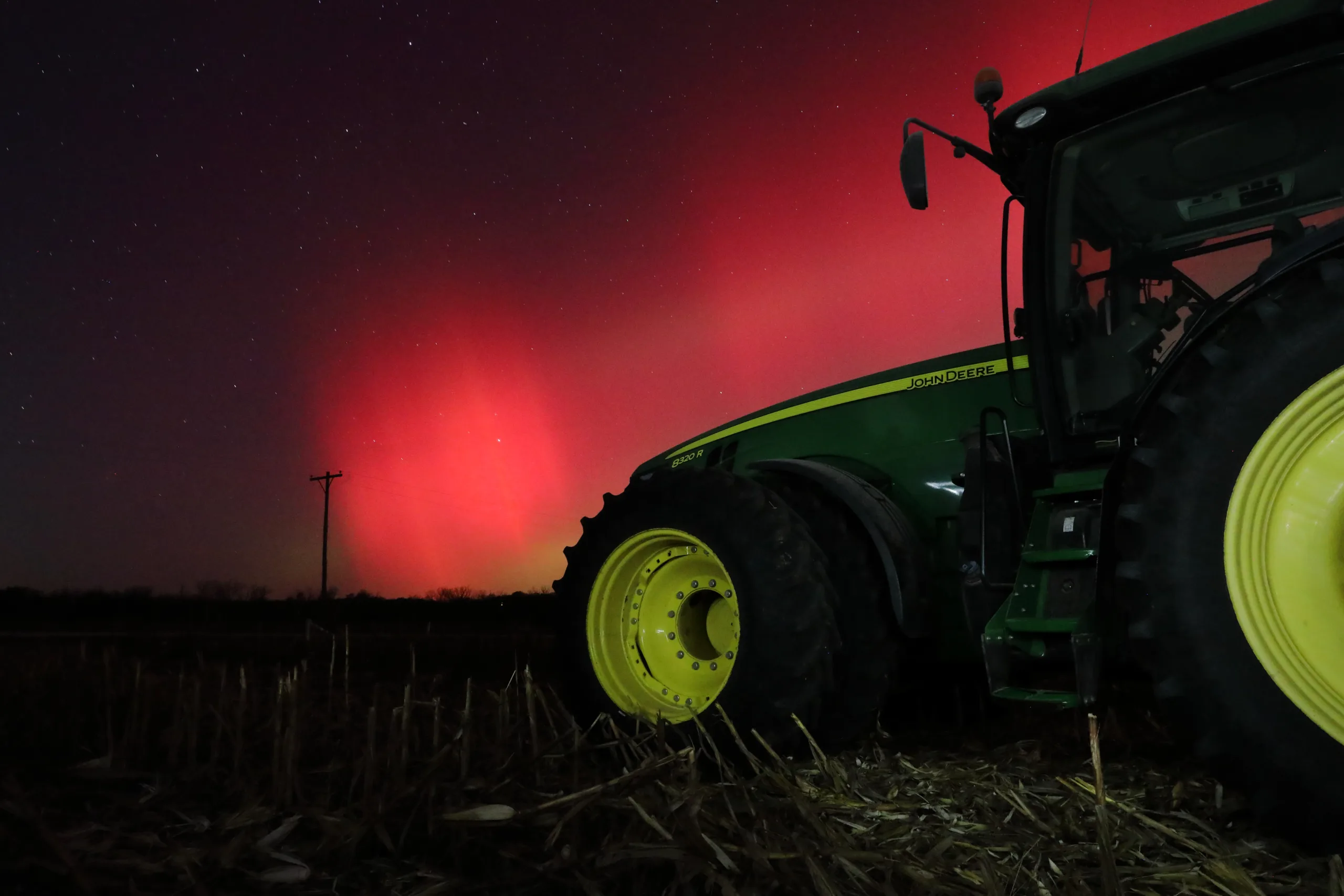
Also known as the Northern Lights, the aurora borealis typically can’t be seen this far south.
Chris Bowman, a meteorologist with the National Weather Service’s Kansas City field office, said it’s a rare “but not unheard-of” phenomenon in these parts, noting the aurora is spotted typically about once a year in the metro region.
The last time the NWS’s office recorded a visible aurora here was in October 2024.
Tuesday’s night show occurred because of a series of strong coronal mass ejections, or solar flares, from the sun passing over the Earth. These are essentially invisible clouds of energy that periodically plume out from the sun and collide with Earth’s atmosphere, creating the lighting effect at the poles.
You can read more about the aurora and how they are created here.
Solar flares can cause disruptions in communications and energy systems and also temporarily degrade the accuracy of GPS devices.
The National Space Weather Prediction Center classified the solar flares this week as G4, the center’s designation for having the strongest geomagnetic impacts.
Bowman with the Kansas City NWS said the stronger the solar flares, the further south the Northern Lights appear, which is why local viewers could spot such vivid colors in the sky Tuesday night.
But you had to be in the right place.
“The best viewing is to get out and away from city lights, in rural areas,” Bowman said. “For instance, I went up to Smithville (Missouri), and it was pretty spectacular.”
If you’re interested in monitoring when the the Northern Lights may appear again in Johnson County, you can follow the Space Weather Prediction Center, which monitors solar flares and forecasts when and where the aurora can be seen on Earth.
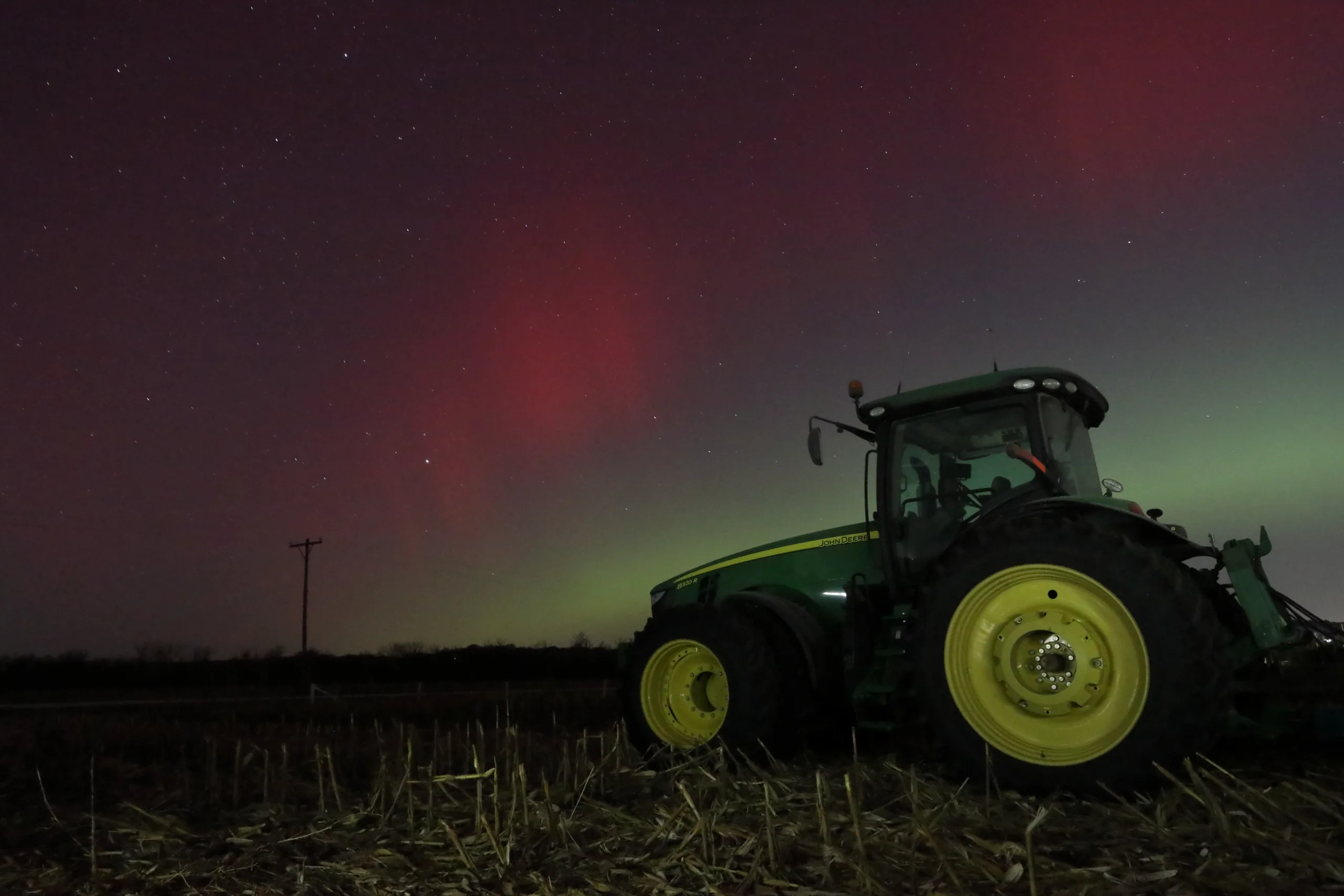
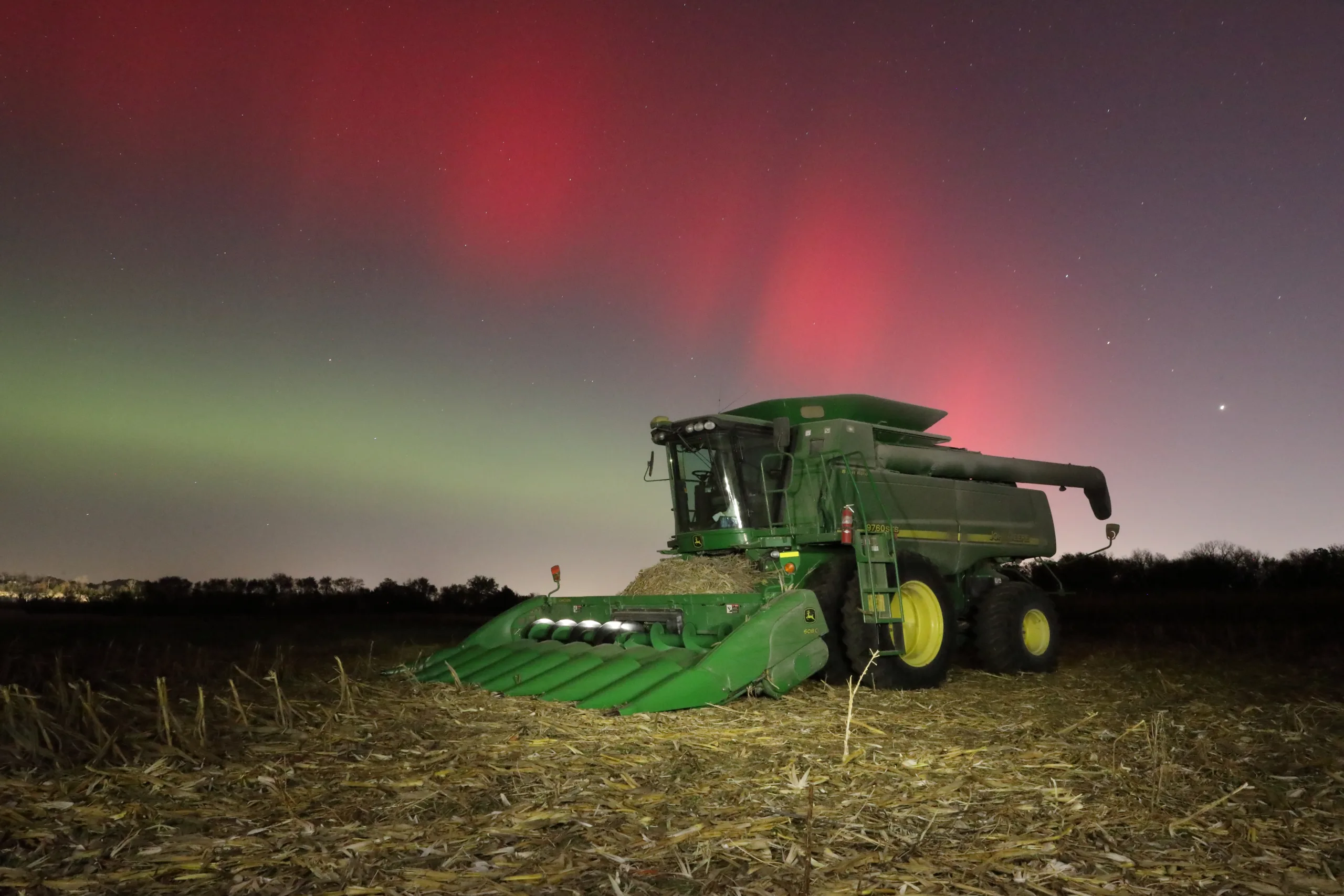
But if you’re like me and were in bed by the time the lights were visible on Tuesday, enjoy some of the images Mike Frizzell captured:
 Thanks for reading! If you value having an independent news outlet keeping tabs on local government, schools and taxes, we're asking you to contribute to our Education Reporting Fund.