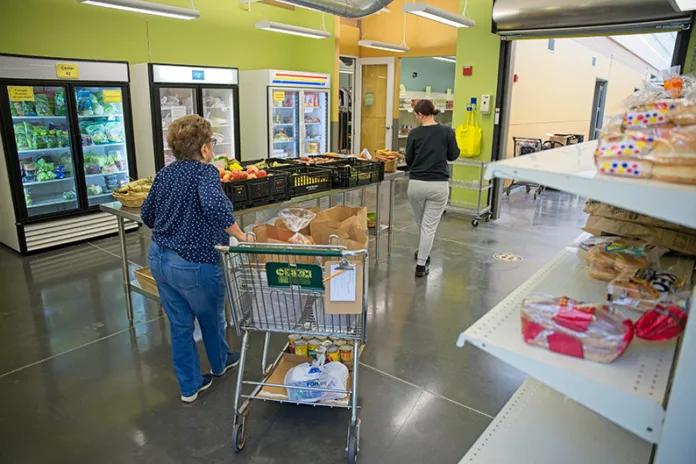
The government shutdown may be over, but even though federal nutrition benefits have resumed, food insecurity is still running at an all-time high this holiday season, say officials at several Johnson County food pantries.
People running food distribution sites in Lenexa, Overland Park and Olathe reported no slowdown in either requests for aid or donations since the shutdown ended on Nov. 12.
Although a spike in food assistance is often associated with the holidays, some pantries are reporting an even bigger surge this year, attributable to ripple effects from unusually long government furloughs, continued high grocery prices and a lack of faith that another shutdown won’t happen again soon.
At Tiny Pantry Times in Overland Park, co-founder Adam Parker expects to give out around 60,000 pounds of food this month. That’s almost as high as the 65,000 pounds the pantry gave out in August, he said.
“The need isn’t going down just because SNAP (Supplemental Nutrition Assistance Program) benefits have started back up,” he said.
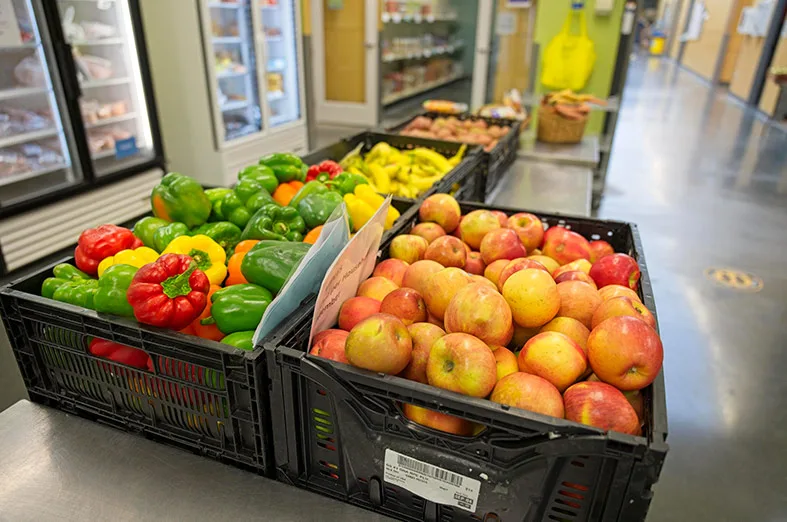
“Still feeling the ripple effects”
SNAP is a federal program that provides financial assistance for food purchases for people who meet certain income guidelines. Payments were paused for twelve days in November during the shutdown.
Because Congress was unable to reach an agreement on a spending bill, many aspects of the government went into shutdown mode on Oct 1. The 43-day shutdown, which was the longest in U.S. history, resulted in furloughs for 670,000 federal employees and work without pay for another 730,000, according to the Bipartisan Policy Center.
“We’re still feeling the ripple effects of it. It created a little bit of panic in a lot of our clients,” said Zach Sellers, food director for the Overland Park-based Jewish Family Services.
The food outreach at Jewish Family Services distributes to people who make appointments, and capacity is limited to 500 households who can collect food once a month from locations at the Jewish Community Center in Overland Park or in Brookside in Kansas City, Missouri.
Right now, the pantry is at its capacity and is referring new requests to other places for help, he said.
A recent emergency distribution for walk-ins served 84 families, and pantry organizers hope to have another one in December, he said.
Stress and food insecurity around the holidays
Even though federal food assistance has started back up, Sellers said he expects the need to continue through December and into January, because the length of the shutdown may have forced some people to use credit cards to buy food and other essentials.
The holidays, he said, “are centered on food. We don’t want any of our clients to have to go without and experience a holiday with less joy and not have the ability to have a nice meal with their families.”
The lengthy shutdown and pause in SNAP benefits has also had an emotional impact on clients of Tiny Pantry Times, Parker said, because many know the reopening of the government is a “temporary stopgap. It’s not like it’s a permanent fix.”
Congress agreed to keep the government running through January 30, 2026, with exceptions for SNAP, a nutrition program for women, infants and children, Veterans Affairs and Congress. Those programs are now funded through the end of September 2026.
With rent, food and utilities taking up entire paychecks, Parker said.
“There is no money to save. One way to hedge bets against the future is to gather food. Now we have a generation of people who are hoarding whatever they can on the not-so-off chance that the government is going to shut down again,” he added.
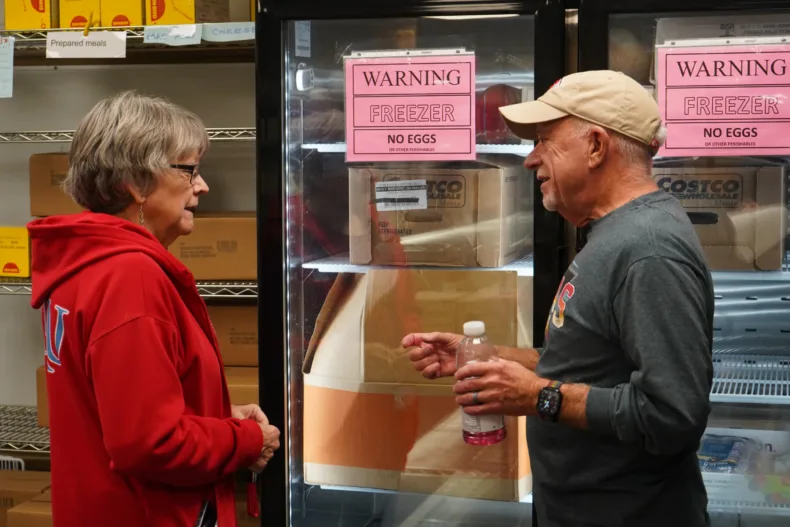
Pantries see increased demand ahead of Thanksgiving
Continued high grocery prices are another contributing factor to the surge in food pantry use, say other providers.
At the Shawnee Mission Unitarian Universalist Church’s FUUD pantry in Lenexa, food prices are a factor in the increased number of calls coming in, said Yvonne Gibbons, co-manager of the pantry.
The church pantry is only open one day a week and is by appointment only, but FUUD saw an increase in calls last week to about 105, Gibbons said. Normally, it is around 90.
Village Presbyterian Church’s food pantry in Overland Park has seen an increased number of people requesting help without an appointment, and the appointments are now being booked three weeks in advance instead of the usual two weeks, said Dennis Cobb, the pantry director.
The pantry recently held a special food distribution event, giving out 500 Thanksgiving baskets, but it will be closed during the Thanksgiving and Christmas holidays.
The New Hope Food Pantry has also noticed more need. So far this month, there have been days the pantry served as many as 83 and even 97 families in one day, according to the group’s Facebook post.
County adjusts guidelines so clients can visit pantries more
Johnson County Aging and Human Services has also seen a noticeable increase in the numbers seeking food assistance in the past month, said Brandy Hodge, the agency’s communications manager.
The need has continued since federal nutrition benefits were reinstated, she said in an emailed response to questions.
The county operates three pantries, in Gardner, Lenexa and Mission. This year has been challenging to keep shelves stocked because of high food prices, Hodge said.
To help meet the need, the county adjusted its guidelines for November and December so that eligible households could visit pantries every two weeks instead of once a month.
Donors large and small have stepped up to match the need, pantry managers say.
“We’ve received both monetary contributions and in-kind donations at levels we haven’t seen since the height of the 2020 COVID response,” Hodge said. “We know many families are feeling the strain of higher food prices, which makes this generosity even more meaningful.”
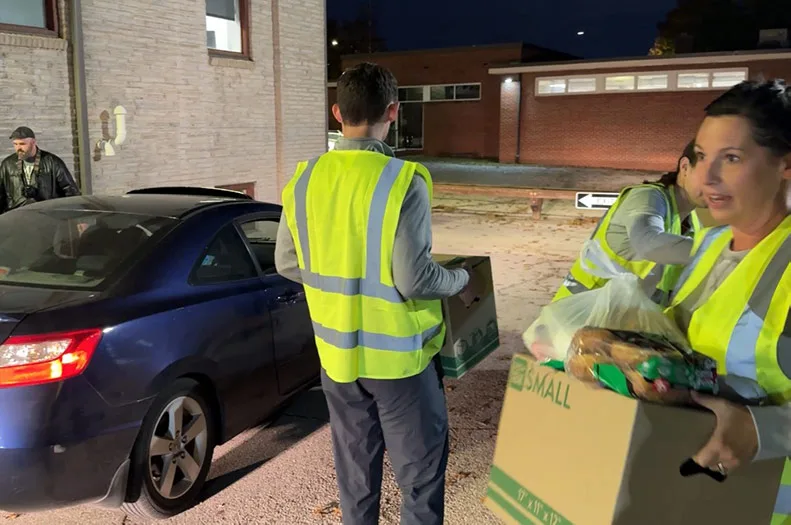
“We’re here all the time”
Parker with the Tiny Pantry Times in Overland Park said he’s been heartened by the community’s response.
Individuals and companies alike have stepped up since SNAP benefits were paused, he said.
“Costco sent us six [pallets] of food yesterday. Two and a half of those were filled with holiday pies. Sixteen- or 18-inch pies,” he said.
At FUUD’s pantry in Lenexa, Gibbons said volunteers have been “ecstatic” about the inflow of shelf-stable food that will last beyond the holidays.
“If anything good came from the SNAP issue, it’s that people are more aware of the food pantries that are around and that we’re not just here when things are a crisis. We’re here all the time,” she said.
Those who need the pantries have been grateful, said Cobb, the director of Village Presbyterian’s food ministry.
“I wish that more donors of all the food items and financial donations could be on the receiving end of some of those thank yous that I get,” he said.
 Thanks for reading! If you value having an independent news outlet keeping tabs on local government, schools and taxes, we're asking you to contribute to our Education Reporting Fund.