It’s been less than a month since Election Day in Johnson County, and the Post is already looking ahead to next year’s election cycle.
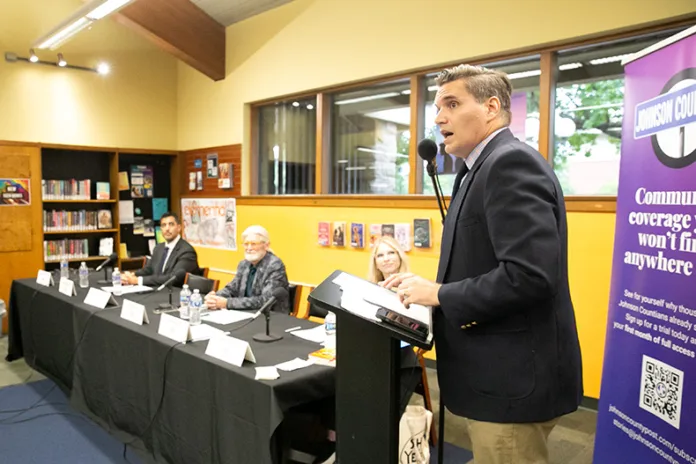
We want to continue to refine our live in-person election forums, which remain our highest profile and — based on audience feedback — one of our most appreciated forms of election coverage every year.
In late October, after we’d finished this year’s round of forums, we asked readers to give us feedback, with the aim of improving our audience’s experience and reaching as many Johnson County voters as possible.
More than 50 responded with comments, questions and suggestions, and I’ll say up front, much of what we heard was positive.
“The forums are a great service to the community!” one reader wrote.
Another called them “outstanding and highly valued.”
Another said, “I had no idea who was running and what the issues were,” until they watched our forum in their city.
Key takeaways:
1. The Post will try to limit the number of candidates per forum to six, and aim for a more ideal number of 2-4.
2. The Post plans to publish a scannable database of audience suggestions we receive that shape the questions we ask candidates, so anyone can see what reader priorities are driving our coverage.
3. The Post will ask uncontested candidates to give us responses to our annual candidate questionnaires so readers can get to know them better, but these candidates will still not be asked to participate in our live, in-person forums.
Comments like that feel great, and we want to acknowledge that praise. At the same time, we want to also look at more critical feedback before this election gets too far in the rearview mirror.
We are considering possible tweaks for future forums and want to be transparent about that process and give readers an authentic chance to weigh in while also allowing you to see a bit of what goes into planning these events.
Several themes emerged in reader feedback, heard both in response to our direct appeal as well as more informally in conversations with candidates and audience members at this year’s events.
When appropriate, I quote directly from emails received from readers without naming who sent them.
If you’d like, you can peruse the full unedited list of comments we received from readers in response to our request (again without identifying the senders) in the document embedded below:
 Loading...

 Reload document
  Open in new tab
 Here are some responses to questions and suggestions we heard from readers.
What’s the process for inviting candidates?
To an unusual degree, candidates’ attendance at the Post’s forums this year became a campaign issue.
A slate of six city council candidates in Prairie Village as a group rejected the Post’s offer to participate, and Overland Park mayoral candidate Faris Farassati also said he wouldn’t attend unless a list of conditions were met. The Post deemed those conditions unreasonable, and Farassati did not participate.
With those incidents in mind, perhaps, one reader wrote, “It’s always disappointing when candidates don’t show up. I think this needs to be emphasized even more…that they are letting down the people who vote by not showing up!”
The Post makes good-faith and concerted efforts to find a date and time that works for all candidates. In our view, it’s in voters’ (and candidates’) best interests for all candidates to participate and present their views and priorities.
This year, my task as organizer of these forums was to find dates that worked for 116 candidates running for 46 different contested offices across 13 municipalities, five different school districts and the Johnson County Community College Board of Trustees.
It’s a cumbersome process and, inevitably, scheduling conflicts arise with a handful of candidates each year, but to the readers’ point, candidates do a disservice to voters (and themselves) when they don’t engage in the Post’s process.
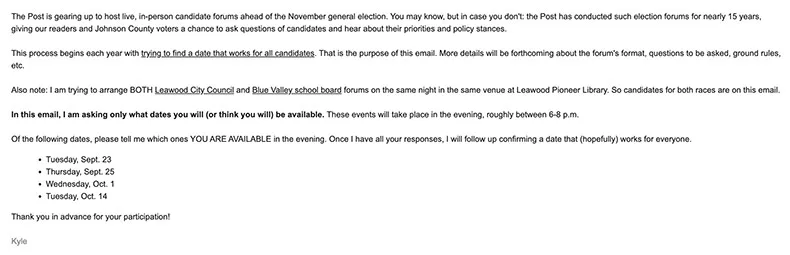
That process this year began with emails in July to all candidates in contested races in Johnson County. I gave the candidates a list of potential dates to pick from and asked them to tell me which date/s worked best for them.
Here’s an email I sent to candidates running for Blue Valley school board and Leawood city council, which is representative of emails I sent to all candidates this year:
There were some candidates this year who couldn’t make a date work for a variety of reasons — a prior engagement, a business trip out of town or a family conflict.
When this occurs, I make it a point to tell audience members a candidate’s given reason for not attending.
In the same way, if a candidate refuses to participate over some objection to the Post’s format or way of doing things, I also note that. Voters deserve to know and should be able to judge for themselves candidates’ reasoning for not taking questions from them.
That leads to another frequently asked question about our forums …
Where do the questions you ask come from?
The quick answer is: from our readers.
But there is a longer explanation that deserves getting into, I think.
Early in each election cycle, usually sometime in late July or early August, we ask readers to tell us what issues they want candidates to talk about ahead of Election Day.
It’s our way of getting a pulse of what truly matters to readers, not what we think will drive click-baity coverage.
This is part of the Post’s long-standing commitment to a “Citizens Agenda” approach to covering campaigns, a philosophy of local election coverage used by media outlets across the U.S. that seeks to center the interests of everyday voters — not political parties, power brokers or pundits.
Each year, we get hundreds of emails from readers in response to our call for issues they want covered at our forums. That helps me craft the questions that I eventually ask.
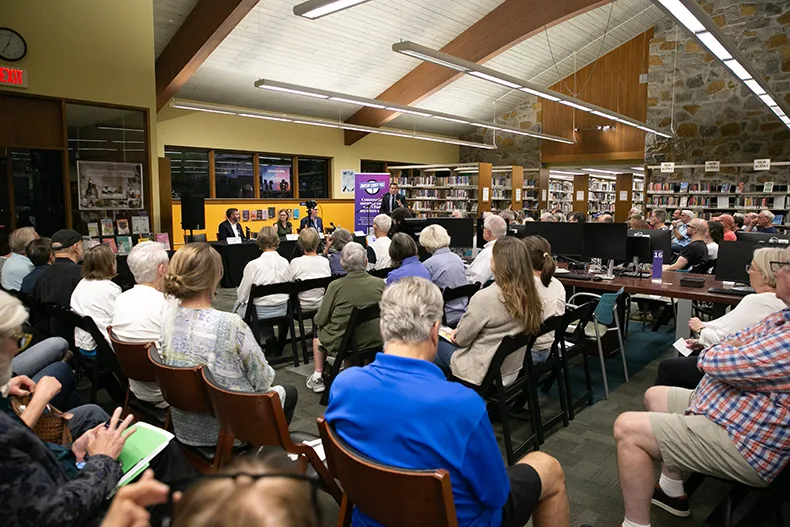
Though not always verbatim questions from readers, all the questions I ask in a forum are based on the input we receive from readers. We also take questions directly from readers in attendance at our forums (which I’ll talk more about later).
Still, there remains the perception among some readers that the Post somehow doctors the questions to favor certain candidates. At times, this year and in the past, readers have suggested that we give some candidates the questions ahead of time or only ask questions that favor one partisan side over the other.
We don’t do this, period. But I take that type of critique seriously.
To answer it more concretely in future years, I plan to publish a scannable database of all the questions we get ahead of our forums, so all readers who want to can look for themselves and see what issues are truly important to our readers and, as a result, come up at the Post’s forums.
This should hopefully underscore the point that Post readers drive our questions and campaign coverage and not the other way around.
Why don’t you ask more follow-up questions?
Each year, we get a few readers asking a version of this question.
One reader this year wrote: “Although fraught with the possibility of turmoil, the additional use of follow-up questions by the moderator … may improve my perspective on candidates. It would also demonstrate the candidate’s behavior when under pressure.”
Another reader told me in an email, “I think your questions could’ve been more pointed,” in regard to a particular forum in which they wanted to hear more from a candidate on some issues.
These are good points and ones that tweaks for future forums will hopefully address.
Often, the issue is time. Several of our forums this fall included six candidates or more. In order to give all candidates a chance to respond to the same issue, I frequently forego the opportunity to ask individuals a follow-up that might probe their thinking or push them to clarify their previous statements.
I’ll address a question about the forums’ size in a bit, but I can imagine that forums with fewer candidates may create a format where follow-up questions are more feasible.
Why not give audience members a mic to ask questions?
The Post eschews a crowd mic at our forums.
We allow audience members to ask questions by writing them down on note cards that then get passed to me, the moderator.
Some readers seem to appreciate that approach. One reader wrote us, “You give the audience a chance to ask via the notecard system (which I prefer to an open mic situation).”
Yet, I’ve heard from other readers who would prefer to be able to speak to candidates directly with an “open mic.” We’ve considered this arrangement before and have ultimately decided against it for at least two reasons.
First, setting up an “open mic” would likely take precious time away from candidates answering questions as audience members try to formulate their thoughts in real time and may ramble or go off on tangents. Reading questions that have been written down, in my opinion, makes the process more efficient.
Second, an “open mic” is inherently more adversarial. A reader may have a niche issue that they’re passionate about or a personal gripe against a candidate. If given a mic, that could devolve into a back-and-forth conflict that takes away from a substantive discussion of the issues that matter most to the largest number of readers.
Our notecard question system, we feel, fits best the vibe we’re trying to achieve in our forums: quick-moving, substantive and civil.
For now, we’ll be keeping our method for audience questions at our forums the same.
What about uncontested candidates and other races?
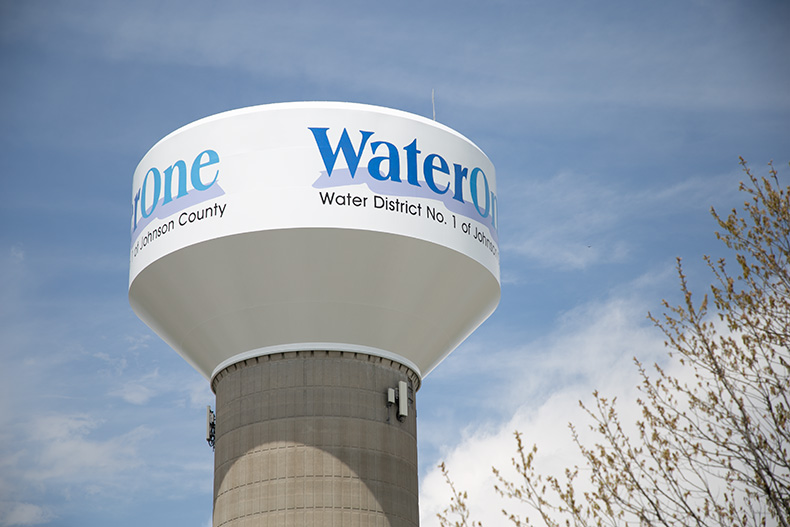
We did have a few readers point out that we did not do a forum for a contested WaterOne board seat this year.
In hindsight, this was a mistake. We haven’t done forums for the WaterOne board in the past, but that doesn’t mean we shouldn’t have done them now or in the future.
It’s an office that impacts a lot of Johnson County residents’ lives (the highest vote-getters this cycle, in fact, were WaterOne candidates), and it strikes me as the exact kind of race — hyper-local and historically undercovered — that the Post is here to shine a light on.
We did have some questions, too, about why we didn’t ask uncontested candidates to participate in forums.
To be plain, that comes down to time and space. We were already working with 100 or so candidates in contested races. Adding seats for those candidates who don’t face a challenger would detract from races in which voters had a real choice before them.
That being said, the Post has decided it would benefit our readers to begin asking uncontested candidates to respond to our candidate questionnaires, which we publish online before each election, so voters in those precincts can at least get to know the person who will represent them before they take office.
How do you determine the number of candidates for a forum?
This might be the biggest logistical tweak for future forums.
The Post is considering ways to limit the number of candidates participating in each forum. Even if this creates the need for more forums overall, I believe it will better serve voters to have smaller individual forums so they can hear more from the candidates that impact their ballot.
We had a number of readers comment on this.
One said plainly, “My main suggestion is fewer panelists.”
Another who watched the JCCC board forum (for which there were seven participating candidates) said, “[It] was a bit difficult because there were so many candidates (certainly it reached the maximum amount of candidates who should be permitted to attend in the same session), but you handled it very well.”
Our largest forum this year was an 8-person forum for Overland Park City Council. That event, from my perspective, dragged, and we didn’t get to hear from each candidate as much as I would have liked.
Grouping candidates by race and city all at once makes logical sense, but it’s also a scheduling convenience. Breaking forums into smaller groupings creates the need for more forums, which will lead to more scheduling conflicts.
However, I think it’s a direction the Post needs to go.
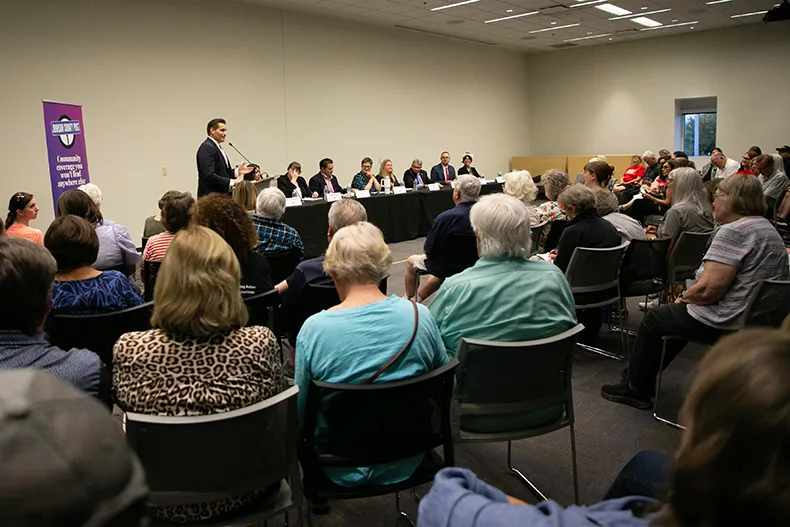
In the future, I’d like to cap the number of candidates per forum to six and, when feasible, aim for a more ideal size of two or four.
I feel that will serve voters’ interests best. The fewer candidates on stage at once means more time for those candidates to answer questions, both from me and from the audience.
It will also hopefully open up more opportunities for direct back-and-forth between candidates for particular races and (as was discussed earlier) give me, the moderator, more freedom to ask timely follow-up questions without feeling like I’m playing against the clock.
How exactly this will look is yet to be determined. It may mean we start our forums earlier in the calendar next year, maybe in August. We might also need to host multiple forums on the same night.
However it comes to pass, look for that change in our forum format next year.
Can you cut down on the technical issues?
Finally, this is something that comes up periodically.
We had a reader comment, “The only issue I can remember is the sound quality is sometimes not great.”
We’ve had complaints about sound dropping out, static over our livestreams and annoying feedback from our speaker in the room, among other issues, over the years.
This year, we discovered an issue with the mixing board we have used for the past three years that was contributing to issues with feedback and sound quality. We found a replacement, and the problems went away.
Inevitably, a new issue will arise in the future. But by and large, our readers noted how generally high-quality the production value was on the videos they watched online, considering that none of us here at the Post are professionally trained sound engineers or AV techs.
Suffice to say, I take it personally when there are technical issues, and we work extra hard to try to rectify problems when and if they arise.
Our commitment going forward is to ensure the voters of Johnson County can seamlessly and easily have access to the candidates who would represent them in local government, whether that’s in person at our forums or watching them online.
That won’t change, and we hope the suggestions offered by our readers make that process even better next year.
 Thanks for reading! If you value having an independent news outlet keeping tabs on local government, schools and taxes, we're asking you to contribute to our Education Reporting Fund.