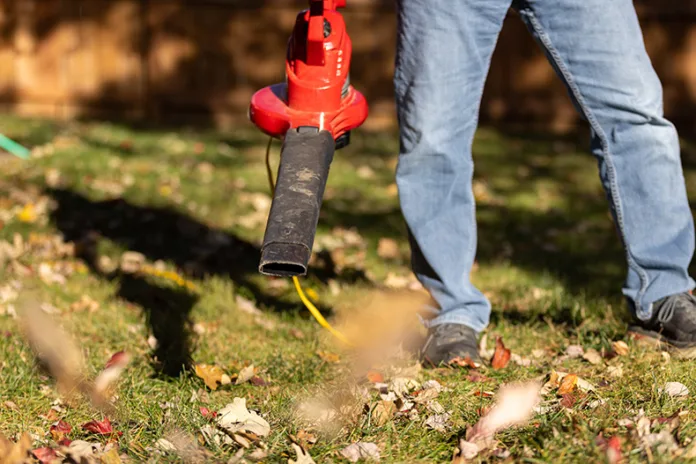
Actress Cate Blanchett calls them “everything that is wrong with the human race,” and says they “should be eradicated from the face of the earth.” Comedic actor Ricky Gervais also hates them, per an October story in The Guardian, as do actors Danny DeVito and Hugh Grant.
So maybe it’s unsurprising that California, home to the stars, has been at the forefront in regulating leaf blowers. Beverly Hills was reportedly one of the first to ban sales of gas-powered leaf blowers — and that was in 1978. California Gov. Gavin Newsom followed that up with a statewide ban on the sale of new gas-powered blowers in 2021.
Hating on leaf blowers has become mainstream in other states as well. According to the U.S. Public Interest Research Group, over 200 laws and programs have been enacted by cities, states and utilities to guide people away from the loud and polluting gas powered blowers.
But here in Kansas and Johnson County, the passion doesn’t run quite as high. Spokespersons at the larger cities reported no impetus for leaf blower bans or targeted restrictions like California’s.
An interactive map of lawn care restrictions on the U.S. PIRG website tells the story. The sole green dot in Kansas is for Wichita, which pays residents in the city and surrounding counties $100 rebates to recycle their gas-powered lawn tools and replace them with battery-powered ones.
No specific leaf blower restrictions here yet
City officials and leaders of homeowner associations in some of Johnson County’s largest cities say there’s no local trend to restrict leaf blowers. Most said they only rarely hear residents complain about them.
Overland Park tracked just one request to its OP Cares customer service hotline related to leaf blowers and that was in October 2022, said city spokesperson Meg Ralph.
Management at some homeowner associations reported few disputes about leaf blower noise. Doug May, of Home Association Solutions, a company that manages home associations, said there is very little language in covenants restricting the tools. If anything, the blowers are covered by municipal noise ordinances, he said.
One of the county’s largest home associations organizes an annual volunteer leaf raking day to help residents who have trouble getting all their leaves cleared but doesn’t have any specific restrictions on blowers.
“Hopefully people connect with their neighbors if there’s a problem,” said Laura Herrick, vice president of the Oak Park Homes Association. Otherwise residents are encouraged to “just make sure they’re not blowing into the neighbor’s yard or into the street.”
Noise ordinances and air pollution
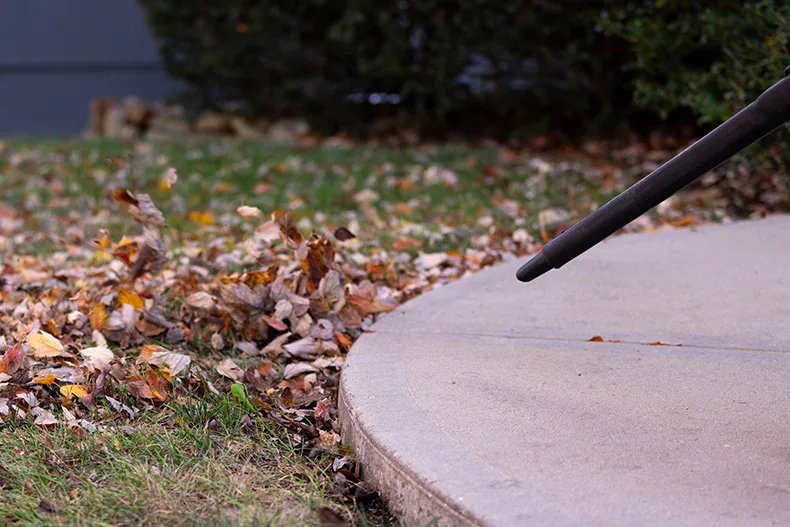
City ordinances generally don’t single out leaf blowers. In most cases, any restrictions on their use falls under a noise ordinance that sets quiet hours during which loud activities cannot take place.
That’s the case in Leawood, which sets quiet hours from 9 p.m. to 7 a.m. In Lenexa, no lawn mowers, snow blowers or other similar equipment that emits enough sound to be heard across property lines may be operated between 7 p.m. and 7 a.m. Overland Park sets hours for just about any type of noise, including gardening tools, from 10 p.m. to 7 a.m.
Complaints may also be tough to track. An alleged violation of Shawnee’s noise ordinance, for example, would generate a verbal warning, not a ticket, said city spokesperson Doug Donahoo.
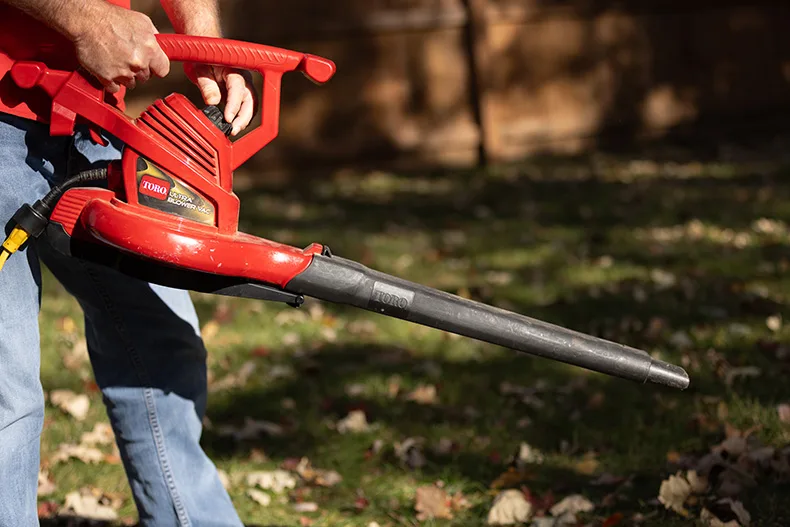
Though noise is a big complaint — gas-powered leaf blowers can be as loud as about 110 decibels — recent regulations in other states have more to do with the amount of air pollution they’re responsible for.
The low efficiency of the two-stroke gas engines is blamed for the high amounts of air pollutants they emit, according to studies by the U.S. Environmental Protection Agency. Data based on the EPA’s 2020 National Emissions Inventory and compiled by the Public Interest Research Group indicates nearly 22,000 tons of fine particulates from all gas lawn equipment was emitted that year, which is as much as 234 million cars.
Electric-powered is slow to catch up
Cities like Wichita have used financial incentives to get people to switch to electric lawn equipment, which also happens to be quieter. Noise from electric blowers clocks in at around 60 to 80 decibels, a huge drop from gas-powered 110 decibels, given that each step up in the decibel scale is 10 times more than the previous.
The Mid-America Regional Council offered a similar incentive program in 2023 that has since closed. But other local incentives are scarce. Johnson County government encourages a switch away from gas lawn equipment, but does not offer incentives.
Although battery-powered leaf blowers have been gradually catching on with residential customers, commercial lawn care companies have been slower to adopt, say sales and equipment store managers.
“We’re selling more and more electric products every year,” said Tom Diltz, owner of Smitty’s Lawn and Garden in Olathe. But electric battery technology has made it less attractive to lawn crews, he added.
Steve Smith, location manager for Van Wall Equipment, said cost is a factor. Batteries typically can run for about 45 minutes before running out of juice, he said. That means most crews would need extra batteries to change out, and possibly some way of charging them on the truck.
With each battery costing about $300, electric power tools end up with a substantial start-up cost, Smith said.
“The average guy with five lawnmowers and three employees can’t go out and make an investment of $10,000,” he said.
Ryan Ross, owner of Ascend Lawn and Landscape of Lenexa, said he hasn’t heard complaints about the giant leaf vacuums his company uses for mostly residential customers. But then maybe that’s because the crews generally get done quickly, and at times when homeowners aren’t around, he said.
Efficiency of gas-powered equipment is important, Ross said, because time to do the work is compressed. Peak season is around Thanksgiving, when the leaves are mostly down and homeowners are concentrating on getting yards cleaned up for the holidays.
Ross adds that dwindling daylight is also a factor. “By four o’clock, we’re done,” he said. “I can’t imagine the job we’d have to do if we used electric or rakes.”
A local electric lawn service provider wants to buck the trend
An exception among landscape companies is Electric Lawnscapes of Leavenworth County. Owner Mike Garcia said the quieter, zero-emission equipment is easier on the ears.
“We sell on the idea of silence,” he said. “You don’t want to hear the mower going off, you don’t want to hear the leaf blower on the driveway.”
Garcia’s company uses a larger battery that can run for about an hour and forty-five minutes before needing to be recharged. Those batteries are more expensive at about $750 apiece, he said, but also cost less to maintain because they have fewer parts. Outlets on the trucks make it possible to keep charging backup batteries.
Leslie Keister, co-owner of Outdoor Equipment Solutions in Merriam said the easier maintenance is a major selling point for electric leaf blowers.
“Our relationship with leaf blowers is complicated,” she said. “They are noisy, temperamental and if not maintained well, they won’t start when needed.”
Keister said she tries to encourage electric leaf blower sales. “Every year I’ll stock a little bit more,” she said. “We hope to be the kind of green shop around town that embraces that kind of equipment.”
But so far gas leaf blowers still outsell electric ones.
“We know it’s the wave of the future,” she said. “We’re just not there yet.”