Roeland Park now has a specific plan to guide the future of public art in the city.
Last month, the Roeland Park City Council unanimously approved a public art master plan developed by Ohio-based urban planning firm Designing Local.
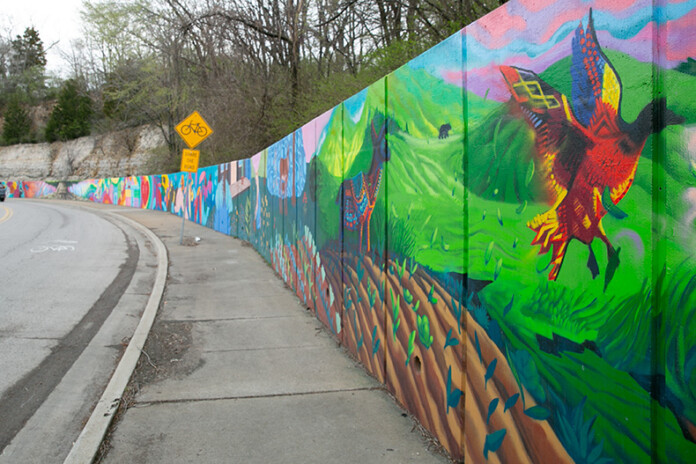
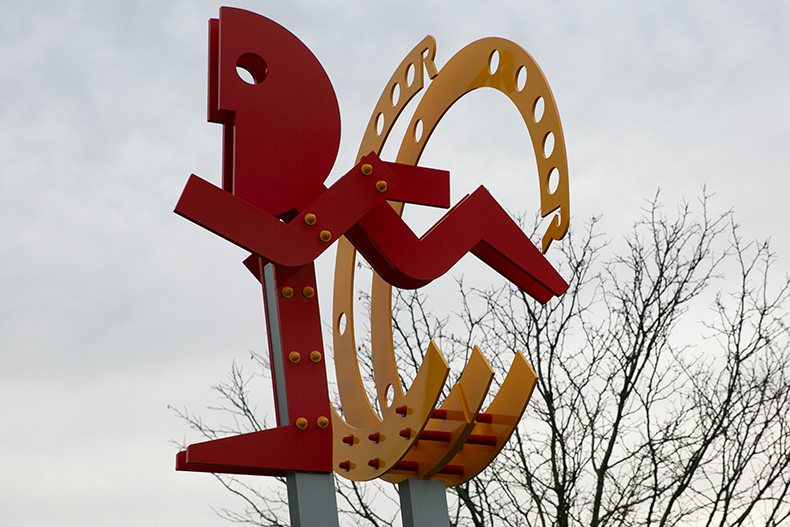
The plan, which involved a public engagement process with resident feedback, will help city leaders add to Roeland Park’s public art collection, which currently features 33 works, including those housed in the George R. Schlegel Gallery located on the second floor of Roeland Park City Hall.
Some examples of public art opportunities included in the plan include painted surfaces like crosswalks, sidewalks and sports courts, and a sculpture trail at Nall Park. Roeland Park’s public art master plan is similar to ones already on the books in other neighboring Johnson County cities, including Merriam.
“By activating imaginations and deepening our connection with nature, public art reflects the creativity, belonging, and vibrancy that define our city today, tomorrow, and for years to come,” the public art master plan’s vision statement reads.
(Read the city’s entire public art master plan online here.)
The plan aims to capture RP’s identity
For months, Designing Local and the city collected public input for the public art master plan.
Anna Talarico, a coordinator with Designing Local, told the city council on Nov. 17 that from that process, the firm decided the identity of Roeland Park was a “small, yet mighty community” that appreciates parks and recreation amenities and is forward-thinking.
The public art master plan tries to embrace that identity with the following driving forces behind it, as outlined in the public art master plan:
- “Public art for all”: the city will aim to use public art to create a sense of unity and belonging
- “Vibrant, dynamic and joyful”: public art will reflect the youthful aspects of the city
- Recurring programming and signature experiences: the master plan also calls for “temporary” installations and projects that play off the city’s existing parks and events but don’t require long-term maintenance
- Creating tight-knit community: creating public art pieces that “leverage the sense of connection and belonging” in the suburb of roughly 7,000 people
A look at the types of public art opportunities
The public art master plan divides the way to accomplish the city’s vision into the following four categories:
- Placemaking public art, like painted crosswalks or sidewalks at Roesland Elementary or creative shade structures at parks.
- “Small spaces, big impact” calls for musical instruments at parks, artistic light pole banners or painted traffic circles
- Public art centered around outdoors, gathering and recreation, with a focus on a sculpture trail at Nall Park and painted bike lanes or basketball courts
- Creating public art out of ordinary objects, such as “whimsical waste bins” or functional art
How RP can change administratively to support public art
The public art master plan also suggested the city take steps within its own policy, staffing duties and practices to help support the public art master plan’s goals.
Some of these recommendations include developing a collection management policy to outline the process for loaned art, donations and maintenance.
The plan also calls for assigning an existing city staff member the duties of a public art administrator.
It also recommends the city conduct an audit of Roeland Park’s current art collection and create a five-year maintenance plan.
Keep reading local government news: ‘Please think twice’ — Residents worry about Royals stadium in Overland Park