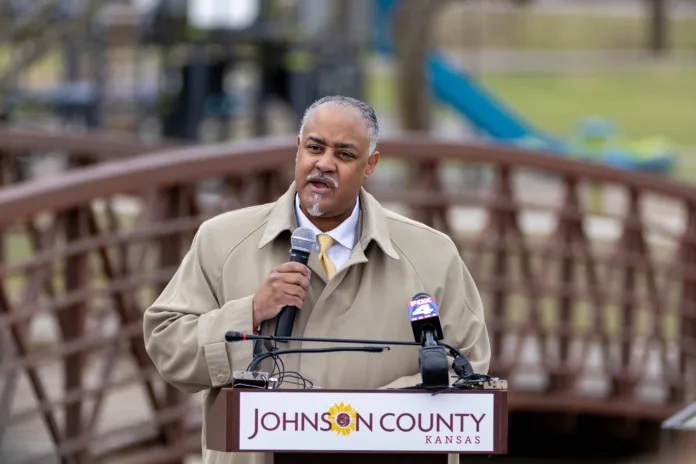
If Mark McCormick’s keynote remarks at the Negro Creek commemoration gathering Friday had a headline, he said, it would be this:
“What you run from pursues you, but what you face transforms you.”
The history of Negro Creek — a small stream through Overland Park and Leawood whose first known name was a racial slur — is dark. It likely involves a man who took his own life trying to escape enslavement.
It’s uncomfortable and inconvenient, said McCormick, a member of the Kansas African American Affairs Commission.
But the civic leaders gathered Friday near Kingston Lake Park in Overland Park had decided not to run from it. Rather than choosing another name for the creek as originally considered, they rebaptized it “Negro Creek,” adding historical markers that tell the background of the grim history behind the name.
Renewed attention on an obscure creek
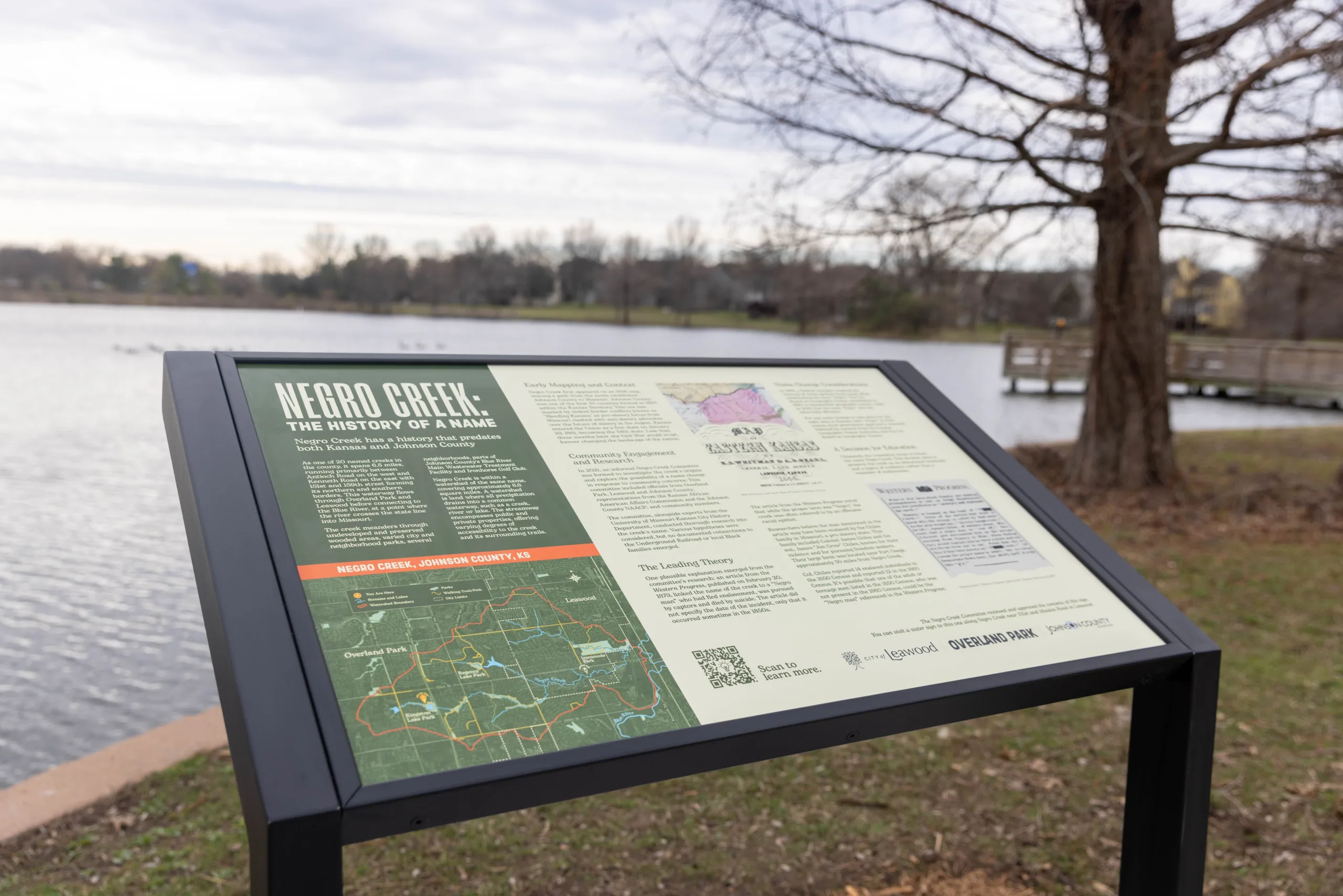
Negro Creek runs for about 6.5 miles from near Antioch Road and 151st Street on the west and Kenneth Road on the east before emptying into the Blue River across the state line.
Up until 2020, it was little known to Johnson Countians because it did not appear on many maps and did not have signs denoting it.
But around 2019 and 2020, people began to notice and ask questions.
A petition to change the name popped up on Change.org, boosted by a social justice group at the same time that the killing of George Floyd in Minneapolis drew attention to a string of police killings of Black people.
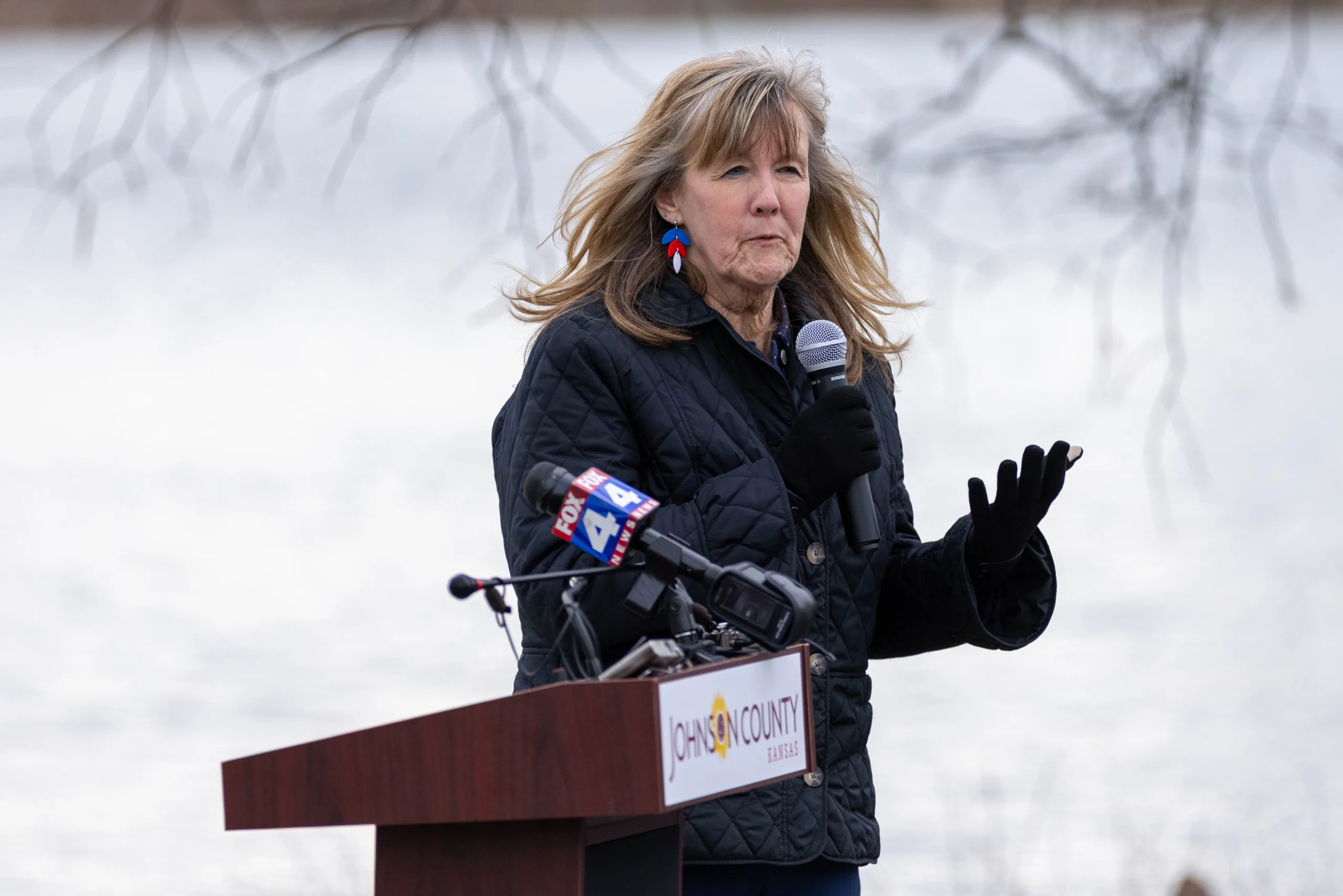
County Commissioner Becky Fast began to get phone calls asking about it, and decided to start researching, eventually putting together an informal committee, she told the gathering of about 25 at Kingston Lake Park on Friday.
That committee’s work eventually drew the support from city and county leaders, local park departments and the county museum, as well as social justice advocates.
“I was hopeful this could be designated as an Underground Railroad site,” she said, adding she still believes it might have been.
But it was not to be. Documentation of Underground Railroad sites is notoriously sparse, and there was no evidence to back that up.
However, historians from the University of Missouri, Kansas City hired by the committee uncovered other evidence.
Historical research turns up tragic story
The UMKC researchers found a wrenching story in an 1879 newspaper that told of a freedom-seeking man cornered by pursuers along the creek sometime in the 1850s.
Rather than return to bondage, the man slit his own throat, according to the account.
That story had plausibility, the historians said, because it mentioned the name of a prominent pro-slavery Missouri family named Chiles with a reputation for violence toward the people they considered their property.
Although there’s not enough evidence to conclusively prove it, the story appears the most likely, according to the researchers.
Fast and committee members had hoped to name the creek after the freedom-seeking man but were never able to find a name, she said.
According to the new marker, the Chiles reported 14 enslaved persons in the 1850 census, but 12 in the 1860 census.
Whatever name was chosen, community leaders agreed that an effort should be made to preserve the history for future generations. The result is the marker near the creek source, at Kingston Lake Park, and a companion marker just south of 151st Street on Mission Road in Leawood.
“Why hide our history?”
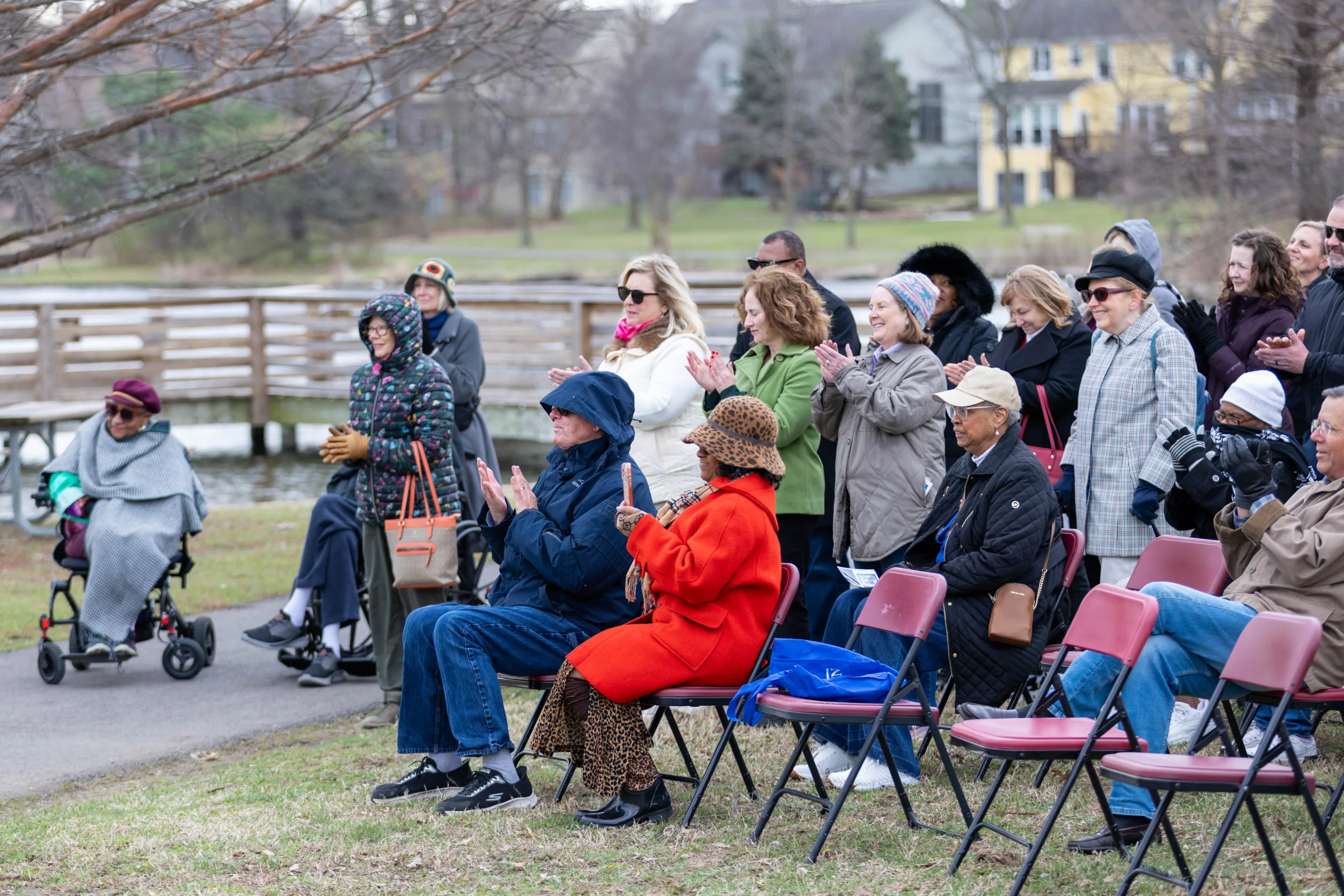
Speakers Friday said the ceremony should not be considered the end of an ugly chapter but an opportunity to reflect on those times and the work still needing to be done.
“Certainly we have many more miles to go,” said Leawood Mayor Marc Elkins.
Former committee member Wandra Minor did not speak, but afterward she said the effort was a “great opportunity to bring the community together.”
“This is not the end. I think this is the beginning,” she said.
Overland Park Mayor Curt Skoog thanked the committee for its research into the “why” of the name.
“Sometimes we think of our part of the city and we think of the beautiful suburbs and the incredible neighborhoods,” he said. “But before that this was a different place.”
“I think all of our hope is that we can bring our children and grandchildren and talk about it with this informational plaque to make sure that future generations know the history of ‘Bleeding Kansas’ and slavery and all of the history that took place in this location,” Skoog continued.
McCormick reminded listeners that racial inequality has been an issue down to our own time.
“We have run from [it] since before we were a nation. It’s this notion of African Americans as lesser beings that underpins our society’s current issue with race. It powers the cyclical nature of Black progress and white backlash that led someone to declare this creek that we are here to commemorate today the “N-word” creek,” he said.
He also said he didn’t think Confederate memorials across the South should be removed. “Why hide our history? We should be learning from it,” he said.
 Thanks for reading! If you value having an independent news outlet keeping tabs on local government, schools and taxes, we're asking you to contribute to our Education Reporting Fund.