
Dave McClung didn’t set out to make history when he decided to hike to Mount Everest’s base camp.
“I didn’t know when we planned it,” he said. “That nobody 82 (years old) had ever done it.”
When McClung, who lives in Olathe, completed the eight-day, roughly 42-mile hike last October, he became the oldest person in the world to hike to Everest’s base camp.
The trek takes hikers more than 17,000 feet above sea level, through the Himalayan mountains, where thin air and steep terrain make even short distances difficult.
For McClung, though, it was just the latest in a long list of challenging hikes.
McClung has dedicated much of his retirement to traveling the world and hiking on all seven continents with his wife, Linda McClung.
And while many people use “Mount Everest” to mean the most difficult challenge, he says it wasn’t the hardest he’s done.
“It wasn’t a real hard hike,” he said.
The Mount Everest base camp in Nepal wasn’t originally on McClung’s radar, and McClung made the decision to go on the trek just months before.
The idea came from his son, Dennis, who suggested they do the hike together. McClung’s wife declined to join.
Because of the weather, the best time to go to Everest’s base camp is in April or October. And it takes a lot of planning — even the process of getting to the start of the hike is tricky.
There are no direct flights from the United States to Nepal, so McClung and his son stopped in Qatar.
But getting to Nepal isn’t the only challenge.
“It is in the area of the Himalayan Mountains where there are no roads from where you start the trip,” he said.
All food, supplies and equipment have to be carried in.
From there, the hike begins.
The hike
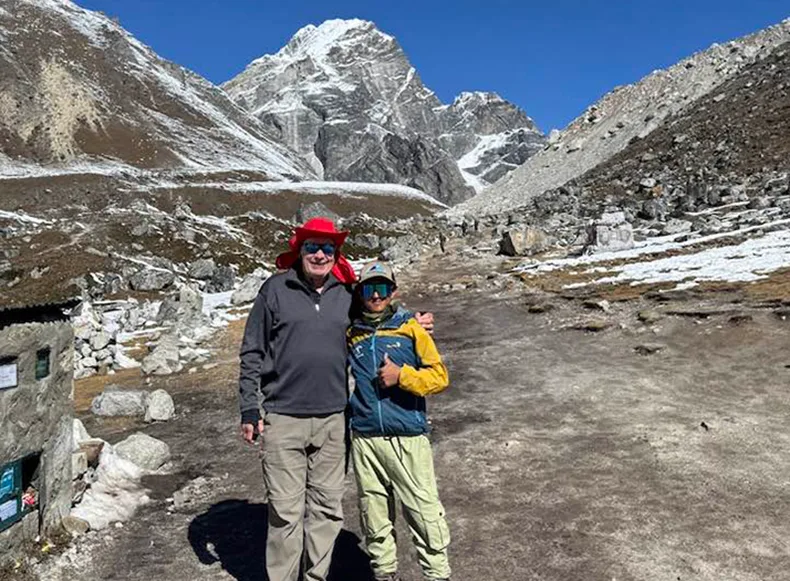
McClung and his son hired a guide and a porter, who carried most of the gear.
“But he would take that heavy load and go faster than we would,” he said. “He would go to the top of the hill and he would put his load down and come back down and get my pack and carry it up.”
The biggest challenge for a lot of base camp hikers is the altitude, which can make people sick or lose oxygen. Pacing out the 17,598-foot trek is critical to mitigate the risks, with hikers climbing to higher elevations during the day and descending slightly at night.
“We go up 3,000 feet in a day and then we go down 500 feet to sleep,” he said.
That approach helped him avoid altitude sickness.
Tea houses, which McClung likened to hostels, are located strategically along the trail.
“Each one of them is very similar. They have a central area with tables where you eat then around it they have rooms to sleep in,” he said.
There’s no heat, and temperatures drop significantly overnight.
“At night, it gets very, very cold,” he said.
McClung said he ate a lot of rice dishes, including Nepal’s national dish, dal bhat, consisting of a lentil soup and rice.
McClung said the biggest surprise about the tea houses was the internet access.
“We were able to send pictures back to the family and post on Facebook every evening,” he said.
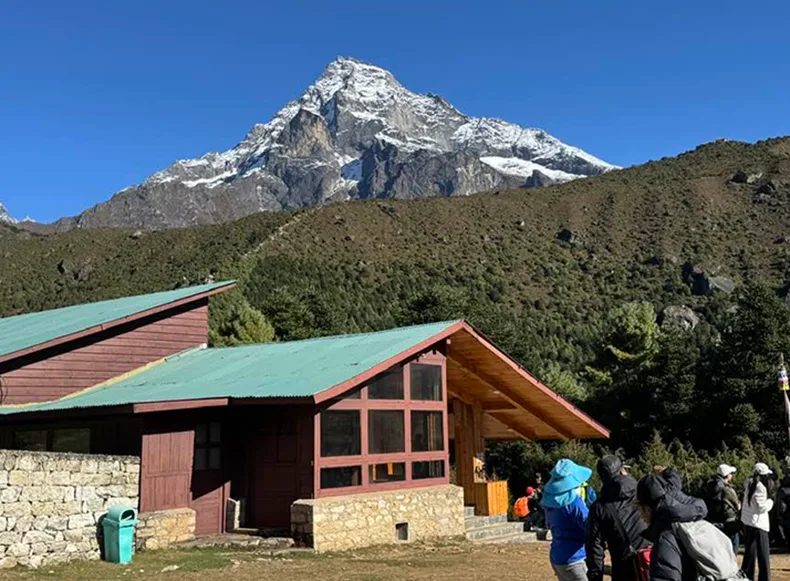
At lower elevations, McClung said it was crowded with hikers, thinning out as they climbed higher. The terrain ranged from smooth stretches to uneven, rocky paths.
“The problem is they’re all different sizes,” he said. “When I trek, I want to take even steps. You have to adjust your steps.”
The hikers just missed a blizzard that hit the mountain the week before. Still, the hike wasn’t snowy, and temperatures hovered around freezing.
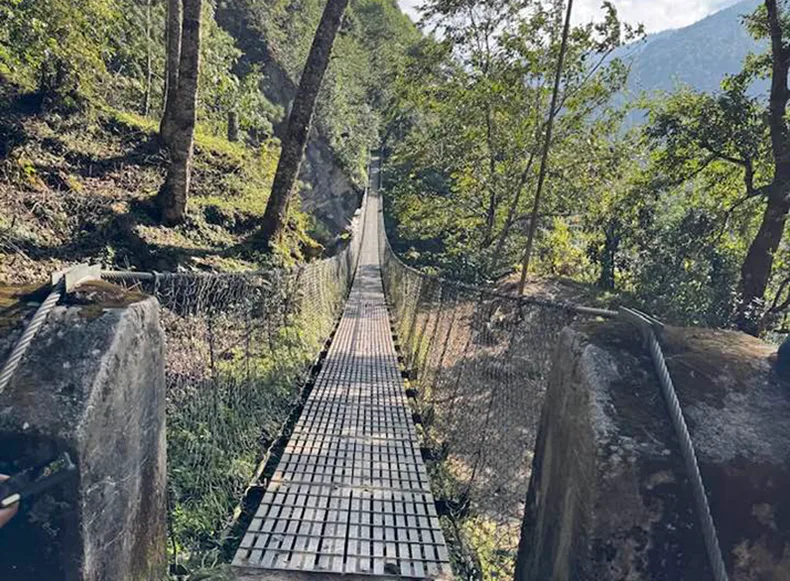
He also noticed many hikers struggled with the suspension bridges along the route, which can sway high above the ground.
After eight days of hiking, McClung and his group reached base camp.
“I felt really, really goal accomplished,” he said. “Not a mountain range anywhere that’s more beautiful than the Himalayas.”
He and his son originally planned to hike back down after reaching base camp, but McClung decided he’d rather spend more time in Nepal’s capital, Kathmandu.
“I looked over at Dennis and said, ‘you really want to hike back down?” he said.
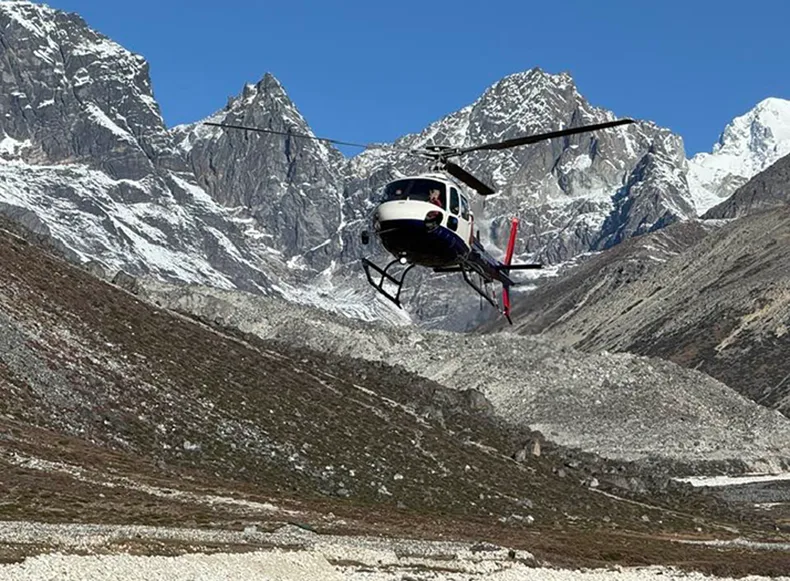
The two hiked a mile and a half back down to a tea house and were picked up by a helicopter and flown down the mountain.
World traveler
McClung has been in Olathe for years, but he grew up in Louisiana. He graduated college with a business degree, but had to quickly change plans.
“It was right in the middle of the Vietnam War, and so I really didn’t have a choice,” he said.
Anticipating getting drafted, he joined the Air Force as a helicopter pilot. In his five years serving, he flew more than 200 missions.
Once he returned home, he decided to go to law school and for a while practiced at a large firm in Dallas. Eventually he began working as in-house legal counsel for a construction company.
He worked to turn around struggling businesses and gained a reputation for helping troubled companies. Throughout his career, he was president or chairman of over 20 different companies.
McClung wasn’t always an avid hiker.
He said he did some hiking as a child but didn’t fully take it up until later in life.
“Really started after I was 50,” he said.
After retiring, he and his wife began hiking regularly, often taking on major trips together.
He’s hiked to the bottom of the Grand Canyon 41 times and completed treks across the United States including Mount Washington, Mount St. Helens and 500 miles of the Appalachian Trail. His international highlights include hiking England coast-to-coast, Ireland coast-to-coast and from Cusco to Machu Picchu in Peru.
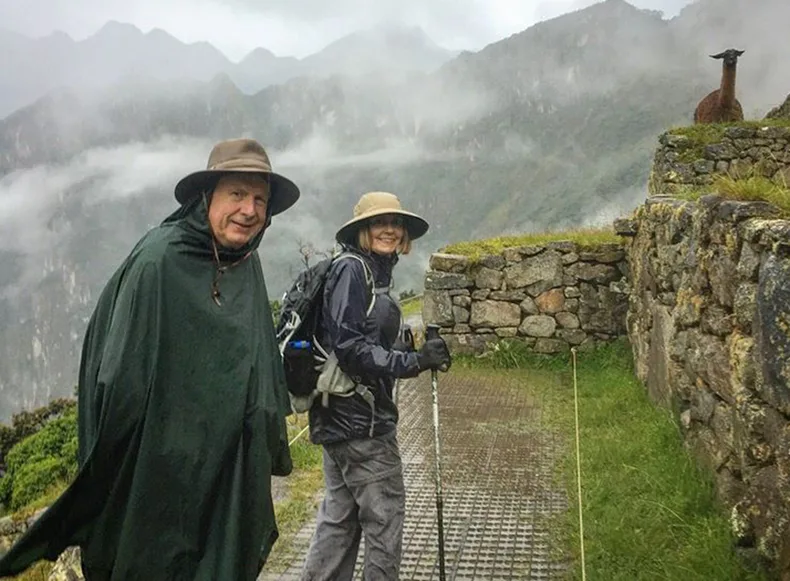
They’ve even made it to all seven continents.
“We didn’t hike a long way in Antarctica,” he said. “But we got to walk on Antarctica.”
Despite Everest’s reputation, McClung said the most physically demanding hike he’s done was likely the Wonderland Trail, a 90-mile loop around Mount Rainier in Washington.
“Wonderland Trail is a lot of up and down, but you do 20,000 feet of gain,” he said.
McClung said that when people find out about his Mount Everest accomplishment, they ask about one of four things: the altitude, the remoteness, his age and his footwear.
While most hikers likely wear special hiking boots for a trek that long, McClung stuck with the shoes he wears for every hike: five finger shoes.
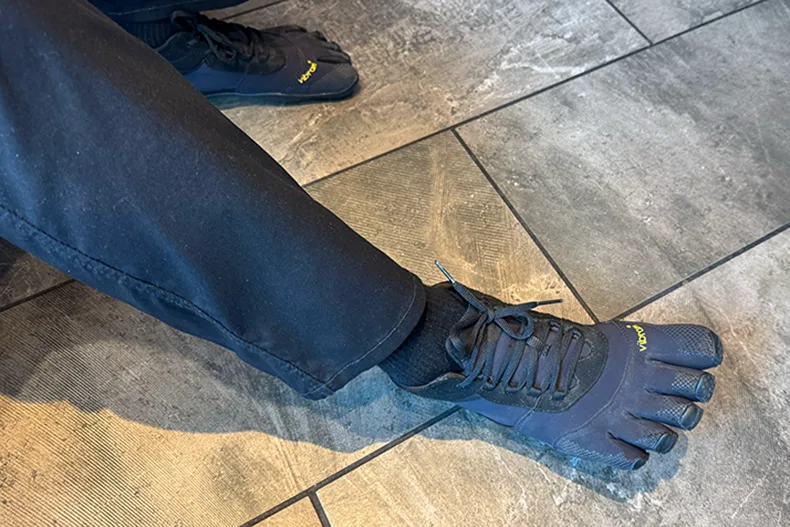
They’re his favorite shoes, hiking or not.
“I wear them to church every Sunday,” he said.
McClung has a list of about 1,100 things he’s done in his life. They range from things like “owned a daschund puppy” to “visited the Saqqara Pyramids (The oldest pyramids in Egypt).”
Even after decades of travel and some of the world’s most challenging hikes, the McClungs aren’t done.
In between hikes, the McClungs go on cruises. Last month, they took a cruise that started in Buenos Aires, Argentina, and ended in Barcelona, Spain.
The two don’t have their next hike planned yet but will be doing some more world traveling soon.
“The next cruise we’ve got is Southeast Asia: Bangkok to Hong Kong,” he said.