Editor’s Note: This story is part of our series “Helping Hands”, which aims to spotlight Johnson Countians doing good in the background of their community. If you have an idea for someone to spotlight in a future “Helping Hands” story, email us at [email protected].
At 8 months old, Stephen “Doc” Hunsley’s son, Mark (his “little mini-me,” as Stephen describes him), had his first seizure. The episode lasted more than four hours.
By 18 months old, Mark was diagnosed with Dravet Syndrome — a rare disorder that causes uncontrolled, medication-resistant seizures. By age 2, he had also received an autism diagnosis.
Hunsley and his wife, Kay, who both practiced pediatric medicine, suddenly found themselves on the other side of the exam table.
“For the first time in our life, we finally understood what it meant to be a parent of a child with special needs,” Hunsley said.
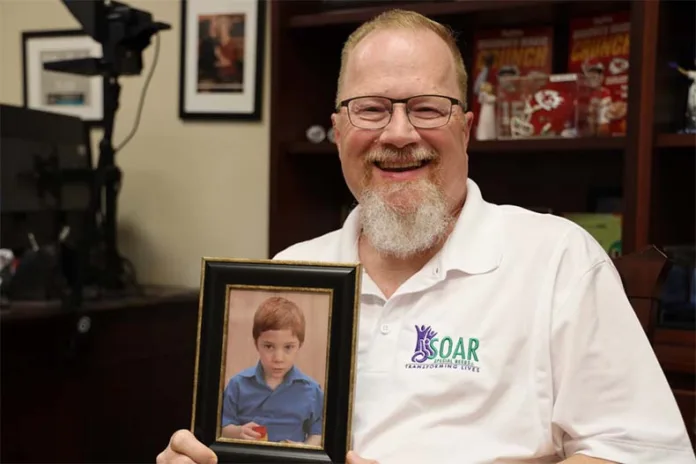
Eight years later, Mark is who Hunsley sees in the faces of the participants of his Lenexa-based nonprofit SOAR, a faith-based group geared toward helping members of the community with disabilities and their families.
Mark didn’t live past age 5, but Hunsley says he is reminded of his son every day, through the people SOAR now works with, regardless of their age.
“I call them all kids, even my 78-year-olds,” he said with a laugh. “What just melts my heart is seeing these individuals and them knowing how much I care for them and how much I love them. They come up and give me big hugs and tell me they love me.”
It’s been nearly a decade since the Hunsleys founded SOAR. The nonprofit now serves hundreds of families and works with thousands of volunteers, but Hunsley said what SOAR has grown into still only scratches the surface of what he hopes it can become.
SOAR offers accessible programming and activities

SOAR got its start as a ministry of Johnson County-based Grace Church, before gaining independent 501(c)(3) status in 2019. It operates, in large part, through community donations.
The organization’s name stands for “Special Opportunities, Abilities and Relationships.”
At its inception eight years ago, SOAR served just three individuals with the help of 20 volunteers.
Over the years, more and more families have sought SOAR’s resources, showing a clear demand. Today, the nonprofit serves more than 800 families and has roughly 2,500 active volunteers.
One of SOAR’s biggest claims to fame, Hunsley said, is its annual summer camp — open to all ages, all diagnoses, all severities.
In 2025, they hosted 217 campers, ages 3 to 78, at two sites on both the Missouri and Kansas sides of the state line. Each camp has a full medical team and a behavior staff on site.
“We truly are able to handle medically fragile individuals that normally are turned away by others,” Hunsley said. “We never send a camper away because of behaviors. We work through everything.”
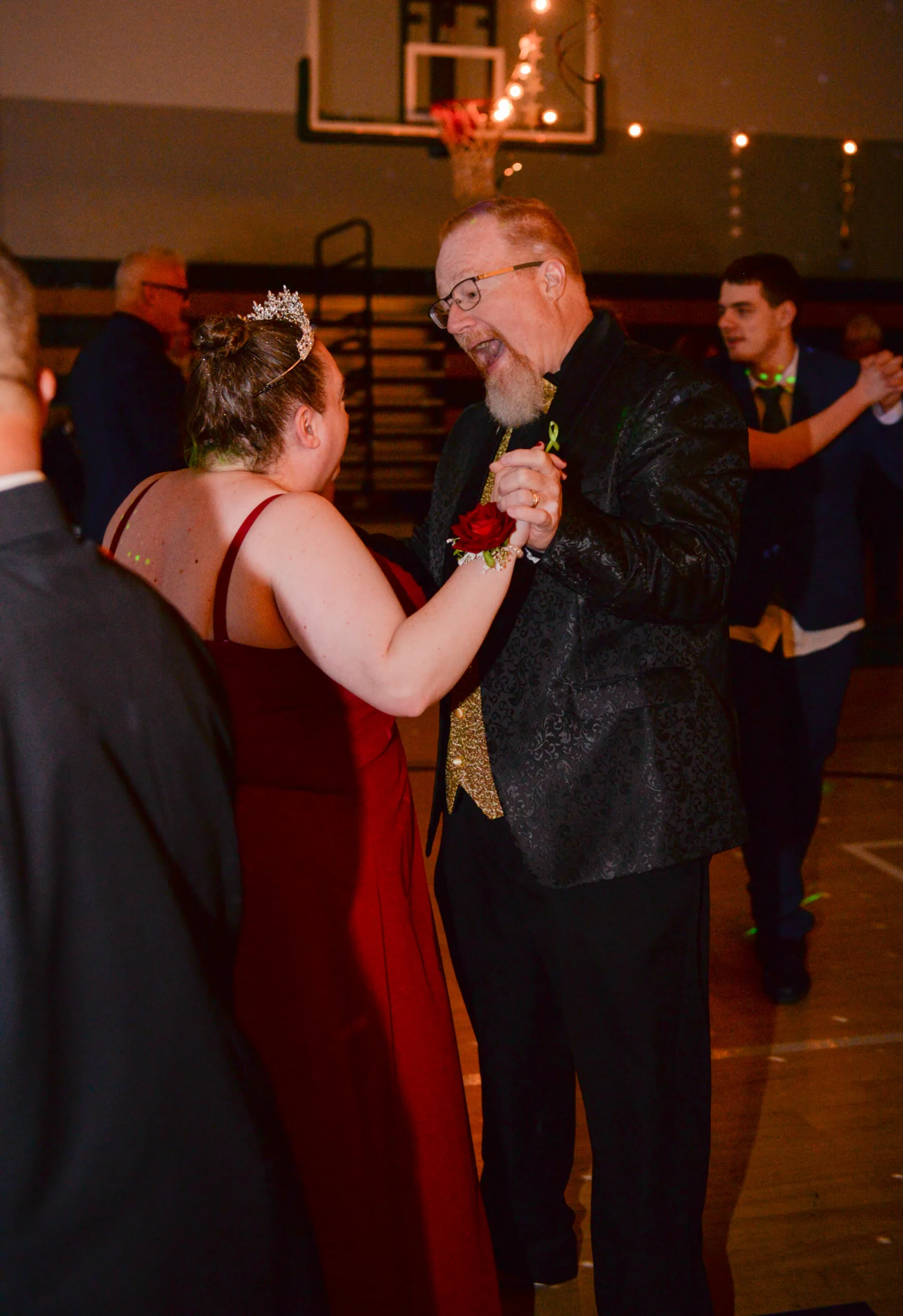
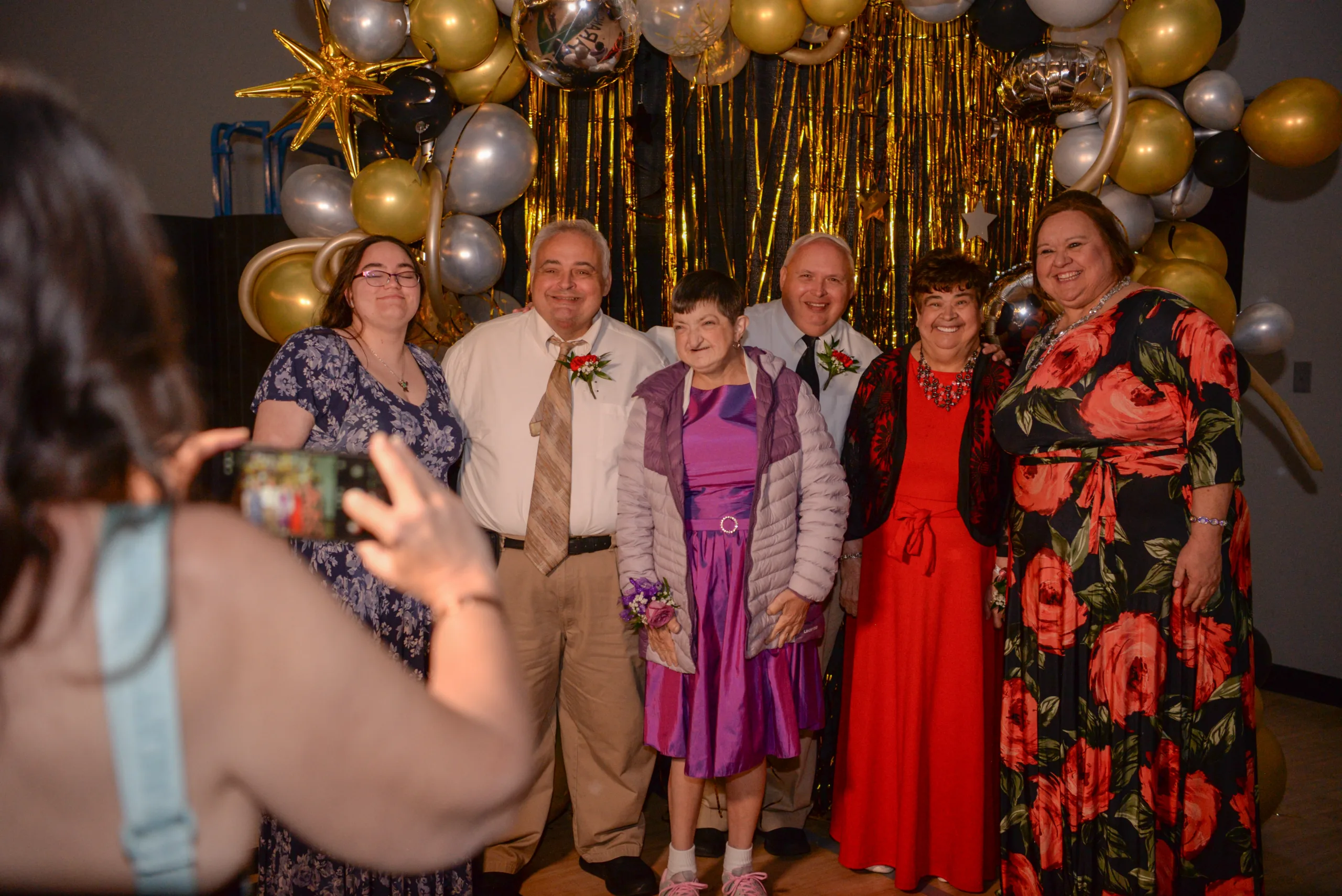
Besides the summer camp, SOAR offers a variety of other events — such as its annual prom event, fashion shows, social clubs with dinner and games, and sensory-friendly holiday events like Santa visits and Easter egg hunts.
While some “signature” events like SOAR’s summer camp cost money for participants ($499 for the camp, for example), others are free of charge.
The nonprofit’s monthly “SOARly Needed R&R” nights give children with disabilities and their siblings a free night of games and activities, while their parents take a night to themselves.
The idea behind these events, Hunsley said, is for its participants to get the chance to have the types of experiences their neurotypical peers get — and to feel just as deserving of them.
“Everybody needs to be cheered for at some point in their life,” he said. “Too many times, these individuals are told what they’re doing wrong, or told they have to leave. We want to celebrate them for exactly who they are.”
Hunsley’s son is SOAR’s “Chief Inspiration Officer”

Mark, who Hunsley remembers as an “ornery little redhead” who loved to laugh, ultimately died at age 5 from complications of his Dravet Syndrome, ten months before the launch of SOAR.
Today, Mark’s legacy still impacts SOAR, from the nonprofit’s programming choices down to its branding.
The green in the SOAR logo was Mark’s favorite color. The purple is the awareness color for Dravet Syndrome.
The organization’s mascot, Bubba Bear, is based on Mark’s nickname, “Bubba.” The red-haired bear resembles a stuffed brown bear that Mark loved.
“Everything we do is because of my son, Mark,” Hunsley said. “He taught us everything. This is his legacy.”
Hunsley hopes to see SOAR keep growing

Mark’s five years of life taught the Hunsley family a lot about the highs and lows of parenting a child with disabilities.
It also taught them a lot about how little everyone else knew about it.
According to the Centers for Disease Control and Prevention, one in six children had been diagnosed with a developmental disability as of May 2025. One in four adults had been diagnosed with some form of disability as of April 2025.
Yet in the United States, he pointed out, less than 2% of all grant funding goes toward serving individuals with disabilities.
“This country doesn’t know how to address it,” Hunsley said. “They’re not aware of it.”
One of the ways that SOAR is attempting to change that is by training churches, parishes and synagogues to accommodate and welcome families with disabilities. As of this year, Hunsley has helped train more than 750 churches.
“We truly believe everyone should be able to go to a place of faith of their choosing,” Hunsley said. “Churches should be places of belonging, where these individuals and families are missed when they don’t show up on Sunday — not (have it) celebrated that they don’t show up.”
That’s not where Hunsley hopes SOAR’s reach ends, either.
“Very honestly, this has all been part of my dream, and we’re not to where the rest of my dream is yet,” he said. “We’re one of the best-kept secrets in this town, and that’s a shame.”
In the future, Hunsley said he’d like to spearhead more job training and employment opportunities for adults with disabilities in the community and even launch housing and 24-hour respite care options through SOAR.
Beyond that, he said, he’d like to see other branches of SOAR eventually pop up in every major city in the country — even on other continents.
Beneath all the plans and programming, though, Hunsley is ultimately trying to change how the world sees people like his son.
“Too many times when we see an individual with a disability, we see autism, we see Down syndrome, we see cerebral palsy, we see a wheelchair,” he said. “Shame on us. They still have dreams. They still have desires. We need to help them reach those.”
More Helping Hands: These Johnson Countians make sure foster kids have what they need — one backpack at a time
 Thanks for reading! If you value having an independent news outlet keeping tabs on local government, schools and taxes, we're asking you to contribute to our Education Reporting Fund.