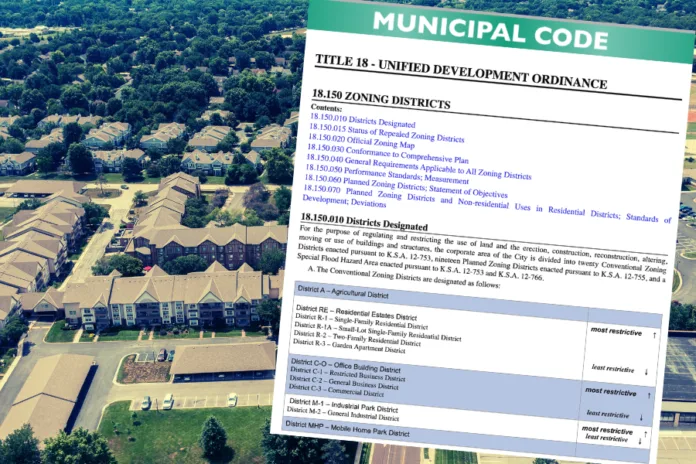
Overland Park officials are considering a complete overhaul to the city’s zoning code that would eliminate single-family-only districts and rezone all 76 square miles of the city under a new “character-based” framework.
It would be a departure from how Johnson County’s biggest city has handled zoning for decades, and a move without apparent precedent in the Kansas City metro.
Notably, the new code, called the Unified Development Ordinance, if enacted, could allow for the construction of more housing types, including duplexes and townhomes, in residential areas that are currently zoned only for traditional single-family homes.
Some officials have acknowledged the scale of what the city is attempting as they’ve discussed these changes in focus groups, workshops and public meetings.
“It’s a big deal; it’s going to take a lot of work. It is scary,” Mayor Curt Skoog said during a joint meeting of the Overland Park City Council and Planning Commission in early March, “but it’s also doable and manageable, and at the end of the day, will provide us a community that’s easier for everybody to understand.”
Supporters of a new zoning framework see it as a way to move away from more restrictive zoning standards that have largely defined Overland Park — and Johnson County — for decades, and potentially pave the way for the construction of more attainable housing.
Officials have also said the new character-based zoning approach could add more predictability for residents and developers alike around development and redevelopment potential.
Though there’s no organized opposition to this effort, some residents are already skeptical of such wholesale changes and are worried that too few people are aware of this proposed zoning framework.
In public recently, city staff have been hesitant to commit to a firm timeline, but have said the expectation is that the drafting phase of the development code overhaul will continue throughout 2026. A city webpage forecasts a December 2026 adoption.
Whittling down 30+ existing districts into 11 character-based districts
For decades, Overland Park’s zoning laws have shaped the city, dictating where homes can go up, where businesses can operate and what can be built near each other.
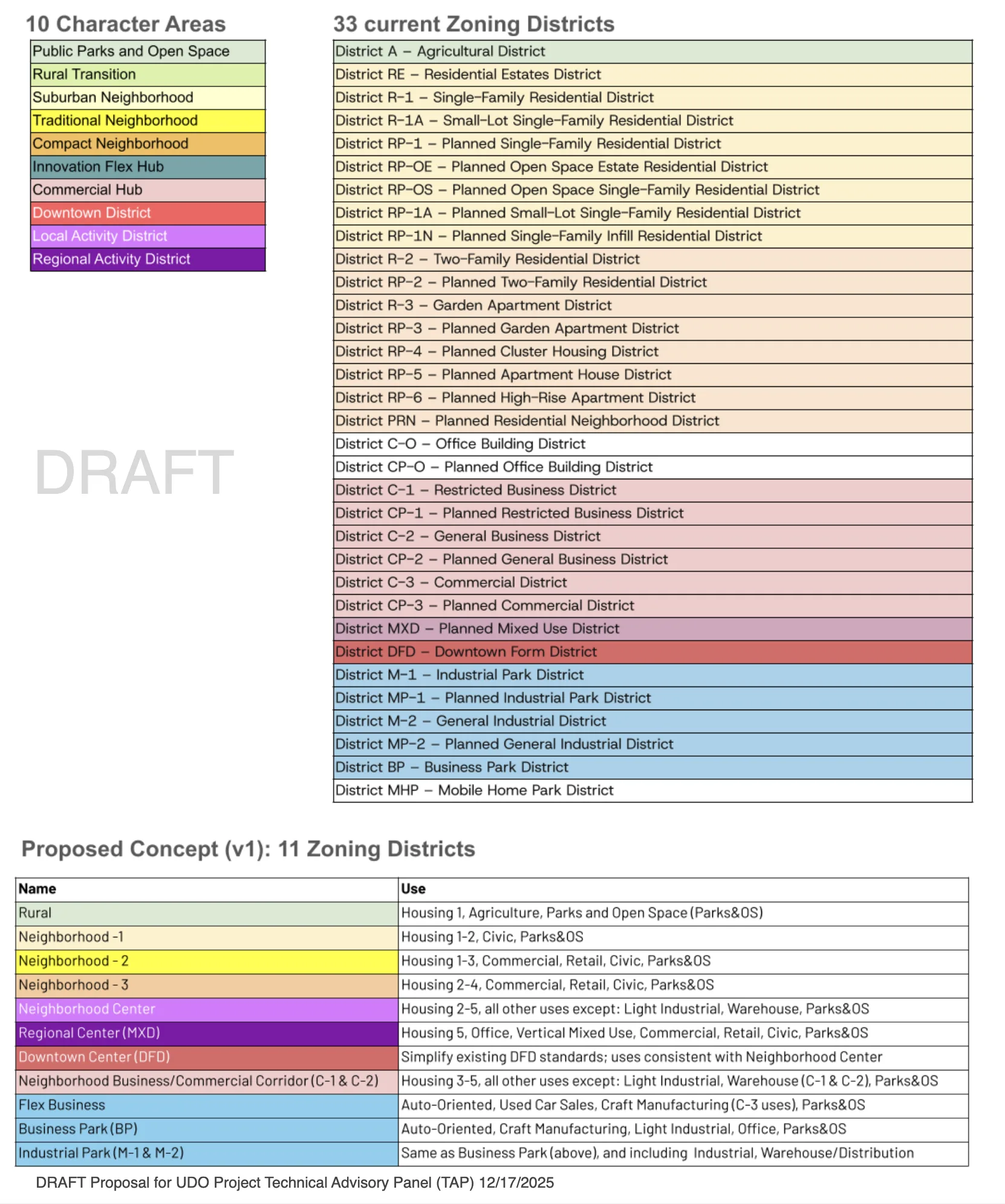
Today, Overland Park has more than 30 zoning district types, each restricted to just one use. So, in areas zoned for single-family homes, only single-family homes can be built. In the various multifamily-zoned districts, different types of apartments or townhomes are allowed. There are a variety of other zones, too, including those for industrial and corporate office-type uses.
That framework leaves little room for flexibility, critics say. The proposed Unified Development Ordinance would replace that system with 11 “character-based” zoning districts, all aligned with the city’s new comprehensive plan. Those character types include things like Traditional Neighborhood, Rural Transition Zone and Regional Activity District, among others.
In general, these “character-based” zoning districts would allow more mixing of land uses within districts than what Overland Park currently allows, such as placing single-family homes and duplexes in the same district.
Why now?
The driving force behind all of this is the city’s new comprehensive plan, adopted in spring 2024. Called Framework OP, this document, which is intended to guide long-term development patterns in the city, replaces Overland Park’s old comprehensive plan, which was enacted more than 40 years ago.
Throughout that multiyear process, city officials hinted that one of the first major steps in bringing that new comprehensive plan to life would be writing a new set of zoning and development codes to align with the goals laid out in that plan — including improved housing diversity — and a more character-type oriented land-use vision.
“Our zoning districts and approach to development, except for a few spots, are from the 1980s,” Mayor Skoog said in 2025 during early phases of the discussion. “What we’ve been charged with is dealing with the 1980s world when we’re trying to build modern structures; this is our opportunity to change that.”
At the same time, in an era where development and zoning decisions can turn toxic, some city officials have seen new codes as an opportunity to smooth out some disputes between the city, developers and neighbors.
James Toy, the senior vice president of government affairs for the Kansas City Regional Association of Realtors, said it could instill more predictability in the process for everyone.
“That gives developers more predictability, it gives homebuyers [and] businessowners more predictability,” he said. “It helps avoid mismatched development and protects neighborhood integrity.”
That’s because it would set out more specific parameters for what each property could become, whether it’s new development or redevelopment, because every property would get a new character-based zoning designation with a set list of “preferred” and “supported” uses.
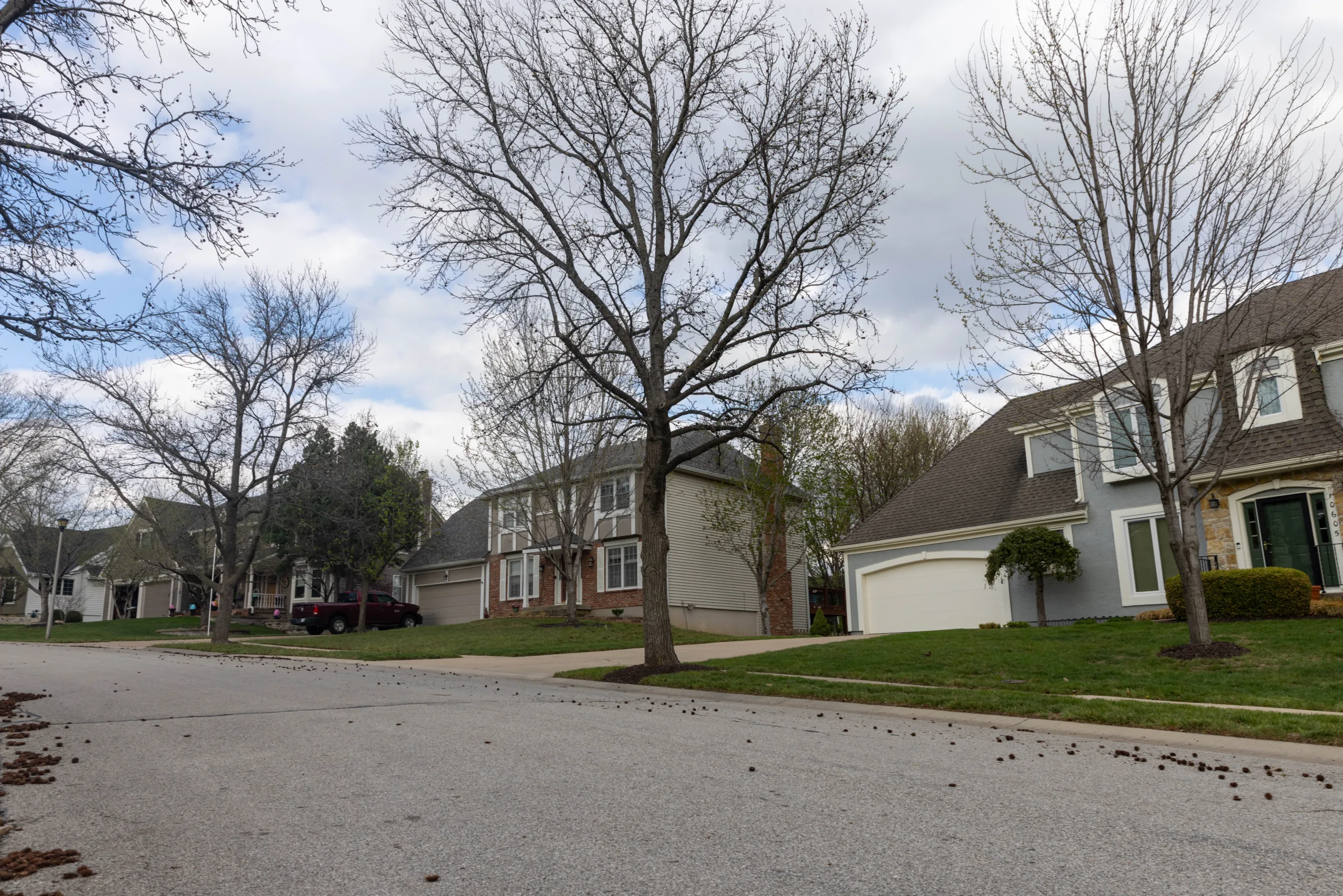
For instance, in the proposed Neighborhood 1 zoning district, which aligns with the Suburban Neighborhood character type in Framework OP, the preferred use would be detached single-family homes. Supported uses would be cottage-style homes, duplexes, and townhomes, or parks and civic spaces.
Exactly how that will look in practice is unclear, but nothing outside of those preferred and supported uses could be built on a property with that specific zoning designation.
In the past, some city leaders have suggested they see it as a way to cut down on some of the tensions that have defined some development conversations in the past.
“The promise of Framework OP and revising the UDO at least, what I believed a promise of it was to eliminate a lot of this contention,” said now-former Councilmember Sam Passer in summer 2025. “A big part of this is just eliminating that contention by putting things in that make sense.”
A tool for housing attainability
Some proponents of Overland Park’s zoning overhaul also see it as a way to address a persistent problem in Johnson County: Housing affordability.
Historically, traditional zoning rules and associated development standards have been a barrier to building more housing, particularly housing at lower price points, said Katie Killen, director of advocacy and community collaboration for Habitat for Humanity of Kansas City.
That’s because some development codes — which dictate everything from building materials to minimum lot sizes — can make it harder to build a project and add to the cost of building.
So, Killen — who sat on a committee that contributed to Framework OP — sees character-based zoning as a way to move beyond the “rigid” confines of traditional zoning and open the door to more housing options that might not have been possible before.
This could, she said, allow for typically smaller, less costly housing types such as starter homes, row houses and duplexes, that are not widely available in Overland Park now. This is often referred to as “missing middle” housing.
“I really think it helps diversify housing so that there’s multiple price points, there’s multiple styles, and also fills in some of that ‘missing middle’ that we see in the Kansas City region,” Killen said.
Some residents worry the zoning changes are too drastic
For Michelle Reinig, the proposal to rezone the entire city doesn’t sound like a good thing.
A longtime resident of the Deer Creek area around 135th Street and Metcalf Avenue, she remembers what it was like going up against the city and a developer four years ago when a proposal to redevelop a now-shuttered golf course near her home was being considered.
She thinks the city already grants too many exceptions, or deviations, to development codes that are already in place, including for building height and size. More flexibility in the zoning codes, particularly around residential areas, doesn’t sound like it will improve that, she said.
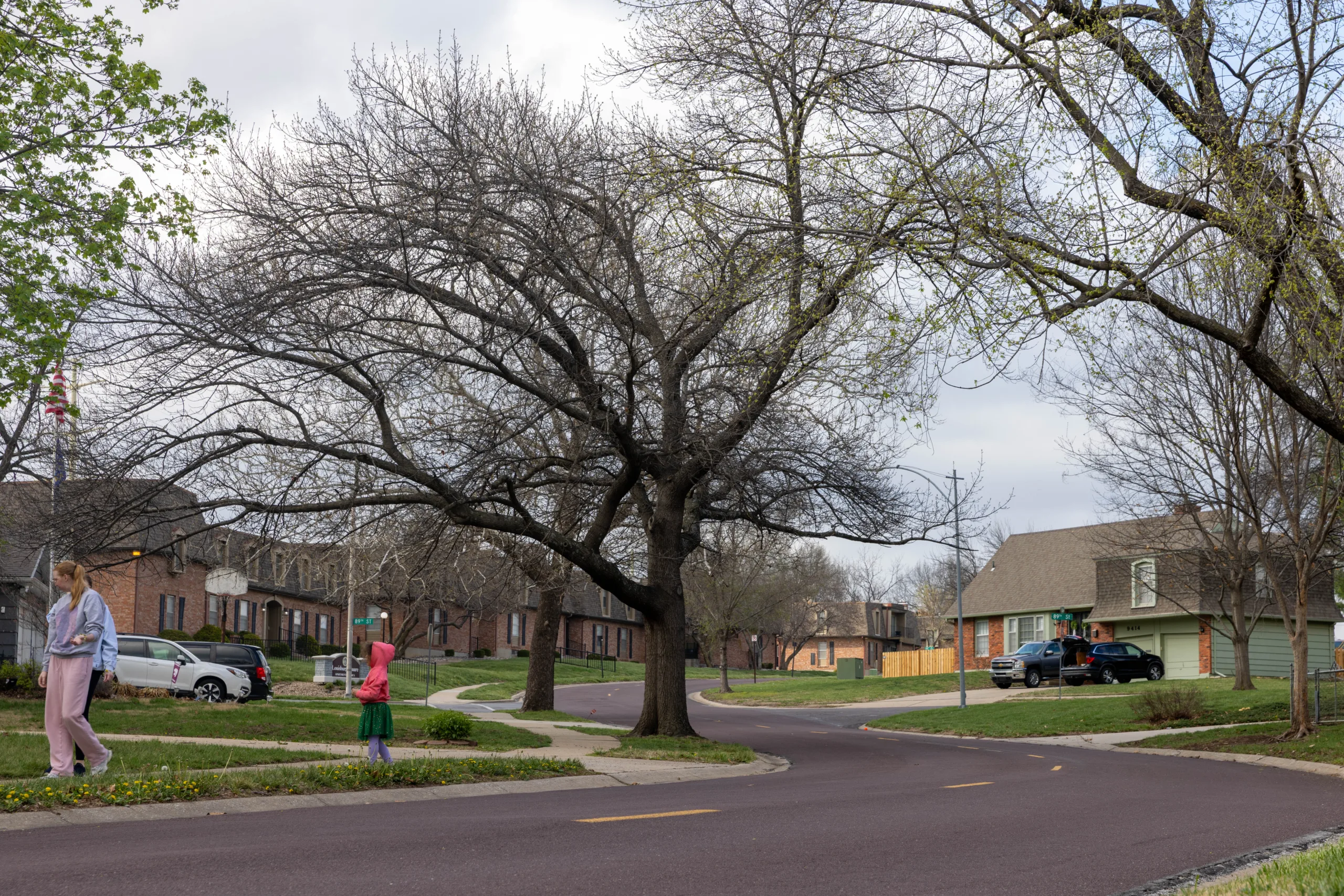
She worries that it could lead to an erosion of single-family neighborhoods that have established characters.
“More things can be passed without looking like they’re breaking the rules, because the rules are going to be a lot more general in nature and subjective in nature,” she said.
She said she’s sympathetic to concerns about housing shortages in Overland Park and around Johnson County. She agrees there needs to be more “missing middle” housing built. At the same time, she wants to see such housing built in appropriate places, not backing up to established single-family neighborhoods.
“The frustration with most people who have come up against zoning issues in Overland Park, it’s just they are not staying true to the character of the area,” Reinig told the Post.
For Sue Nagy, who has lived for decades near downtown Overland Park, her top concern is that residents aren’t paying enough attention to the zoning conversation because the proposal is too conceptual.
She still has a lot of questions about how this might all look in practice, and hopes the city keeps residents in the loop.
“I want to see more people aware of it, that’s my number one thing,” Nagy said.
What’s happening now?
Members of the public can still visit a Virtual Open House for more information about the UDO overhaul and take a survey to share feedback about the proposals through the end of April.
To adopt a new Unified Development Ordinance, both the planning commission and the city council will need to sign off.
Keep reading: Overland Park temporarily loosens zoning codes in attempt to build more housing