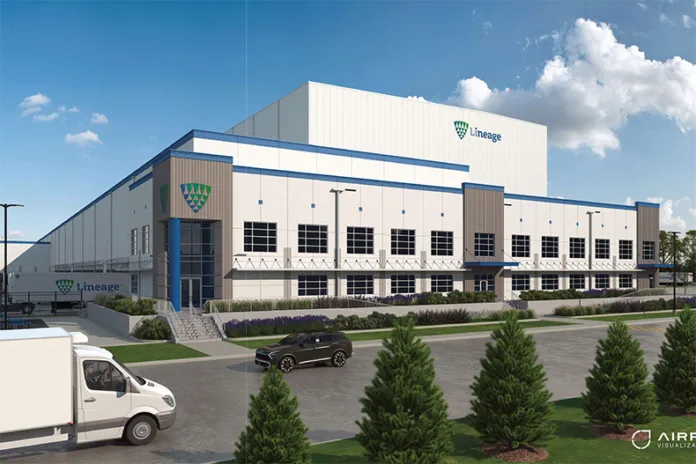
A controversial cold storage facility planned for southern Olathe will now opt for a safer refrigeration system.
Olathe City Councilmember LeEtta Felter announced on Friday that Lineage Logistics will no longer be using anhydrous ammonia refrigeration, instead opting for a transcritical CO2 system.
The use of ammonia refrigeration was one of the main reasons dozens of Olathe residents protested the facility, to be located at 175th Street and Lone Elm Road, ahead of the Olathe City Council’s vote approving the facility last September.
“Removing the use of anhydrous ammonia will provide additional peace of mind for many in the surrounding neighborhood as the project moves forward,” Felter told the Post over email. “I’m grateful the company took the time to hear the community’s concerns and respond in a meaningful way.”
One nearby resident cheered the news of the less toxic refrigerant but remained critical of the project overall, based on fears the new facility could dramatically increase truck traffic in the area.
Background
Lineage Logistics is looking to develop 146 acres to build several facilities for industrial and commercial uses, including the cold storage facility.
The cold storage facility will operate 24 hours a day, seven days a week and will be used by multiple different businesses.
Last fall, the city council voted 5-2 to approve the project, overriding a recommendation from the Olathe Planning Commission to deny it.
Residents of nearby Nottington Creek, expressed concern that anhydrous ammonia, a refrigerant commonly used in industrial cold storage facilities, could leak, causing health issues for neighbors and parks.
They packed council chambers holding signs reading things like “Vote No” and “No Anhydrous Ammonia.”
In a Facebook update on Friday, Felter, who voted in favor of the facility in September, said the new CO2-based refrigeration system is generally viewed as a safer option than anhydrous ammonia because it is non-flammable and non-toxic.
She noted that risks are more localized for CO2 systems, meaning if something goes wrong, it would be less toxic for the surrounding neighborhoods.
Both refrigerants are natural, not synthetic, but anhydrous ammonia is considered more environmentally friendly, especially in warmer climates. CO2 also requires high-pressure resistant equipment, which can make it more expensive for cold storage facilities.
Resident concerns remain
Katy Hupe, a resident of the Nottington Creek neighborhood, said the switch to transcritical CO2 is “a step in the right direction,” but questioned why the city approved the project with anhydrous ammonia.
“This facility is planned to be built directly next to a city park and less than a mile from my neighborhood,” Hupe said to the Post in an email. “Why wasn’t this change requested prior to approving the site?”
She added that residents are still concerned about the heavy truck traffic the facility is expected to generate.
Lineage previously estimated the facility would generate about 500 truck trips per day.
“The anhydrous ammonia was a big concern, but the 24-hour semi-truck traffic on unimproved roads will continue to be a daily issue for the many residents that use Lone Elm,” Hupe said. “There is also no mention of any changes to the 140-foot tall eyesore the building will be in south Olathe.”
According to Felter’s project update on social media, Lineage is expected to receive permission to begin site work soon.
Lineage did not respond to the Post’s request for comment.