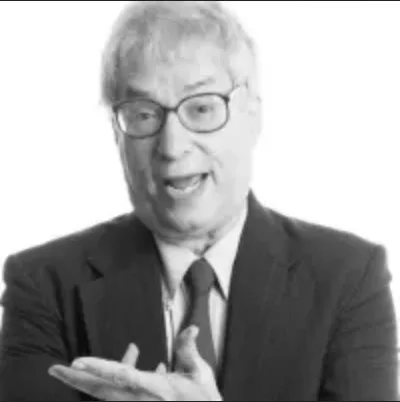
Larry was born on February 28th, 1949 and passed away on July 30th, 2026 at the age of 77
Lawrence “Larry” Goldblatt, beloved partner, father, grandfather, brother, architect, planner, developer, writer, advocate, and friend, passed away peacefully at home on July 30, 2026, at the age of 77, following a courageous six-month journey after suffering a devastating stroke in January. Despite enduring additional strokes, seizures, and the many challenges that followed, Larry never lost his determination, his curiosity, or his unwavering commitment to helping others. Even as his body weakened, his mind remained focused on solving problems, serving his community, and imagining a better future.
Throughout his illness, Larry’s remarkable sense of humor never left him. During one hospital stay, a doctor asked if he was in any pain. Larry smiled and answered, “Yes.” When the doctor asked where it hurt, he replied without missing a beat, “My wallet.” Dad jokes remained one of his favorite languages, even in the most difficult moments.
Perhaps even more telling was the gratitude that defined him until the very end. Through countless hospital stays, Larry made it a point to thank everyone who cared for him—from the environmental services staff who cleaned his room, to the dietary team who brought his meals, to every nurse, physician, therapist, and caregiver who crossed his path. He believed every person deserved to be seen, appreciated, and treated with dignity. His gratitude was never performative; it was simply who he was.
That spirit of perseverance, kindness, and gratitude defined Larry throughout his entire life.
Larry devoted his life to building more than buildings. He built communities. He championed civil rights through architecture, planning, and development. He built friendships. He built hope. Above all, he believed that architecture, planning, and development existed for one purpose: to improve the lives they support.
Born on February 28, 1949, in New Brunswick, New Jersey, Larry displayed an extraordinary curiosity from an early age. After seeing a construction site at age six, he knew he wanted to be the one designing the buildings. He earned his Bachelor of Architecture with Honors from North Carolina State University in 1972, where he also competed as a cross-country runner. He continued his education at the Massachusetts Institute of Technology, earning master’s degrees in both Architecture and City Planning in 1975. Long before interdisciplinary design became common, Larry recognized that architecture, planning, and development were inseparable disciplines. Throughout his career, he became known as one of the first professionals to truly integrate all three into a single vision for creating thriving communities.
Soon after graduating from MIT, Larry closed his eyes, placed his finger on a map of the United States, and opened them to discover it resting on Kansas City. He took it as more than coincidence. He believed it was where he was meant to be. For nearly fifty years, Kansas City became both his home and the canvas for his life’s work.
In 1977, Larry founded Lawrence Goldblatt Architecture, Planning & Development. Five years later, he founded The National Architect Corporation, envisioning a professional home where independent architects across the country—and eventually the world—could collaborate, mentor one another, share ideas, pursue continuing education, and create together the professional support system that no individual architect could build alone. He believed that access to great architecture and development should not depend on geography or resources, and that collaboration could become a powerful force for advancing civil rights and expanding opportunity. Long before online collaboration became commonplace, Larry imagined a national network built not on competition, but on cooperation. Like so many of his ideas, it was decades ahead of its time.
Throughout his career, Larry designed homes, synagogues, churches, schools, commercial buildings, neighborhoods, and master plans throughout Kansas City and beyond. His work included projects for Chabad House, BIAV, churches of many denominations, the Islamic Foundation of Kansas City, affordable housing developments, historic preservation initiatives, neighborhood redevelopment plans, and civic institutions. Larry fought tirelessly to protect the unmarked slave graves threatened by Kansas City International Airport construction, believing that those whose lives had gone unrecognized deserved to be honored with dignity and never forgotten. He devoted years to preserving places that carried the stories of those who came before us, ensuring that history would not be erased. He also played a pivotal role in preserving and advancing the Mutual Musicians Foundation, whose continued success contributed to its designation as a National Historic Landmark and the preservation of Kansas City’s historic jazz district.
For many years, Larry also shared his ideas through writing. As a longtime columnist for the Kansas City Business Journal, he challenged readers to think differently about architecture, city planning, and public policy. He also served as speechwriter and planning advisor to Mayor Emanuel Cleaver during his campaigns and administration, helping articulate a vision for a stronger, more inclusive Kansas City.
But Larry’s greatest gift was not his intellect. It was his ability to bring people together.
Grounded in the values of his Jewish faith and strengthened through years of tefillah (prayer), Larry formed lifelong friendships across every race, religion, neighborhood, and profession. He worked comfortably alongside the Jewish community, Baptist pastors, Muslim congregations, Christian ministries, Black community leaders, neighborhood advocates, elected officials, developers, artists, educators, and families from every walk of life. Whether working in Kansas City, St. Croix, or elsewhere, Larry never saw labels. He saw people. He believed we are strongest when we work together, and his friendships reflected the kind of world he hoped humanity would become—one defined not by division, but by dignity, mutual respect, and love. His love and reverence for G-d shone through every aspect of his life. His unwavering commitment to truth, honesty, and justice was not simply a professional ethic—it was a reflection of his faith.
Larry believed architecture was never about buildings alone. It was about freedom. It was about helping families find safe homes, helping neighborhoods reclaim hope, helping communities preserve their history, and helping people recognize possibilities they could not yet see. His commitment to justice extended well beyond design. Representing himself, Larry successfully brought two cases to the docket of the United States Supreme Court—an accomplishment many attorneys pursue their entire careers without achieving. Whether advocating for property owners, historic preservation, or civil rights, he never hesitated to challenge institutions when he believed truth and justice demanded it. He dedicated decades to affordable housing, neighborhood revitalization, historic preservation, and empowering communities to shape their own futures. Even after suffering a stroke earlier this year, Larry continued trying to solve complex redevelopment and housing challenges. Where others saw impossible obstacles, Larry always saw another path forward. Larry saw potential before anyone else did. He had an extraordinary ability to see not only what a building could become, but what a person, a neighborhood, or an entire community could become if someone simply believed in them first.
A member of Mensa, Larry possessed a remarkable intellect, but those who knew him best remember something even greater than his brilliance: his extraordinary kindness.
One story captures his heart more than any professional accomplishment. While giving a fundraising presentation at a Baptist church he had designed, a young boy—no older than twelve—raised his hand and asked what he could personally do to help with the church’s renovation. Larry stopped his presentation, reached into his pocket, pulled out his wallet, and handed the boy the only $20 bill he had. Turning to the congregation, he said, “This young man is the leader of the attitude we must all possess.”
That was Larry.
Whether giving away the last cash in his wallet to someone in need on a street corner, spending hours helping a friend solve a difficult problem, or offering encouragement to someone who had moments earlier lost hope, Larry believed generosity was measured not by abundance, but by willingness. He gave freely of his time, his intellect, his compassion, and his heart.
Larry approached every challenge with extraordinary determination. During graduate school at MIT, students jokingly competed to see who could stay in the studio the latest while working on their capstone projects. One of his classmates, future architect Curtis Fentress, famously left his studio light on all night before going home to sleep. Larry never got the shortcut memo. Believing everyone else was still hard at work, he stayed in the studio trying to outlast Curtis. That story became a perfect metaphor for the way Larry lived his life—he simply outworked everyone around him, not for recognition, but because he believed every project, every problem, and every person deserved his very best.
He was fearless in his pursuit of truth, unwavering in his principles, and relentless in his belief that every problem had a solution worth finding. He never accepted that broken neighborhoods were beyond repair or that injustice was inevitable. At the heart of everything he did was one simple conviction: every life mattered. Whether he was protecting forgotten slave graves, advocating for affordable housing, preserving historic neighborhoods, mentoring a young student, giving his last dollars to someone in need, or simply thanking the person delivering his hospital meals, Larry believed every person possessed inherent dignity and immeasurable worth. He believed people, working together with integrity and creativity, could leave every community better than they found it.
Yet for all his accomplishments, Larry’s greatest joy was always his family.
He was a devoted son who lovingly cared for his mother during her later years after she moved to Kansas City. He was a loving father who listened patiently, encouraged curiosity, and believed deeply in the potential of his children. He adored being “Saba” to his grandchildren, who knew him not as the architect or planner, but as the grandfather who read books, played games, listened intently, laughed often, and made every child feel deeply loved. His sense of humor could always bring a smile and a laugh to those around him.
Larry was preceded in death by his beloved parents, Louis Goldblatt and Selma Goldblatt, whose love and guidance helped shape the man he became.
Larry is survived by his beloved and devoted partner, Paula Fesenmeyer; his son, Aaron Goldblatt, daughter-in-law Marjorie Marchin, and grandchildren Phoebe and Flynn Goldblatt; his daughter, Leah Goldblatt, her fiancé, Yisroel Tzvi Zalman Meyers, and his cherished grandson, Jack McCormack; his sister, Ruth G. Nolan, and brother-in-law Bruce McKenna; along with countless dear cousins, friends, colleagues, neighbors, and community partners whose lives he profoundly touched.
Larry’s legacy cannot be measured by the buildings he designed or the plans he drafted, impressive though they were. His true legacy lives in the people he encouraged, the neighborhoods he strengthened, the friendships he forged across every imaginable boundary, and the enduring belief that communities become stronger when people choose cooperation over conflict, generosity over self-interest, and love over division.
In a world that too often encourages us to see what separates us, Larry spent his life helping people discover what united them. He saw potential everywhere—in people, neighborhoods, communities, and even in problems that others believed had no solution. His greatest work was never a building. It was the countless lives he strengthened and the enduring belief that people are always better when they build together.
Funeral graveside services will be held at Sheffield Cemetery, 6200 Wilson Avenue, Kansas City, Missouri 64123, on Tuesday, August 4, at 10:00 a.m. CDT.
In lieu of flowers, memorial contributions may be made to the Mutual Musicians Foundation, continuing Larry’s lifelong commitment to strengthening communities and expanding opportunity for others, or to Chabad of Leawood in support of its unwavering commitment to the Kansas City Jewish community.
Memorial contributions in Larry’s honor may be made to:
Chabad of Leawood
https://www.kansasjewish.com/
Donations: https://www.kansasjewish.com/templates/articlecco_cdo/aid/5020892/jewish/Donate.htm
Mutual Musicians Foundation
https://www.themutualmusiciansfoundation.com/
Donations: https://checkout.square.site/merchant/MLXHX2BFQA30T/checkout/YNLZHJI75TDXRQQ4LELNVNUG
Obituary published by Louis Memorial Chapel.