Six months out from the project’s completion date, officials from the Kansas Department of Transportation say the 69Express project is operating as intended and running “smoothly.”
The project, which wrapped up earlier this year, took about three years to complete and cost about $572 million.
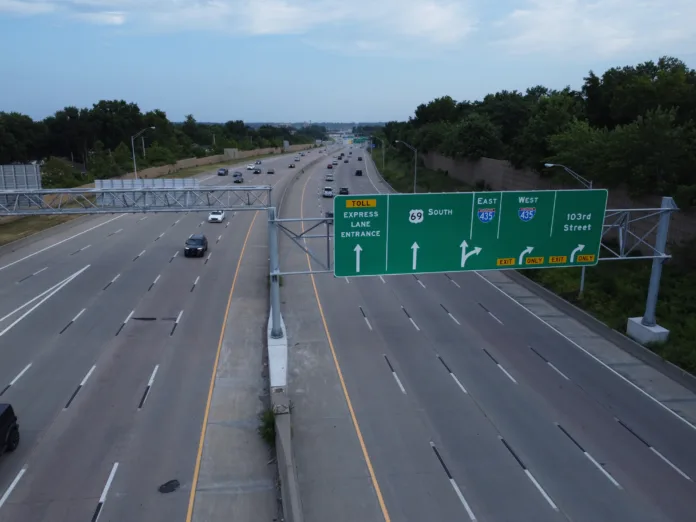
It brought the state’s first express toll lanes to U.S. Highway 69, running between 103rd and 151st streets going both north and south.
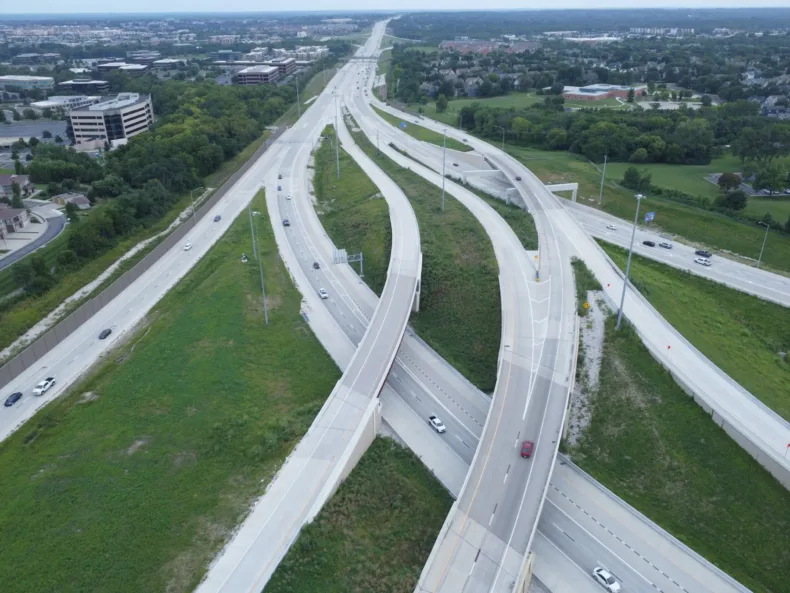
Primarily focused on the stretch of the highway between Interstate 435 and 167th Street, the project also touched multiple interchanges, bridges and some of the surrounding surface streets.
All of that was expected to address congestion in one of the state’s busiest four-lane highways that has historically experienced an elevated general crash rate.
That said, it did bring a headache to some drivers during that time due to changing traffic patterns, lane and interchange closures and roadwork-related congestion that created unreliable travel times.
Express lane usage is on pace with expectations
KDOT officials acknowledge that it might seem like people aren’t using the new express lanes, but they are.
Between their opening in late February through the end of July, the express toll lanes recorded about 320,000 trips, according to KDOT data.
During the morning and evening peak rush hours, the lanes carry, on average, between 4% and 5% of traffic traveling on U.S. Highway 69. In general, express lane traffic volumes are on the rise, going up about 1% or 2% each week.
That’s a good “indicator” that the express lanes are delivering reliable travel times for their users while also still maintaining capacity to offset future congestion in the general purpose lanes (that is, the regular lanes that aren’t tolled), said Craig Cogan, a 69Express program manager from HNTB.
“A big part of why KDOT chose the express lane option for this corridor is it gave them the ability to provide reliable trips when it opened, but also far into the future as traffic continues to grow in the corridor,” he said.
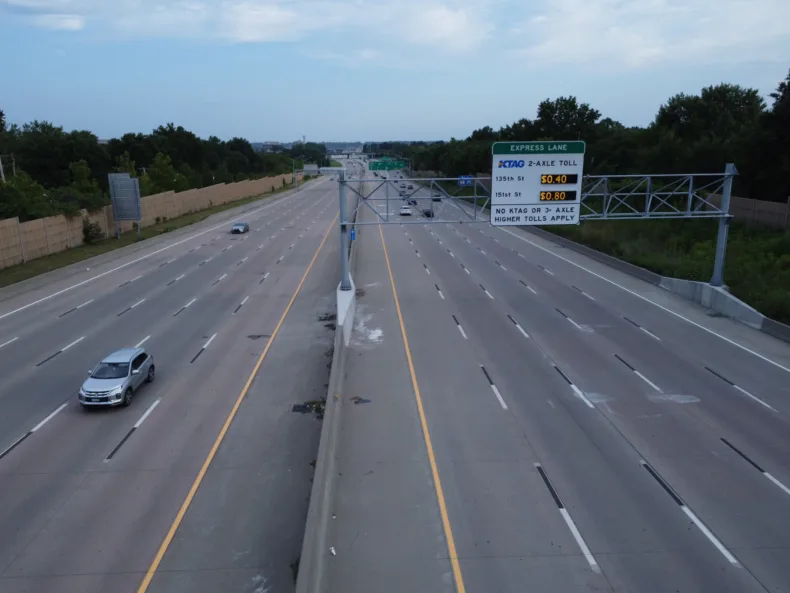
If the express lanes were constantly full, that wouldn’t be good, said Karla Clark, the 69Express operations manager. In fact, it could be a signifier that the project isn’t working as intended.
“If you see that lane completely full all the time, that means their general purpose lanes are congested, and you’ve got a traffic management problem,” she said.
Delaney Tholen, the public information officer for KDOT in the Kansas City metro, told the Post that the most popular express lane segment is the portion between Blue Valley Parkway and 151st Street going south.
All those numbers are pretty much in line with what KDOT expected from the express lanes.
“This is what other express lane operations have seen in their early opening months as well,” she said.
What are readers saying about 69Express? Find out here.
KDOT project brought more than the express lanes to US-69
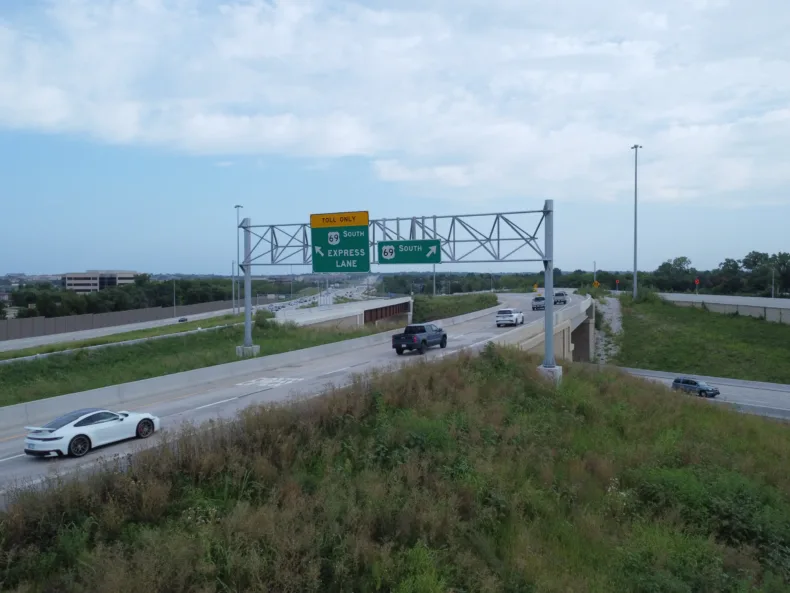
The project was about more than the express toll lanes; it also brought some much-needed safety improvements and general upgrades to a stretch of the highway with aging infrastructure.
“That’s such a large aspect of the project that I think has sometimes been overlooked,” Tholen said. “The express lanes are but one important part of this project, and there are all of these other facilities that have been rehabilitated or completely reconstructed.”
During the 69Express project, multiple bridges were replaced, as were interchanges, some of the surrounding surface roads and highway pavement.
That portion of the work addressed infrastructure assets that were 50 years old or older and had reached the end of their useful life, Cogan said, while also improving traffic flow and safety issues.
“KDOT was able to address really all of those infrastructure conditions [and] needs with with the project,” he said.
Additionally, noise barriers to block the sound of the highway from nearby residential areas have been replaced or added.
Some things to keep in mind when driving US-69
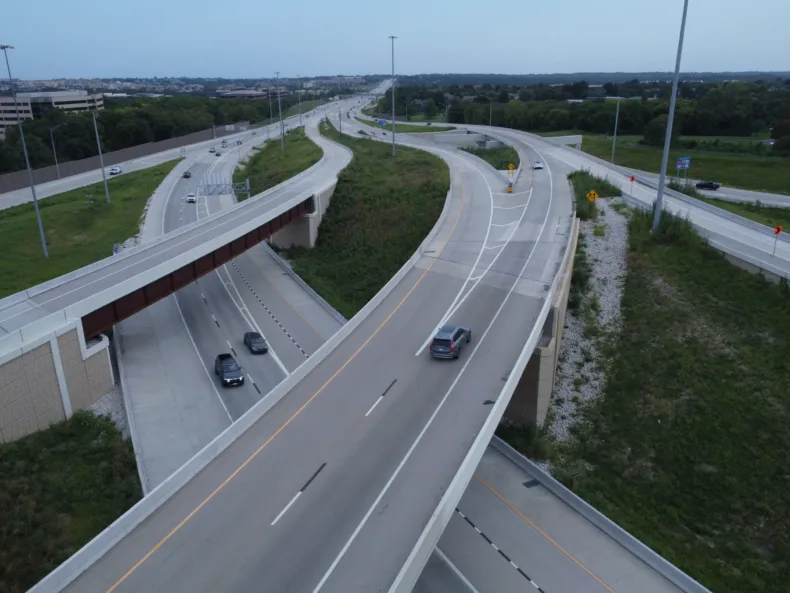
Even though things are operating “really pretty smoothly,” Clark had some reminders for drivers who use U.S. Highway 69.
For starters, it is against the law to cross double white lines to enter or exit the express lanes, and drivers can get a ticket from the Overland Park Police Department for doing it.
Instead, you have to enter and exit at the designated areas, which are roughly around 103rd Street, Blue Valley Parkway, 135th Street and 151st Street going either direction.
The transportation department also reported some issues with speeding, particularly in the express lanes.
“It’s not the Autobahn,” Clark said. “Express lane does not equal express speed.”
Drivers using the express toll lanes still need to drive the posted speed limit of 65 miles per hour.
Finally, drivers who have a K-TAG — the toll transponder from the Kansas Turnpike Authority — get a cheaper ride through the express toll lanes.
While the cost will still be variable depending on demand and the time of day, the price posted on digital signs over the express lanes shows the cost for K-TAG users, who get a 50% cheaper toll than drivers who don’t have a K-TAG.
According to KDOT data, the average cost per express lane trip for a K-TAG user has been about 50 cents since February. On the other hand, drivers who don’t have K-TAG have paid about $1 per trip.
You can get a K-TAG online at driveks.com. (Find a video here for a more detailed tutorial.)
Keep reading: How to use US-69 express toll lanes through Overland Park