In a decision that one councilmember described as “heartbreaking,” the Leawood City Council last week voted to follow their public works department’s advice and not install sidewalks on some streets leading to Brookwood Elementary School next year.
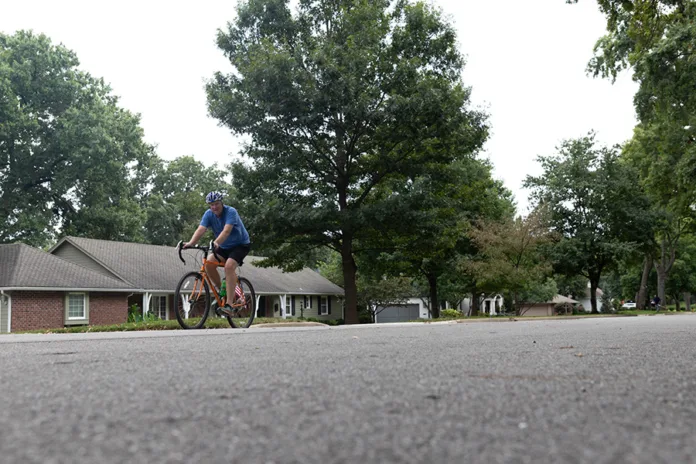
The sidewalks were being considered for the street reconstruction planned for Mohawk Lane between 97th Place and 101st Street and Pawnee Lane between 101st Street and 103rd Street, linking pedestrians from the neighborhood to the crosswalk on 103rd to Brookwood.
The sidewalks would have been the first on the streets, which are to be torn out and redone next year. Parents of school children at Brookwood and elsewhere in Leawood have pushed for safe streets and sidewalks after Duke Ommert, a student at Brookwood, was killed while riding his e-scooter almost a year ago.
But residents along Mohawk and Pawnee Lanes were adamantly against the sidewalk plan because they would have to pay for their installation and because a number of mature trees would have to be cut down to make room.
“It kind of breaks my heart we’re not putting sidewalks in there because I think in the long run we probably will want sidewalks there,” said Councilmember Alan Sunkel at the city council meeting on Sept. 21. “It’s sad to me because clearly there are kids who would use it and it would make them safer. But here we are.”
Homeowners would have to pay hundreds a year for sidewalks
Sidewalks have been discussed in the neighborhood since 2022, when city public works officials were planning for the upcoming street reconstruction, said Public Works Director David Ley.
That year, officials took a survey of residents north of the school whose streets led to the Brookwood crosswalk. About 49% of those surveyed were in favor of sidewalks.
Pedestrian safety has become a higher-profile issue since then. In the aftermath of Ommert’s death, parents have attended city council meetings — some with children who survived their own crashes with cars — asking for more and better sidewalks, slower speed limits and better crosswalks signals.
The Leawood City Council has acted on proposals for helmet requirements for young riders, rebuilt some sidewalks and reduced lanes on part of 103rd Street.
The city revisited the sidewalk question with Mohawk Lane and Pawnee Lane residents, sending another questionnaire in 2026, this time providing more detail on the tree loss and funding.
According to city policy, residents whose properties touch the new sidewalks would be assessed the cost of putting them in through a special benefit district.
Beth Breitenstein, the city’s spokesperson, told the Post that a letter sent to residents stated they would be on the hook for paying $500-$600 per year for 10 years to cover sidewalk costs.
This time the results were more lopsided. Residents on both sides of the street were polled, but the sidewalks would have gone on only one side, Ley said.
The city reported 90% of those responding replied that they wouldn’t regularly use the sidewalks, 94% were opposed to the sidewalks, 95% said they would not allow a sidewalk to be built on their property, and 100% said they did not favor the proposed sidewalk layout, Ley said.
That level of opposition was the reason some councilmembers gave for their vote to accept the staff’s recommendation not to include sidewalks in the plan for 2027.
Councilmember Julie Cain, who chaired the city public works committee as it reviewed those results on Sept. 2, said it put committee members in a difficult position because of the overwhelming opposition of those who would have to pay.
“The question to the Public Works Committee was, are you going to force the residents to pay for a sidewalk that they’re saying they flat out don’t want?” Cain said.
The public works committee held two meetings on the subject with sometimes emotional testimony that sometimes seemed to pit older residents against younger ones.
Besides the expense and the trees, some neighbors who opposed the sidewalks referenced their difficulty shoveling snow or the fact that they’re on fixed incomes.
Could a federal grant change things?
Cain and some other councilmembers on Sept. 21 were hopeful that the city’s participation in Safe Streets For All could provide some ideas on how to address the conflicting desires of residents.
Safe Streets For all is a national effort aimed to eliminate traffic deaths and severe injuries for all users. The city will use a $452,000 federal grant, $56,000 state grant and $56,000 from its own coffers to search for safety improvements to all aspects of street infrastructure.
Councilmember Matt Peppes said the decision not to include sidewalks near Brookwood, “doesn’t necessarily mean that the broader safety conversation stops here.”
There was no public comment period during the Sept. 21 discussion.
Councilmembers present were Sherrie Gayed, Rachel Rubin, Lisa Harrison, Mary Larson, Steve Kaster, Peppes, Cain and Sunkel. Mayor Marc Elkins did not vote.
 Thanks for reading! If you value having an independent news outlet keeping tabs on local government, schools and taxes, we're asking you to contribute to our Education Reporting Fund.