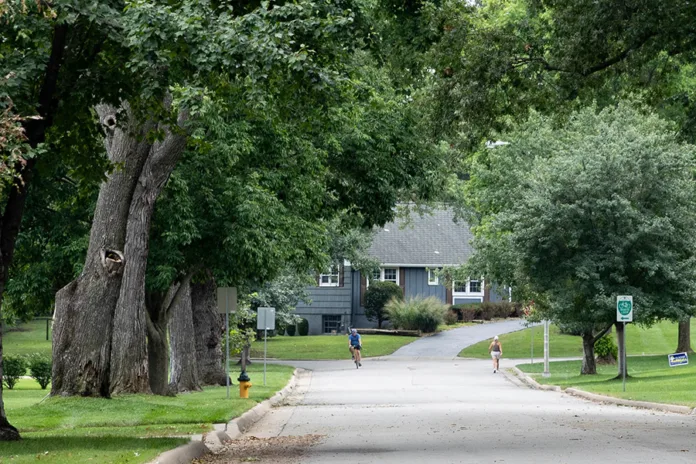
Eleven months after Brookwood Elementary School fourth grader Duke Ommert was killed while riding his e-scooter — prompting heartfelt pleas from parents for safer streets — the Leawood City Council is preparing to discuss a recommendation not to install sidewalks on Brookwood’s nearest residential streets.
The reason: Overwhelming opposition by the neighbors along those streets who, under the city’s sidewalk policy, would be charged for the sidewalk installation and expected to shovel and maintain it. Many were also concerned about the number of mature trees that would have to be removed.
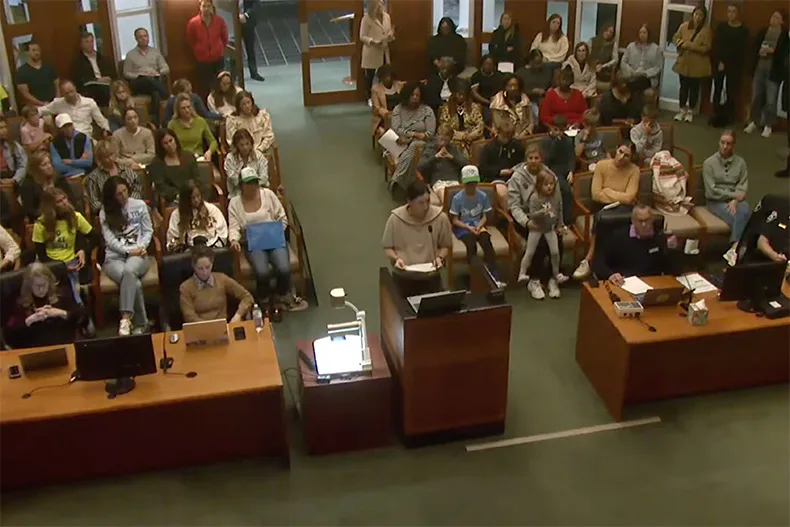
Because of that opposition, city staff recommended that sidewalks not be included in the 2027 residential street reconstruction program. After a sometimes emotional public hearing Sept. 2, the city’s public works committee, which includes volunteer members as well as city councilmembers, went along with that recommendation.
The item is now headed for the full city council, possibly as early as Sept. 21.
Car-pedestrian collisions prompt parental outcry
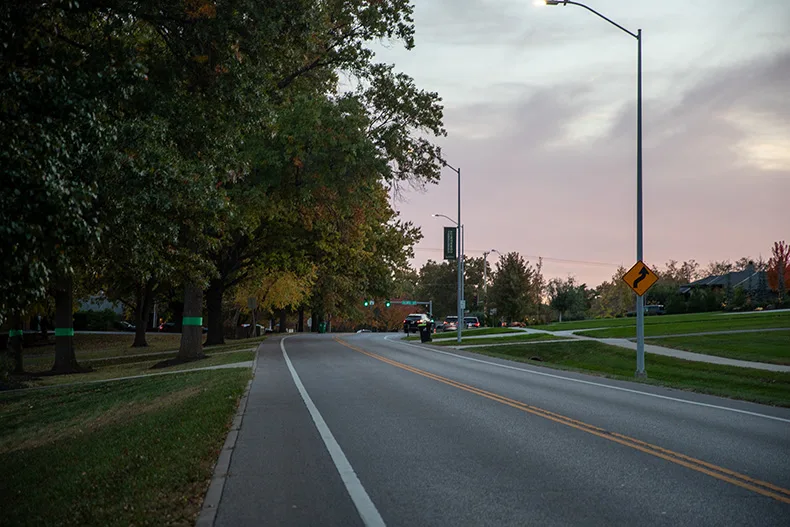
Parents had already been calling for more pedestrian safety by the afternoon of Oct. 13, 2025, when Ommert was struck by a vehicle at Lee Boulevard and 103rd Street, about a mile from his school. But his death was a catalyst for the attention to pedestrian safety that followed among city leaders.
Many parents showed up at ensuing meetings to share their thoughts on measures the city council pushed to the top of the agenda — a helmet ordinance, street improvements that included a lane diet for part of 103rd Street as well as a different traffic signal configuration there, and generally slower speeds, better signs and traffic signals and more separation between sidewalks and the curb.
They were particularly concerned about the areas around Brookwood Elementary, 3411 103rd St., and Corinth Elementary, 8301 Mission Road.
Sidewalks, particularly along Lee Boulevard, were also a major issue. Some parents have asked councilmembers to consider adding sidewalks to the east side of Lee Boulevard. The street currently only has sidewalks on the west side. If sidewalks had been on both sides of Lee Boulevard, the accident might not have happened, Duke’s mother, Monica, said at one city meeting.
Some parents brought along children to the November city council meeting who had survived being hit by vehicles in Leawood. At that time, police confirmed that they had investigated 15 crashes in the past five years involving pedestrians or people riding on scooters or e-scooters.
At least one more vehicle-scooter crash has happened since then. Further south, at 143rd Street and just outside Prairie Star Elementary School, another boy on an e-scooter was hit. He recovered at home from his injuries.
Sidewalk policy makes homeowners pay
There is not a robust network of residential sidewalks in the older part of Leawood. The majority of residential streets north of Interstate 435 were built without sidewalks, according to city officials.
In the months since Ommert’s death, the council has acted on several pedestrian safety proposals. They enacted a helmet requirement for riders younger than 18 on electric-assisted or motorized vehicles. They also fast-tracked some sidewalk widening and traffic signal improvements along 83rd Street and reconfigured traffic and signals on 103rd Street, just in front of Brookwood.
But sidewalks have remained an issue because the city policy requires homeowners who would have them on their lots to agree to pay.
Below is a copy of Leawood’s sidewalk policy.
 Loading...

 Reload document
  Open in new tab
 Property owners can request a sidewalk in front of their property, but there are some rules. The proposed sidewalk must stretch from intersection to intersection, and it needs the signature of 75% of homeowners with property touching it to move forward. Those homeowners would be assessed the cost of putting it in.
The city public works department has asked the sidewalk question before to people living near Brookwood. In 2022, as the department prepared for its 2023 residential street reconstruction, it sent out a survey to homeowners. Less than 50% approved of the idea.
The sidewalks were proposed again in 2026, this time to homeowners between 97th Place and 101st Street on Mohawk Lane and between 101st Street and 103rd Street on Pawnee Lane.
The survey included information about the homeowners paying for the sidewalks and the possible trees that would be cut down. This time, the response was 90% opposed to sidewalks, with 95% elaborating that they would not agree to an easement if sidewalks are planned.
Older homeowners on fixed incomes vs. parents of young kids
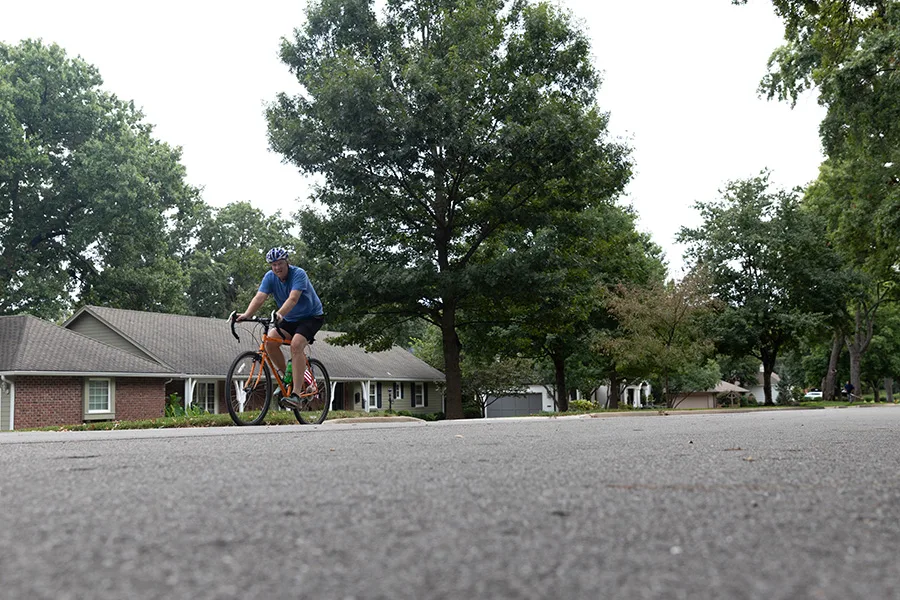
The responses appeared to pit the wishes of long-established and older residents against those with grade-school-age kids.
The “open-ended comments” of the sidewalk survey included anonymously in a report to the city public works committee were adamantly against the sidewalks, with several responders saying they were “empty nesters” or living on a fixed income or unable to shovel more than their driveways.
Many mentioned their objection to the cost of the sidewalks.
“I refuse to pay for or maintain a sidewalk,” wrote one. “Brookwood students are free to walk in my yard.”
“We are senior citizens living on a small income and would like to stay in our home, but with all the additional costs, we may be forced out of Leawood. We can barely clear our driveway, much less 60-plus feet of sidewalk,” wrote another.
Others said sidewalk upheavals would become an eventual eyesore and liability hazard, and wondered why the Brookwood area needs sidewalks when more students walked to school without them in 1960.
The removal of trees along the streets was also frequently mentioned, with responders saying it would ruin the ambiance of the neighborhood and decrease property values. At least one suggested speed tables or speed bumps to slow down traffic.
Public works committee takes a vote
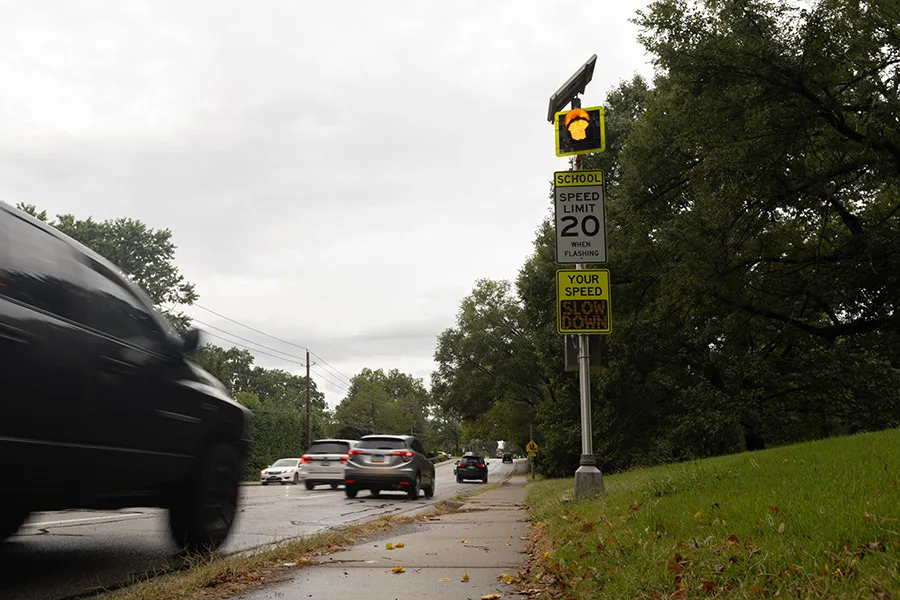
That line of thinking continued into the public comment time at the public works committee. William Dennis told the committee that generational shifts in the neighborhood might mean the school-age children the sidewalks are built for would eventually be gone.
Karen Axford said she is already shoveling her circle drive and, “I don’t even know how I would shovel 100 feet of sidewalk out in front.” Axford said she moved to the area for the “beautiful wide streets and those beautiful trees and I would really like to keep it that way. I would hate to see it changed.”
But the committee meeting also drew supporters of the sidewalks. Sara Hertz Wu called the idea of denying sidewalks on a direct route to an elementary school “heartbreaking.”
“I understand the tree issue, but we’re talking about trees versus a kid getting hit by a car. Those are not the same thing,” she said.
Amy Reid became emotional as she talked about the issue. She said she didn’t think it was fair to make the homeowners pay, but noted that people of all ages get out and walk their dogs or run.
“I hope that no matter how old I am that I value how people are getting around in our neighborhood,” she said.
Katy Wirtz recalled traffic and fast-moving school buses in the area, as well as more children.
“What’s it going to take, a kid getting killed on our street?” she asked.
But when it was time to vote, most committee members said they like sidewalks but could not square that with the homeowner opposition. They agreed 7-1 to accept the staff recommendation and not support adding sidewalks to the reconstruction plan.
The holdout was Kyle McCawley, who said that if there are no sidewalks, pedestrians end up walking in the streets, which are less safe.
“For me it comes down to community betterment, and I just think sidewalks are a part of that,” he said.
Safe streets for all
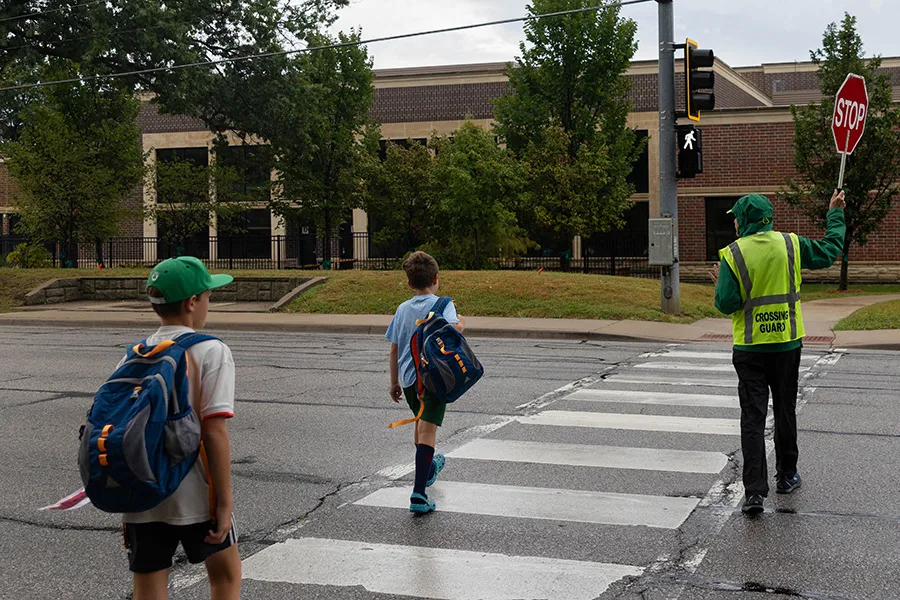
The recommendation puts the city in an awkward position when it comes to participation in the Safe Streets for All program.
The city is currently enrolled in that nationwide effort to eliminate traffic fatalities and severe injuries for all users.
The city was awarded $452,000 in federal dollars and a $56,000 state grant, then added $56,000 from its own budget for the Safe Streets for All program. It involves a study of all aspects of street infrastructure, including serious or fatal traffic collisions with an eye toward safety.
Councilmembers heard an update on that project during the Sept. 8 work session, in which a consulting team from Burns & McDonnell shared data showing one fatal injury and 15 suspected serious injuries to vulnerable street users (pedestrians and bike riders, for example) during the period from 2015 to 2024.
Councilmember Julie Cain, who chairs the public works committee, mentioned at the work session the neighborhood’s opposition to sidewalks, saying every meeting of the committee lately has been about safety.
“We really need help,” on the issue, she said.
Earlier, at the Sept. 2 public works committee, she urged sidewalk supporters to remain “loud and proud” to convince their neighbors and continue to bring the issue forward.
Cain, who said her mother’s death in 1990 due to a drunk driver has underlined the need for safe streets, also told the sidewalk proponents the city takes their concerns seriously.
“We take streets and curbs and sidewalks and safety seriously,” she said. “I don’t know how in this city we could take it any more seriously.”