By Chad Taylor, the Taylor-Made Team

I’ve noticed how often buyers come back to what they know. Sometimes they buy a house with a floor plan a lot like the one they grew up in. Sometimes they move back to the same town or even the same neighborhood. And sometimes what feels familiar is the sight of three bikes dropped in a front yard because apparently kickstands are optional.
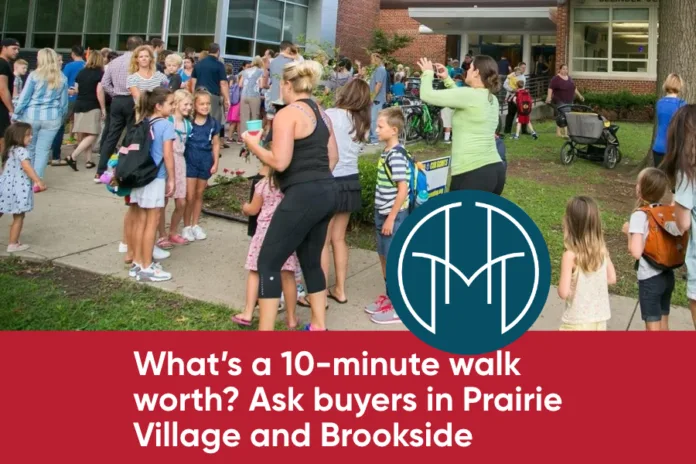
Think about riding your bike to a friend’s house, playing with the kids next door or walking home from school. A lot of buyers want their kids to have some version of that childhood. And those memories can pull you toward a neighborhood even if you don’t have kids. You see people out walking their dogs and neighbors stopping to talk, and something about it feels like home.
Prairie Village and Brookside sit on opposite sides of State Line, but they have a lot in common. Mature trees shade the sidewalks. Neighborhood parks give people a place to go. The Village Shops and the Brookside shops give people a reason to head out on foot, whether it’s for dinner, a quick errand or just a cup of coffee.
Mission Hills and Sunset Hill are two of the most coveted neighborhoods in Kansas City, and it’s easy to see why. Think rolling hills, palatial homes and some lots big enough to measure in acres. They’re beautiful places to take a walk. In Prairie Village and Brookside, that walk can also take care of your errands. And when you keep running into the same people on your way to the park or the shops, you get to know them a little at a time. Usually you learn the dog’s name first. The owner’s name may take another couple of walks.
I understand the appeal of a newer home farther out. A three-car garage, a huge open kitchen and a backyard with room to run are all fair things to want. But have you ever tried to walk around one of those cloverleaf subdivisions? You can walk for 30 minutes, pass your own house twice and still have to get in the car for coffee.
So where does walkability rank with buyers?
First among the six neighborhood features Zillow asked buyers to rate in its 2026 survey. Sixty-one percent called walkability very or extremely important. Proximity to shopping, services or leisure activities came in at 53%, a sense of community or belonging at 51%, and the commute to work or school at 49%.
The National Association of Realtors asked people to make a trade-off in its 2026 survey. Fifty-nine percent chose a smaller yard in a walkable neighborhood over a larger yard that required more driving. And 63% said they’d pay more to live within an easy walk of parks, shops and restaurants.
That helps explain why I think walkability is contributing to rising home values in parts of Prairie Village and Brookside. When buyers are willing to give up a third garage bay or a bigger backyard to live a few blocks from places they’ll use every week, those homes have one more reason to draw competition. How much that’s worth depends on the block. An easy ten-minute walk down a shady sidewalk feels a whole lot shorter than ten minutes that include waiting to cross a busy road.
After your next showing, leave the car where it is and walk somewhere you’d go on an ordinary Tuesday. See how long it takes, what streets you have to cross and whether you’d actually make that trip on foot. I’d learn more from doing that once than from scrolling through another 40 listing photos.
If you’d like to know some of my favorite walkable neighborhoods on either side of State Line, message me here.
Wondering what your budget could buy in Prairie Village—or what your current home could sell for? Contact us for a personalized look at available homes, recent sales, and the options for your next move.