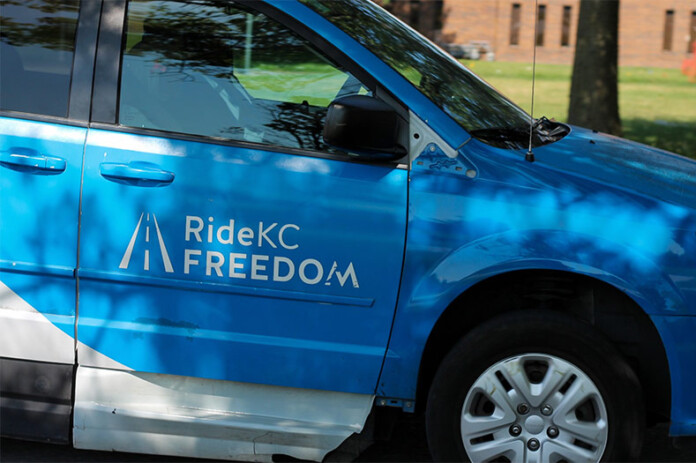
A split county commission is leaning toward substantial reductions in public transit that are intended to rescue the paratransit service for disabled riders from a budget shortfall in 2027.
Those reductions could mean more expensive fares for longer paratransit trips, as well as cuts in hours and days of service to the K-10 Connector to Lawrence and ride-hailing microtransit vans.
At a Committee of the Whole meeting last Thursday, a slim 4-3 majority voted for a staff recommendation on the cutbacks. The vote is not binding but will put the cutbacks on a future agenda, possibly as soon as Dec. 10.
The changes are being proposed in order to avert a possible cost overrun in 2027 on the paratransit service, which has seen a substantial increase in demand in the years since the COVID-19 pandemic.
Commissioners previously bailed out paratransit’s budget for the current year by closing an expected $1.43 million deficit with federal grants, microtransit service reductions and cash from its general fund. However, the danger of another cost overrun persists into 2027 because of paratransit’s growing demand, according to staff figures.
The service recorded 118,760 trips in 2025 and is expected to make 125,000 this year, which is a 69% increase since 2021.
The transit fund for 2027 could end up at $700,000 — well short of the amount of reserves needed to protect it from unexpected costs, the staff report said.

Major changes on the table
The commission is considering a number of changes to transit services.
Microtransit
That includes a “pause” in microtransit service beginning January 1 and ending in August. That move would save $110,503 in operating costs, staff say.
Microtransit is a sort of hybrid service between a taxi and a bus, with riders arranging to be picked up as with a ride-hailing app and then sharing the van with other riders.
The service was popular when first introduced in 2019, but fares have increased and the service area has shrunk over the years because it is expensive to run. Ridership has lagged since then.
During the pause, staff would analyze the service and come back in August to discuss either redesigning it or discontinuing it entirely.
K-10 Connector
The commission is also weighing cutting the operating hours of the K-10 Connector to Lawrence, which is among the most used in the county system.
The route runs from two University of Kansas sites in Johnson County to Lawrence.
The proposal is to cut back on hours of operation.
Currently, the Connector runs at either thirty- or sixty-minute intervals from 9:30 a.m. to 5:30 p.m., Monday through Friday.
The proposed plan for 2027 is to limit the weekday trips to hourly, from 6:30 a.m. to 9:30 a.m. and from 2:30 p.m. to 5:30 p.m., leaving a break in service in the middle of the day.
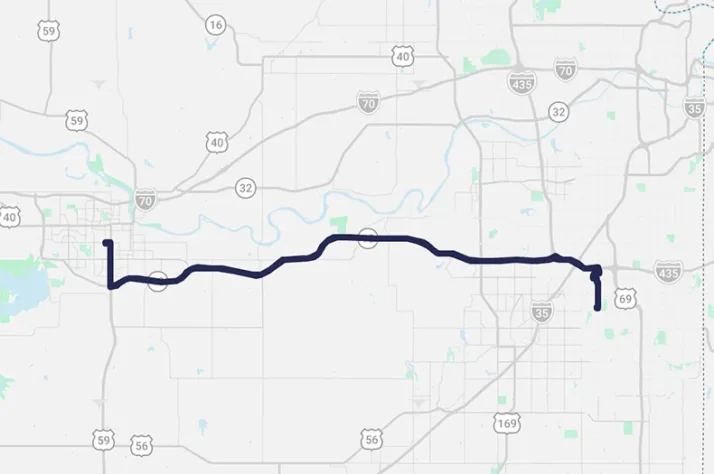
That change would cut the number of trips by more than half, from 34 trips per day now to 16.
Connector service also would not be available in June or July, under the proposal.
Those changes are expected to save $223,129 in 2027, with no additional county funding.
Paratransit
Paratransit services did not escape the proposed changes, either.
The plans call for a lower-fare core paratransit service area that would shrink, leaving people who take longer trips paying a higher fare.
Paratransit services that would be affected by the change are RideKCFreedom, which is a core curb-to-curb service that must be booked 24 hours in advance, and Freedom on Demand, a regional book-ahead service. Both have eligibility requirements.
The core area, which now covers the county and slightly beyond, would shrink under the proposed changes to an area along Interstate 35 from Olathe to Kansas City and Wyandotte County.
The Freedom on Demand area would be expanded to include the area dropped from the core area. Freedom On Demand territory that now extends further into Wyandotte, Platte and Jackson counties would remain.
Someone traveling entirely within the new, smaller Freedom area would pay $4 per trip. To go outside the core, the trip cost is estimated to be $17.86.
At that level, ridership is expected to decrease more than it would grow, according to the staff study. But it would still need to be bolstered to close a gap of $179,086 after fares, federal programs and county tax dollars had been included.
“We’re taking one step back”
All those proposed changes would leave the transit fund with just over $1 million at the end of 2027.
Some commission members expressed frustration with the ongoing funding problems at last week’s committee of the whole meeting.
The commission last year worked out a landmark strategic plan for transit that was intended to install a financially sustainable bus service for people who depend on it, while leaving room to grow. The strategic plan began with cuts to some fixed routes and microtransit.
Commissioner Julie Brewer said she understood that the strategic plan routes were going to be the foundation for a sustainable service and would be something the county could afford.
She noted that routes running through her district and Commissioner Shirley Allenbrand’s, in the southern parts of the county, lost bus routes as part of the strategic plan.

“We knew when we went to that foundational plan our areas would be losing services,” Brewer said.
She said she’d hoped that once proof of concept and ridership improved, that could change.
“And now I’m hearing that that’s even further out in the future of us ever getting routes out our way,” she said.
Brewer said her constituents have told her they support paratransit services because they or their relatives may need it.
“I feel like we’re taking one step back,” by making the option less palatable, she said.
Prioritizing paratransit
Commissioner Becky Fast said paratransit should be the number one priority for quality services and suggested microtransit be curtailed so the funds could be used for paratransit.
“One of the first things when I got on the commission I thought that we funded transit just enough to be terrible. And I feel like that’s what’s happening to our paratransit,” she said.
Commissioner Michael Ashcraft also said he was reluctant to make the changes recommended to paratransit.
He suggested the commission go with a different option offered by staff that would leave paratransit service as it is but take more from the transit fund to pay for it.
Ashcraft’s motion did not progress. Ultimately, the commission went with the staff recommendation.
The vote is not binding when the transit services come up for a decision in December.
Voting yes at the committee of the whole meeting were Commissioners Janeé Hanzlick, Shirley Allenbrand, Jeff Meyers and Chair Mike Kelly.
Voting no were Fast, Brewer and Ashcraft.
 Thanks for reading! If you value having an independent news outlet keeping tabs on local government, schools and taxes, we're asking you to contribute to our Education Reporting Fund.