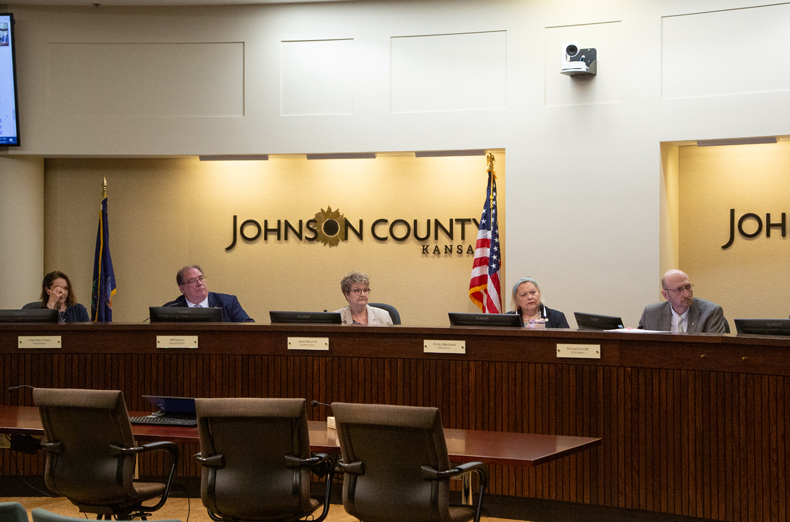
Johnson County commissioners didn’t all agree on exactly what was discussed in a June 29 closed session, but a majority voted that it was legally appropriate to call it.
In a letter to the Kansas Attorney General, a split commission maintains that the board did not violate the state open meetings law.
Commissioners voted 4-3 last week to accept wording proposed by the county’s Chief Counsel Peg Trent that they were in “full compliance” with the law.
The letter is a response to a complaint filed by Commissioner Charlotte O’Hara about an executive session shortly before a vote on adjustments to pay tables for county employees that would be part of the 2024 budget.
County’s letter says individual employees were discussed
Chairman Mike Kelly called the executive session just before the pay table discussion was to take place in open session.
At the time, three commissioners, including O’Hara, objected.
When the group came back into regular public session, they voted to approve a pay table with an adjustment to County Manager Penny Postoak Ferguson’s salary, giving her an annual base pay of $323,670, effective July 9, 2023.
O’Hara’s complaint to the attorney general’s office asserted that the closed session did not comply with Kansas law because it was more of a general discussion of policy that belonged in an open meeting and did not review specific employees.
But since the meeting was about specific employee salaries — for Postoak Ferguson, as well as Trent and Internal Auditor Harry Heflin — a closed meeting was appropriate, the letter states.
Such sessions are allowed to “protect the privacy rights of employees, save personal reputations and encourage qualified people to seek government employ,” according to state statute, K.S.A 75-4319(b)(1), Trent wrote.
“Thus, while some individual commissioners may have desired to discuss the Board’s employees’ compensation in the open portion of the meeting, a majority voted to respect and protect her privacy rights and reputation by conducting that discussion in an executive session,” the commission’s response said.
Some commissioners did not agree with the response
Since there was disagreement on whether to call the closed meeting, Trent compiled a hybrid response to the Attorney General’s investigation that included individual questionnaires from those who attended as well as Trent’s wording on the legality.
The disagreement continued when it came time to vote on the letter.
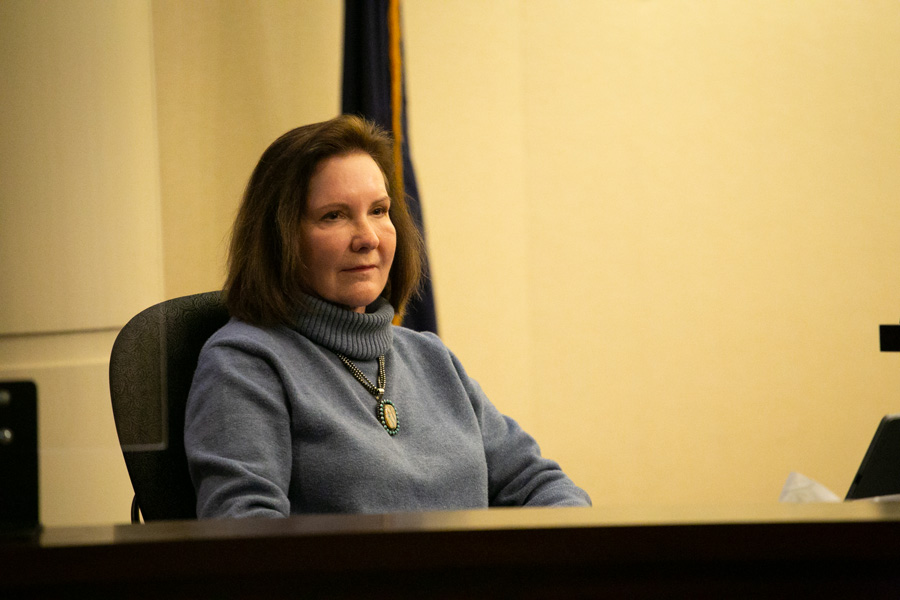
Commissioners Michael Ashcraft, Becky Fast and O’Hara provided questionnaire answers about the closed discussion that differed from the gist of the letter.
They also voted against approving the final response.
O’Hara, the complainant, did not recuse herself.
Fast said in her written questionnaire that there was no review of Postoak Ferguson’s performance during the closed session and that although there was talk about how the auditor and chief counsel fit into the pay tables, they were not identified by name.
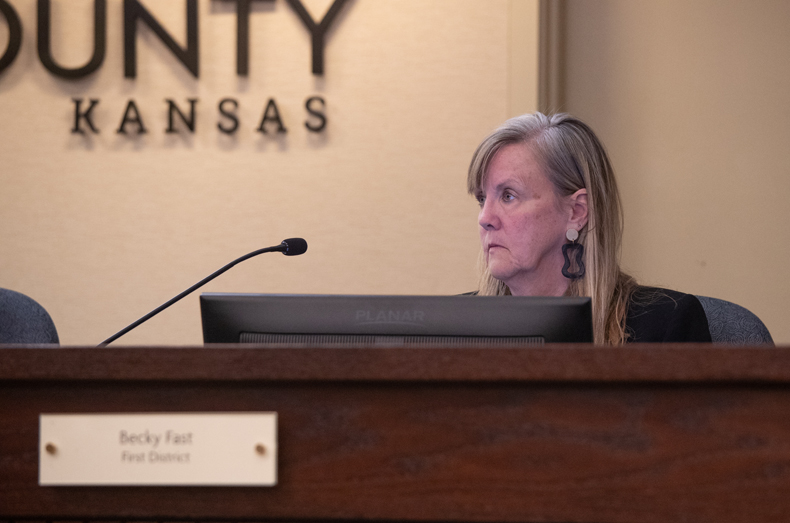
She reiterated past statements that best practices dictate a closed session should not be before the vote and that the session was about policy, not specific performances.
“My statement doesn’t connect with your statement,” she said of the response letter shortly before the vote.
Later she clarified that she was not offering her opinion on whether the closed session was illegal.
“In my signed statement, I stated ‘the executive session did not meet best practices and the spirit and intent of the rules under KOMA,'” she wrote in an email, referring to the state’s open meetings law. “I will leave the legality of the process up to the Attorney General as I am not an attorney.”
Ashcraft disagreed with a part of the statement that said brief references were made to the pay table.
“I’m sorry, but that’s just not my recollection,” he said.
Other commissioners defended the closed session and response
Commissioner Janeé Hanzlick said she looked at the “approval” of the response as an agreement that there’s been a thorough response.
“I don’t read that to mean I agree with every single statement made by anybody in that report,” she said.
Commissioner Jeff Meyers said he didn’t see the executive session as problematic.
“I am not sure why there is a complaint,” he wrote on his questionnaire. “Nothing seemed to be out of the ordinary in any of our executive sessions.”
Kelly said the response is accurate and that the commission has been transparent in its response. There may be differences of opinion on best practices, he said, but the response properly addresses the legality of the session.
In his questionnaire, he said he trusts the Attorney General’s Office to make a swift and appropriate ruling.
He added that he fears the continued investigation, which comes at a cost in staff time and county resources “could lead to a chilling effect of elected boards across Kansas properly utilizing executive sessions as allowed under Kansas statute.”
Roxie Hammill is a freelance journalist who reports frequently for the Post and other Kansas City area publications. You can reach her at roxieham@gmail.com.