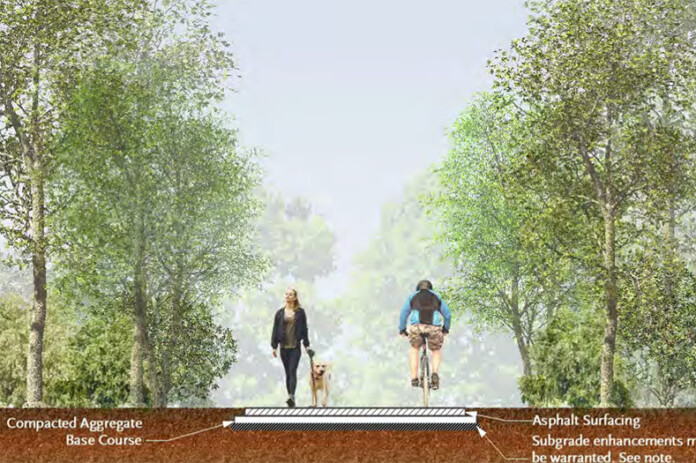
A local partnership that has involvement on both sides of the state line is requesting $20 million from the federal government to fund a trail connection that would include the site of now-demolished industrial site in southern Johnson County.
The city of Overland Park, the Johnson County Park and Recreation District, Jackson County Parks and Recreation on the Missouri side and the nonprofit Heartland Conservation Alliance have teamed up to request a Federal Community Change Grant for the project.
If awarded the full amount, the trail connection would complete a 14-mile linkage that would cross into Missouri and also increase “access to nature” while having “multiple environmental benefits” as well, according to Overland Park city documents.
No action has been taken yet, and it’s still unclear if the grant will be approved in its full amount or at all, but the Overland Park City Council’s Community Development Committee received a presentation on the proposal earlier this week.
Council President Logan Heley, who is also the executive director of the Heartland Conservation Alliance, left the room during the discussion on Wednesday due to the organization’s involvement in the project.
History of the old Kuhlman site
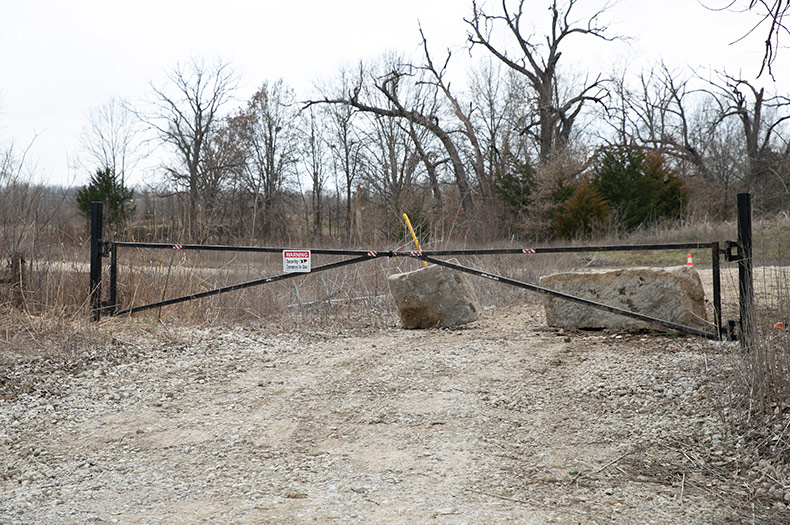
- The former 35-acre Kuhlman Diecasting plant, was abandoned decades ago after the company went bankrupt and over the years, it became both an environmental concern and a public safety hazard.
- It eventually became an EPA Superfund site, sitting in the Blue River floodway just outside of Overland Park city limits near 164th Street and Mission Road.
- Following years of back and forth, the county demolished the former plant’s dilapidated 74,000-square-foot warehouse after the Johnson County Commission earmarked more than $700,000 for the purpose in 2021.
- Last year, JCPRD and Overland Park published a 37-page Kuhlman Site Connectivity Study that ponders what to do with the property and how much the conversion could cost. Read the full study here.
- Still, conversations about the future of the site have lingered, popping up again as recently as spring 2024.
What would the trail connection project entail?
The plan, Overland Park’s Sustainability Manager Lara Isch said Wednesday, is to connect the old Kuhlman site to the Heartland Overlook Preserve north of Bannister Road off the Blue River in Kansas City, Missouri.
That connection would include a link from Wilderness Lake Park in Overland Park to an undeveloped city-owned property identified for future park development that neighbors the Kuhlman site.
That portion of the project is expected to cost about $5 million and would serve as Overland Park’s piece of it.
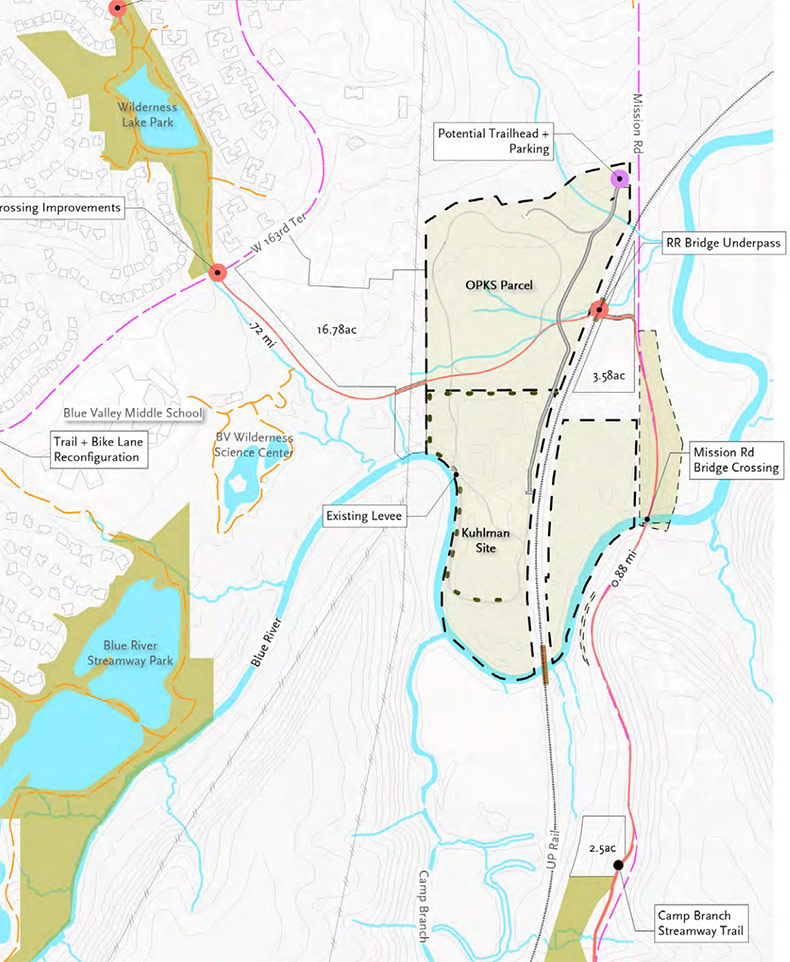
Plus, Johnson County, under the plan, would acquire the Kuhlman property — something that’s been on and off the table for years.
All of that would tie into the larger network planned to connect to the preserve, Isch said. Overland Park has long included greenway linkages with the Missouri side of the metro on its priority list.
Additionally, there are plans to do natural vegetation restoration and tree plantings to help with water quality in the Blue River watershed (which received a C letter grade in 2021 in a study published by The Nature Conservancy, Heartland Conservation Alliance and the Missouri Department of Conservation).
“The idea behind the whole grant is anything we do upstream is also going to help the communities downstream and help the water quality downstream as the Blue River flows to Missouri,” Isch said.
What are the terms of the federal grant?
- There are not local match requirements, Isch said, which means none of the involved jurisdictions will be expected to chip in a certain percentage of the project’s anticipated cost themselves.
- Community Change Grants were created in 2022 with the passage of the Inflation Reduction Act. Administered by the Environmental Protection Agency, the funds are meant to help local communities reduce pollution and “increase community climate resilience.”
- Change Grants do require an “environmental justice” component under the federal Justice40 initiative — the grants are meant for “disadvantaged communities” — and that is where Jackson County, Missouri, comes in.
- A community organization also has to be involved, Isch said. That requirement is covered by the Heartland Conservation Alliance’s involvement.
More on the Kuhlman remediation: Chemical-laced water remains on old Kuhlman site outside Overland Park, upping cost of cleanup