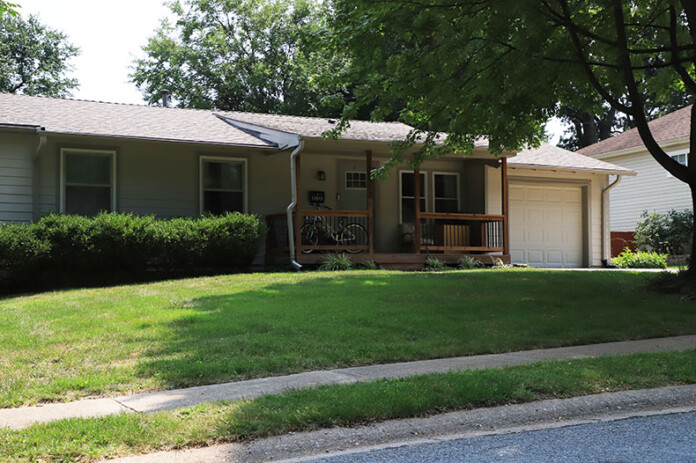
Overland Park has started the legal process of removing historically racist deed restrictions on residential property records in older parts of the city.
A century ago, racist covenants barred Black and Jewish people from owning homes in some communities but haven’t been enforceable for decades. Still, the offensive language has remained on property records like plats, deeds and neighborhood declarations.
Last week, the Overland Park City Council Community Development Committee unanimously voted to recommend the city take the first step in releasing such restrictive covenants.
City staff described the action as mostly symbolic since the original documents won’t be changed, but according to city documents, it does allow Overland Park to “express that [the covenants] are inconsistent with the city’s values.”
Looking back on the issue:
- Though the exclusionary covenants have been unenforceable since a 1948 U.S. Supreme Court decision ruled them unconstitutional, they are still on many property records.
- Recently, cities in northeast Johnson County have been advocating at the state level for a process to dissolve the covenants.
- Overland Park, too, put the issue in its 2024 state legislative platform.
- Under the old state law, only homeowners associations could remove the discriminatory language, so neighborhoods that have defunct HOAs or are without HOAs altogether haven’t been able to remove the language themselves.
- Earlier this year, Roeland Park was the first city to start the process under a new state law city officials helped create.
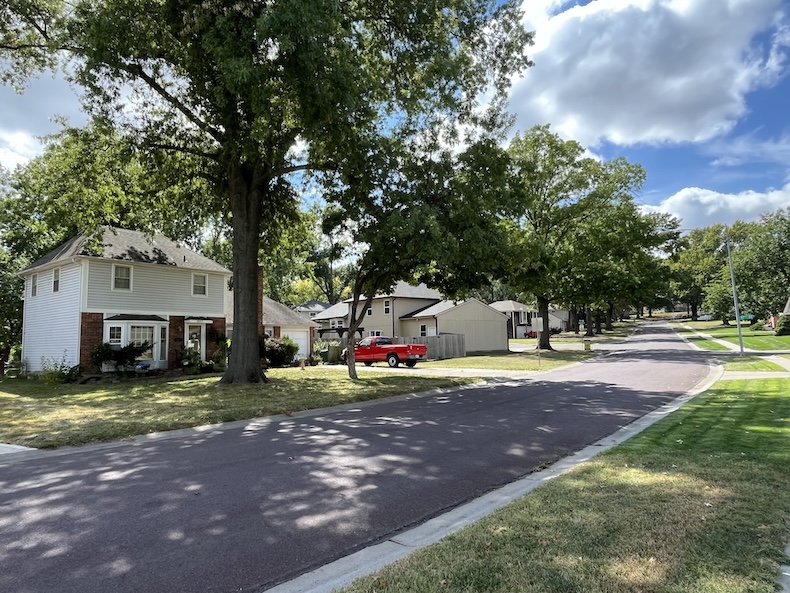
Overland Park isn’t sure how many racist covenants exist
Overland Park city staff doesn’t know exactly how many neighborhoods in city limits have racist covenants and what the HOA status is of all the neighborhoods that could have them.
That being said, there are about 20 neighborhoods in the northern part of the city that pre-date 1948, said Susan Alig, senior assistant city attorney.
If the city finds these neighborhoods do have racist language in their deeds but don’t have an HOA to lead the process of getting rid of it, then they’ll be able to do that for them with the help of a title company.
Alig said some preliminary research did reveal at least some exclusionary covenants.
Additionally, under the new state law, neighborhoods that do have restrictive covenants on their books but still have active HOAs can amend their governing documents independently.
Council President Logan Heley, who represents Ward 1 where these racist restrictive covenants are more likely to be found given the age of the area, said last week that he grew up in a home in Overland Park with a covenant on it.
“I think it’s just an important reminder that civil rights violations didn’t just happen in the deep South, they happened all over America, including here in Overland Park,” he said.
Next steps for Overland Park:
- The resolution to start the process of releasing racist deed restrictions goes to the Overland Park City Council for consideration next.
- After that, city staff plans to work with a title research firm to figure out just how many restrictive covenants exist in neighborhoods without HOAs.
- From there, the firm would file documents with the Register of Deeds to release the covenants on behalf of those neighborhoods.
More on racist housing covenants in Johnson County: Racist deed restrictions remain in northeast Johnson County but erasing them has proven difficult