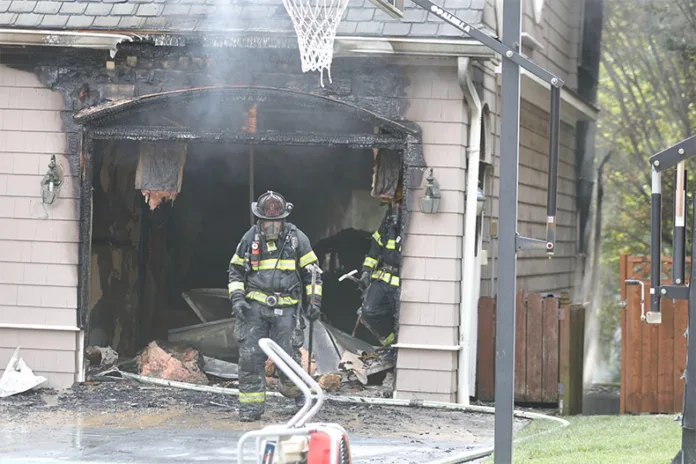
It didn’t take long for a fire that started reportedly due to a charging lithium-ion battery in the garage to wreak havoc on a family home in Fairway last week.
The battery in question — believed to be for a lawnmower but usable in other tools — was only on the charger for fewer than 15 minutes before the family living there heard the sound of an explosion, and escaped from a fast-moving fire.
“The subsequent fire was totally unexpected and reportedly expanded very rapidly,” said Fire Chief Steve Chick, who leads Consolidated Fire District No. 2, which covers northeastern Johnson County, in an email to the Post. “This event took the homeowner by surprise, and justly so.”
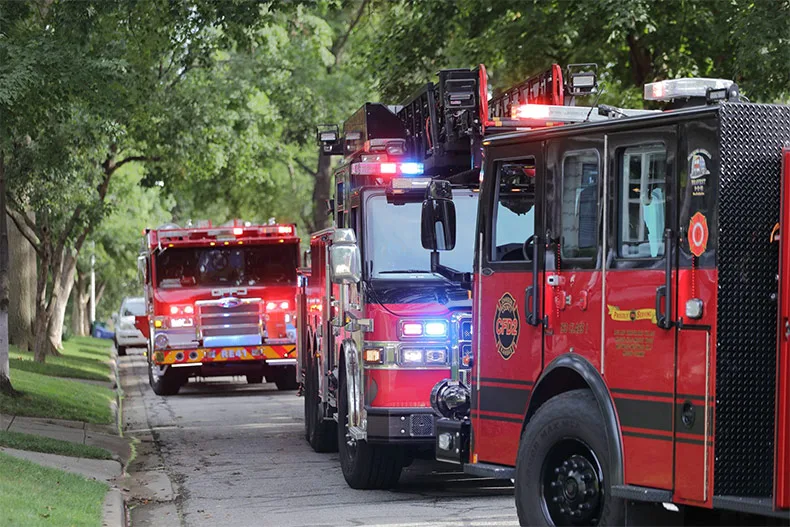
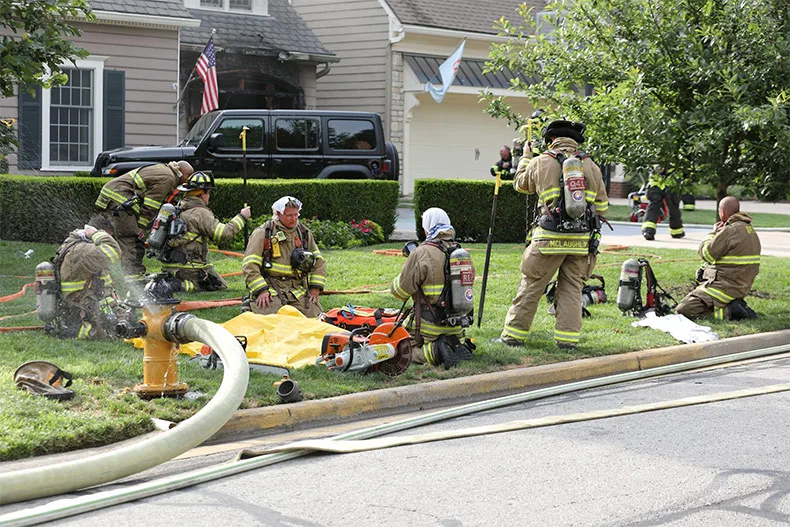
Chick said that even though crews arrived quickly, there was already heavy fire in the garage. It was a ripping hot and humid day to boot. In the end, it took about an hour to bring under control the fire that ultimately displaced a family of four.
“We did rule this as an accidental fire that was caused by the failure in the charging of a lithium-ion battery,” he said. “At the point of origin of the fire, CFD2 Fire Investigators located the component remains of a charger and lithium-ion battery pack.”
Lithium-ion batteries are rechargeable and power all sorts of devices like portable electronics, vape pens, power banks, electric vehicles and cordless tools.
Though these kinds of lithium-ion battery fires are still rare in Johnson County, Chick said his department has started seeing more of them, and he knows other departments are too.
How do lithium-ion battery fires start?
Chick said lithium-ion batteries can fail and cause fires in “a process called Thermal Runaway,” in which the heat of the battery rises quickly, causing it to expand exponentially. The results can lead to a “catastrophic” failure that “perpetuates thermal runaway.”
These small batteries — that keep getting smaller — have storage for a “large amount of energy,” that, when they go haywire or are used improperly, can be dangerous.
In an email to the Post, Fire Marshal Todd Kerkhoff with Consolidated Fire District No. 2 believes that, in the case of the Fairway fire, the high heat of that day, paired with humidity and then the added heat from the batteries, could have led to the fire.
Chick said the family was charging the batteries appropriately, but that extra heat “could have been contributing factors to whatever failure took place in the process of charging those batteries.”
“We believe the homeowner did nothing wrong,” Chick said, “but the result was still a catastrophic failure of the lithium-ion battery.”
How to prevent lithium-ion battery fires in your home
Chick and Kerkhoff warn that there are “no catch-all solutions” when it comes to preventing this type of fire, but they recommend buying UL Solutions-approved batteries that are of good quality and to only use them as intended.
“Like any device, there are small numbers of batteries which are, or may become, defective,” they said in a joint email.
However, they recommend charging these batteries on a hard surface and removing them promptly when they’re finished charging. They also said it is best to keep the lithium-ion batteries at room temperature when possible, and away from flammable materials.
In an upcoming newsletter in Overland Park, fire officials recommend charging these batteries away from the primary living areas of the home and away from doors that may be needed in an escape from a fire.
If your battery starts to smell funny, make odd noises, change colors or shapes, get too warm, leak or melt, do not use or charge them.
And, if you do need to dispose of a lithium-ion battery, don’t put it in the regular trash or keep it with other batteries that need disposing of. These types of batteries need to be disposed of properly. For guidance, call the Johnson County Household Waste Collection and Reuse Facility.
Other JoCo departments worry about lithium-ion battery fires, too
Earlier this year, Deputy Fire Chief Andrew Grove in Overland Park gave a presentation to that city’s public safety committee about the rising danger of fires caused by these batteries.
Grove said the Overland Park Fire Department is working with regional hazmat teams and the Environmental Protection Agency to develop best practices on how to respond to these fires and has started getting special equipment designed to help get control of them.
Though the Overland Park Fire Department doesn’t track lithium-ion battery fires specifically in its current reporting system, Jason Rhodes, the department’s media manager, said it is “an emerging trend.”
There have been at least three lithium-ion battery fires in Overland Park this year so far, including one in May that was reportedly the result of a charging hoverboard, according to the Overland Park Fire Department.
Looking back: Family displaced by Fairway house fire linked to lithium-ion battery in garage