
In a decision that one commissioner called “soul crushing” the Johnson County Commission Thursday accepted Sheriff Calvin Hayden’s recommendation that mental health care for jail inmates be provided by a private Topeka-based health care business rather than the county’s own mental health center.
Commissioners voted 5-2 in favor of the change, though some noted that they have a limited role in how the sheriff manages his office’s budget.
Topeka company will now oversee mental health care at detention facilities
Some of the strongest objections came from Commissioner Becky Fast, who along with Commissioner Janeé Hanzlick voted against the change.
“To me this is just soul crushing,” Fast said, noting dissatisfaction with a different, previous health care provider to the jail before the county agreed to partner with its own mental health center for the services in 2020.
Fast said she’d pushed for that change to happen since coming onto the commission and has now heard from constituents dismayed about the prospect of reverting back to a private company.
The sheriff had asked commissioners to add mental health services to the existing contract for medical care of inmates, which is provided by VitalCore Health Strategies, a health care consultant based in Topeka.
That contract is already in progress and runs out December 31, 2025, but could be extended for an additional three years.
The sheriff asked the commission to approve an exception to competition to add mental health, bringing the medical, mental health and prescription services contract to $27.8 million, while terminating the county mental health center’s agreement.
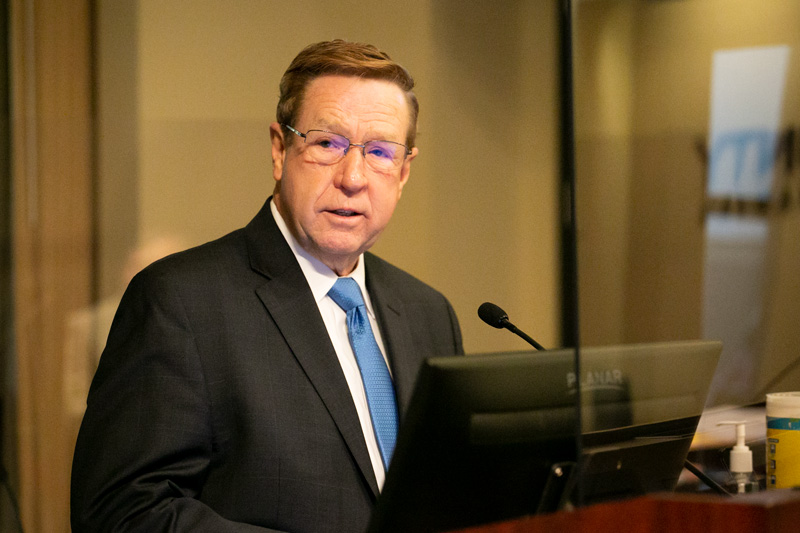
The sheriff called the decision a cost-saving measure
The change was proposed as a cost-saving measure. The county would save $4.87 million over five years by going with VitalCore, according to a staff analysis.
However, Fast cast doubt on the projected savings, saying the amount the county paid to its own mental health center over the past four years is actually less than what it will pay VitalCore going forward.
Fast noted other times vendors have come in for their initial contracts at a low price only to come back the next year for an increase due to unexpected costs of finding workers.
A for-profit business will face difficulties hiring and may end up recruiting from the county mental health staff or hiring staff with lesser credentials, she said.
Moreover, there will be extra costs involved in handing off the mental health care between the two providers, she said.
Commissioners also discussed “forced” medication
Policies on “involuntary,” or “forced,” medication also was discussed at length at Thursday’s commission meeting.
At a previous meeting, Hayden said detention center staff were dissatisfied with some of the outcomes in treatment. For some ill and combative inmates, “there is no other choice,” than immediate medication, he said, but without a doctor on staff round the clock they cannot be prescribed, he said.
Involuntary medicating also requires a court order.
“When you’ve got people hurting themselves and injuring themselves and you have to stand and watch that, it’s inhumane, it’s the wrong thing to do,” he said.
VitalCore has done a good job providing medical care to the inmates, he said. Adding mental health care will make for better continuity, Hayden said.
“We wouldn’t do this unless we felt there was an extreme need for the health and care of our inmates,” he said. “It’s not about saving money, to me.”
Commission wants to keep tabs on involuntary medication instances
VitalCore was represented by Betsy Gillespie, who is a former county corrections director.
Gillespie said it’s a very rare situation when a patient in danger of self harm objects to being medicated. The company has strict policies to try to de-escalate and to convince the patient to cooperate, she said.
“Even at the last minute we still try to get the patient to agree to it and in most cases they do,” she said.
Chairman Mike Kelly warned that data on involuntary medication and restraint will be watched closely going forward.
“I think it’s a metric we’re going to be looking at,” he said. “If there becomes an extraordinary increase, we’re going to have eyes on that.”
Questions about why contract was not opened up to others
Some commissioners expressed frustration because they said they’d heard from constituents who were happy with the county mental health department and concerned about the change.
“At the end of the day, the sheriff has the ability to do whatever he wants to do,” with his budget, said Commissioner Shirley Allenbrand.
But she wondered aloud why the contract wasn’t opened up to other vendors, as is usually the case in other departments.
Fast said the change will mean a loss of continuity in care for inmates as they leave the jail. With the county mental health center, she said, they could continue seeing some of the same clinicians after their release.
Putting mental health care in the hands of the county mental health center is best practices throughout the nation, she said, adding that other models with for-profit caregivers have not worked as well for Johnson County in the past.
Keep reading: Johnson County Jail’s mental health screening reduced recidivism, Notre Dame study finds