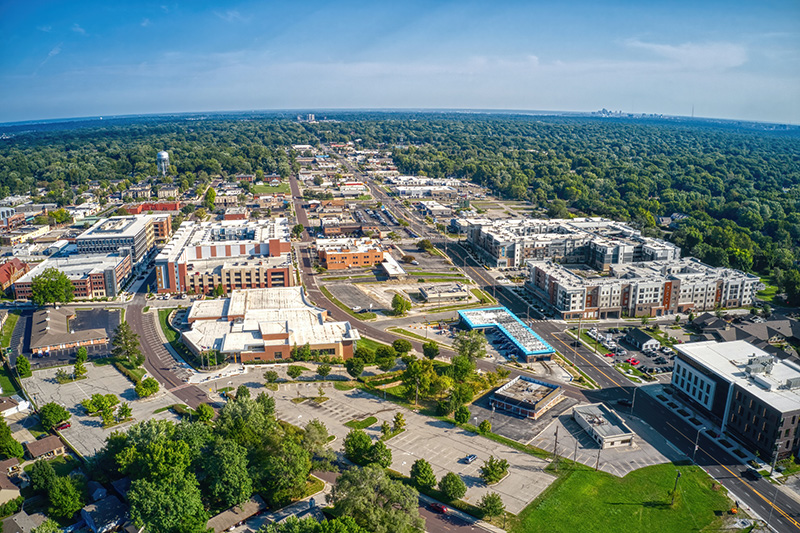
Overland Park is developing an economic development policy aimed at encouraging certain kinds of housing projects.
The policy would dictate the development of new so-called reinvestment housing incentive districts, or RHIDs.
The Overland Park City Council Finance, Administration and Economic Development Committee kicked off the drafting process on Wednesday, discussing possible target areas for the districts and attainable housing, among other things.
No final decisions have been made about what language the committee will recommend to the rest of the council for consideration.
Read the draft policy presented to the committee here.
How does a reinvestment housing district work?
- Kansas has allowed RHIDs, previously called Rural Housing Incentive Districts, for decades, but only in certain areas and with some limits.
- Over the years, the policy has been expanded to include other areas, and in 2023, was amended to be for reinvestment housing, which could include redevelopment, new development or the renovation of existing housing stock.
- Like a tax increment financing district, or TIF, a RHID works by setting a base year tax valuation.
- Then, all assessed tax on any increased valuation above that base year is returned to the developer to reimburse for some infrastructure development costs.
- These districts are clearly defined geographically, and they come with a clear expiration date.
- Spring Hill passed the first RHID in Johnson County in 2022, back when it was still for rural housing.

Overland Park’s draft policy proposes limits on RHIDs
- Assistant City Manager Jack Messer said the proposed RHID policy closely mirrors the city’s existing TIF policies, but there are some key differences.
- For one thing, under state statute, a RHID cannot have more than 100 new units go up for sale or rent in a single calendar year.
- Additionally, the average dwelling space size across a district cannot exceed 1,650 square feet.
- Plus, Overland Park is considering lowering the application fee cost for RHIDs to open the incentive up to smaller developers.
- The city is also proposing limits on what kind of residential land-use areas such districts could be formed in to help preserve single-family neighborhoods.
Committee divided on using RHID for new development
While the bulk of the committee on Wednesday seemed open to allowing RHIDs for both development and redevelopment purposes, Councilmembers Jeff Cox and Gregg Riess seemed hesitant.
They indicated they’d prefer to see the policy limited to redevelopment and infill developments only.
Cox was more forceful is his opposition, seemingly dissatisfied with the prospect of Overland Park using an incentive of any kind to encourage attainable housing.
“I want to crap on the whole thing,” he said. “The whole point of this is us getting in the business of creating affordable housing, which I don’t want to do.”
However, the rest of the committee — including Councilmembers Drew Mitrisin and Inas Younis, who were filling in for their fellow ward representatives, Councilmembers Melissa Cheatham and Sam Passer, respectively — favored keeping the RHID policy open for both new development and redevelopment.
Younis said she sees a policy such as the RHID policy the committee is workshopping as a way to encourage the development of “missing middle housing” that the market isn’t producing on its own.
Next steps:
- The Overland Park Finance, Administration and Economic Development Committee will continue developing the draft RHID policy at its May meeting.
- After that, whatever recommendation the committee makes will go to the full council for approval.
- A Committee of the Whole meeting for further studying of the new RHID policy and other incentive policies is possible as well.
- Those conversations would be part of the Framework OP comprehensive plan implementation process.
Keep reading: Overland Park adopts its first official electric vehicle plan
 Thanks for reading! If you value having an independent news outlet keeping tabs on local government, schools and taxes, we're asking you to contribute to our Education Reporting Fund.