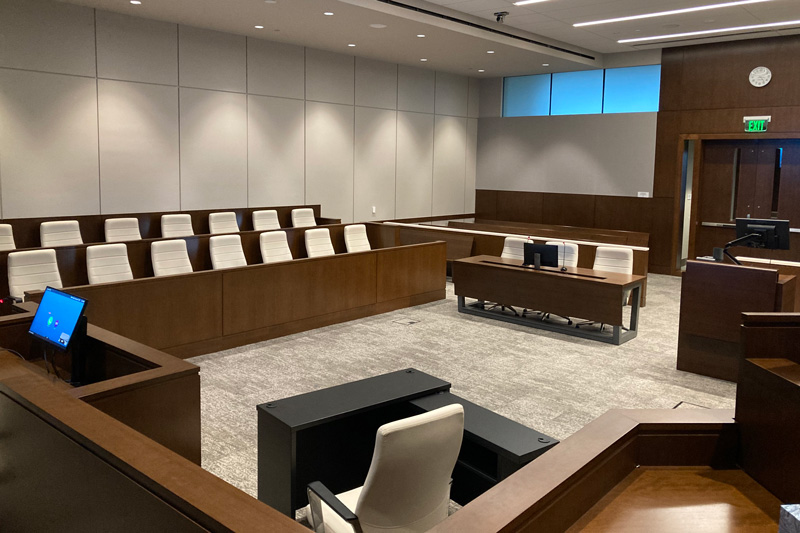
A federal grant of $1 million will allow more non-violent adult offenders in Johnson County to get treatment for substance abuse next year rather than going to jail.
County commissioners on Thursday unanimously voted to accept a grant from the U.S. Department of Justice that expands services in the adult treatment court, which has been in operation for about a year.
The grant money plus $200,000 in reserves from the county Mental Health Department will make treatment an option for more people convicted of nonviolent crimes. It would also set up a $24,000 fund per year for housing, transportation and medication costs for participants.
How the program works
The treatment court for drug use is one of three in the county that provides treatment and counseling for people who commit nonviolent crimes. There is also a court for veterans and for behavioral health.
Under the adult treatment court, individuals with substance use disorders are referred to private counseling for 12 to 18 months of court-supervised treatment after their case is adjudicated. After the treatment program is successfully completed, the charges are dismissed.
Kansas established drug treatment courts in 2004 for people convicted of nonviolent drug offenses, but that eligibility was opened up last year to include those who committed non-drug, non-person offenses. The grant will allow some people who don’t meet the strict requirements for eligibility to participate, said Tanner Fortney, assistant director at the county Mental Health Center.
Johnson County has 15 active participants in the program. The grant disburses $1 million over five years which will allow 17 to 25 additional people to get treatment, Fortney said.
Because “emerging adults” in the 18-29 age range have an increased risk of addictive behavior and of becoming repeat offenders, county officials will focus on getting that age group to complete the program and stay out of future trouble with the law, according to a staff memo.
Commissioner Shirley Allenbrand said she supports the program because she has heard from residents who have graduated from the program. “If it helps even two or three people, that’s a win-win,” she said.
Go deeper: Learn about the county’s treatment court programs here.
 Thanks for reading! If you value having an independent news outlet keeping tabs on local government, schools and taxes, we're asking you to contribute to our Education Reporting Fund.