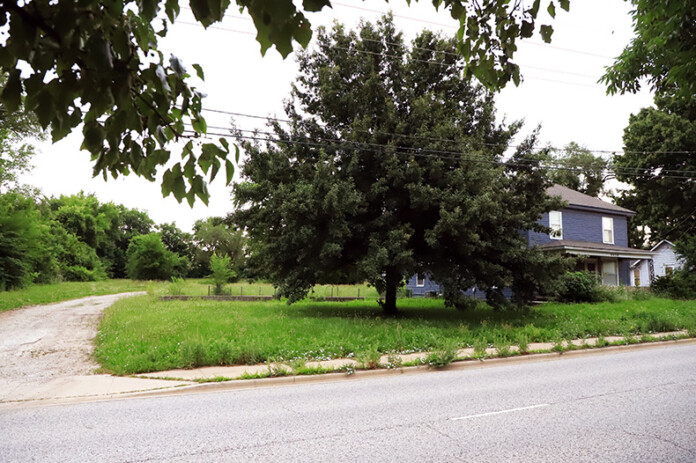
Overland Park will move ahead with a developer’s plans to form the city’s first housing-centric incentive district in the city’s southern half.
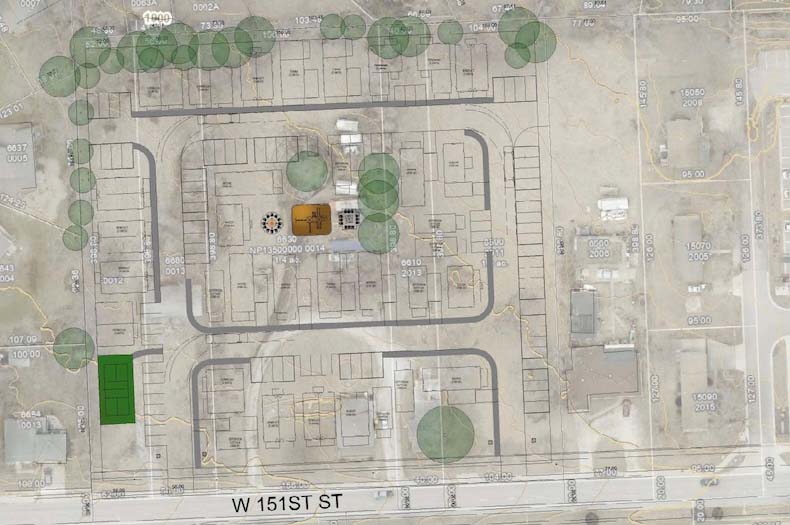
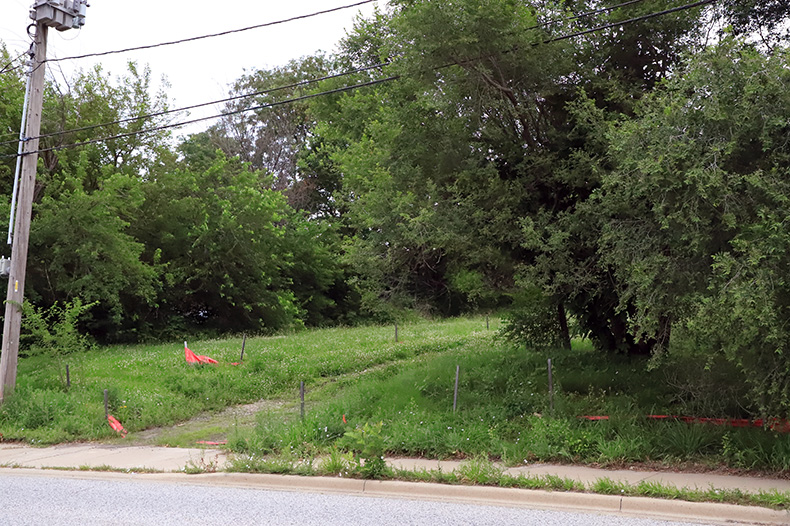
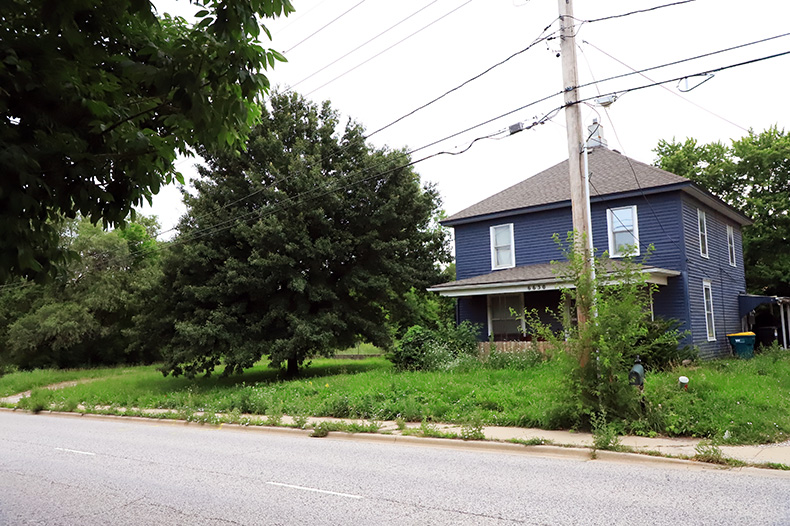
The proposal — from Midwest CRE Advisors — would feature a mix of for-sale single-family and twin villa-style residences, roughly at 6630 and 6680 W. 151st St., and it would be financed with the support of a Reinvestment Housing Incentive District.
Logan Freeman, a senior broker from Midwest CRE Advisors, said attainable housing and being able to provide it is something he’s passionate about.
“Where are the school teachers, where are the police officers, where are the service people actually living,” he said last week.
Additionally, the developer plans to utilize designs from the city’s Portfolio Home program — a pilot that offers pre-selected designs nearly pre-approved — to construct the neighborhood. City documents say the proposed sale price would start at $300,000.
Forming the district would require the city to diverge from its incentive policies in a manner that would leave it taking on more financial risk. However, Assistant City Manager Jack Messer said it would tick the boxes on several other priorities for Overland Park, like supporting the development of attainable housing.
Last week, the Overland Park City Council Finance, Administration and Economic Development Committee had the first of what is likely to be several discussions on the proposed application for the new housing incentive district on 151st Street.
Though the committee took no direct action on the housing district incentive proposal last Wednesday, the councilmembers in attendance expressed support for moving the plan forward and an appetite for exploring creative approaches to housing development with an eye toward affordability.
What is a Reinvestment Housing Incentive District?
Up to this point, Overland Park has yet to consider or approve a Reinvestment Housing Incentive District in city limits, but other Johnson County communities have used the tool in the past to develop new housing options.
That being said, Overland Park has recently been mulling adding this type of incentive to its docket as part of a wider discussion about economic development policy.
The tool has been permitted for years in the state of Kansas, but the state legislature has only recently expanded its use beyond rural communities (they were previously called Rural Housing Incentive Districts). The change allows municipalities to use the incentive to support redevelopment projects as well as the formation of new housing and the rehabilitation of existing housing.
It operates similarly to a Tax Increment Financing, or TIF, district, because it involves setting a base year tax valuation. From there, all assessed tax on any increased valuation above the base year is returned to a third party to reimburse them for eligible costs for a set amount of time. The idea is that the tax on the increased value — called an increment — offsets some of the development costs. From there, those savings can be passed on to the housing unit’s future occupant, either through a lower sale price or cheaper rent.
In the case of this particular prospective project, the city would need to veer from its incentive policies. That’s because Overland Park usually favors a pay-as-you-go approach, which basically means the city prefers to give the money in an incentive district to a third party as it is raised instead of up front.
But, there is a gap in financing for the 151st Street project that could make it hard for the developer to cover the reimbursable costs initially and wait to be paid back.
So, the developer is asking to form a housing incentive district while requesting the city authorize special assessments — a municipal mechanism typically used to help cover the cost of public upgrades that are then paid off through annual property tax add-ons.
Then, the developer plans to pay off the assessments with the increments raised in the district. But, to make that work, the city would assume more of the financial risk than is typical.
Committee touts proposal as a potential model for attainable housing
Still, members of the finance committee last week were fairly enthusiastic about the prospect of trying out the housing incentive district.
Councilmember Chris Newlin, who chairs the committee, said he sees this as “an opportunity.”
“I think that this is a creative way of trying to come up with a way to solve for the attainable housing issue that we’ve all talked about,” he said, adding that he hopes this can be a model for other developers by showing them that attainable development “can be done.”
Others agreed.
“This is exactly the kind of project that we want to be doing in Overland Park,” Councilmember Melissa Cheatham said, calling it “innovative.”
That being said, there are still some details to sort out. For one thing, Newlin and other committee members seemed keen on ensuring there’s a homeowners association attached to the proposed neighborhood that would bar corporate owners from buying up the homes to rent them out.
Committee members raised other considerations as well, like whether a land trust model — an arrangement where land, in this case, would be owned by a nonprofit third party to keep the cost of homeownership low in perpetuity — might be beneficial.
What comes next for the 151st St. RHID?
- Before anything else can happen, the developer will need to submit a formal application.
- The RHID application would come to the finance committee for consideration first, then go to the full Overland Park City Council.
- Then, the city would need to hold public hearings and take other action to establish the RHID.
- Plus, the property is still zoned for agricultural uses, which means the Overland Park Planning Commission and city council will need to sign off on a rezoning request before any residential development could occur.
Keep reading: What’s an RHID? Overland Park mulls developer incentives for housing projects