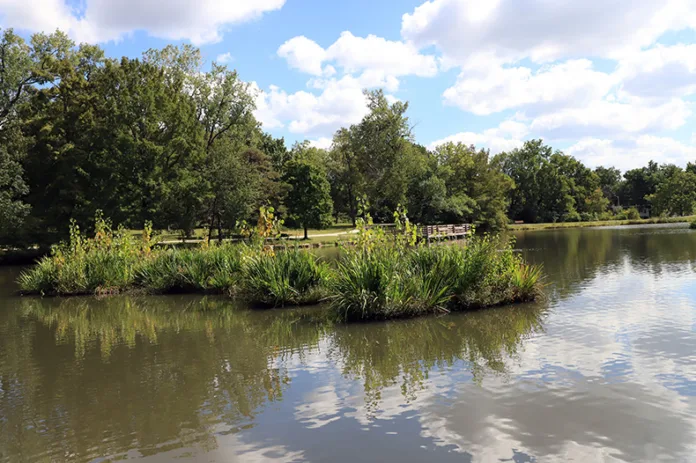
From afar, they can look like large collections of plants, growing out of the lake and shooting toward the sky, but there’s a little more to the flora popping up on some Overland Park lakes.
Called floating wetlands, these man-made mini islands of native Kansas plants are intended to balance the water’s ecosystem and keep harmful algae blooms at bay.
Overland Park is now adding more of them to lakes at city parks.
How do floating wetlands work?
The floating wetlands are full of native plants like blue flag iris and awl-fruited sedge, and the roots from those plants hang down into the water, soaking up excess nutrients, like nitrogen and phosphorus, that can spur harmful algae blooms, said Public Works Water Quality Specialist Julie Roberts.
Those nutrients can enter the lakes from water runoff that may carry lawn fertilizers, pet waste or other organic materials, like leaves and yard waste.
The harmful blue-green algae blooms that feed on them are caused by cyanobacteria, which can lead to neurological illnesses that may be life-threatening for animals and humans, according to the Centers for Disease Control and Prevention.
But the roots of the plants on these floating wetlands suck up these nutrients instead, improving the water quality.
“As the plants absorb more nutrients, there are fewer nutrients available for the algae, leading to a reduction in the algae,” Roberts said in a written statement.
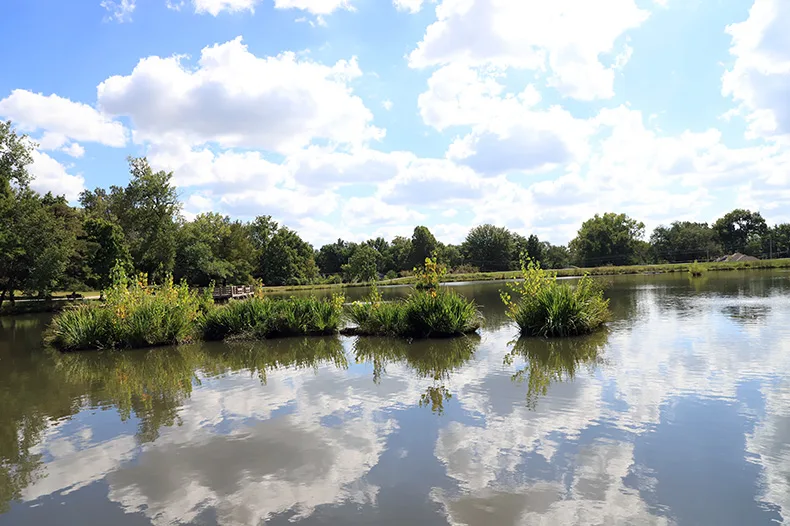
Overland Park has experimented with floating wetlands for a few years
Overland Park started playing around with floating wetlands on an experimental basis in 2018 at South Lake Park near 87th Street and Metcalf Avenue, deploying a 50-square-foot floating wetland.
Early success there eventually led Overland Park to ponder expanding the concept.
Over the years, officials at the Kansas Department of Health and Environment have included South Lake Park on multiple statewide health advisory watches, warnings or hazard lists about harmful algae blooms.
In 2023, Overland Park added 10 additional floating wetlands to South Lake Park’s body of water, all 100 square feet apiece with about 100 plants each, and started looking at other lakes in the city that might benefit from their own floating wetlands.
Now, the city has floating wetlands at Regency Lake, Wilderness Lake and Amesbury Lake.
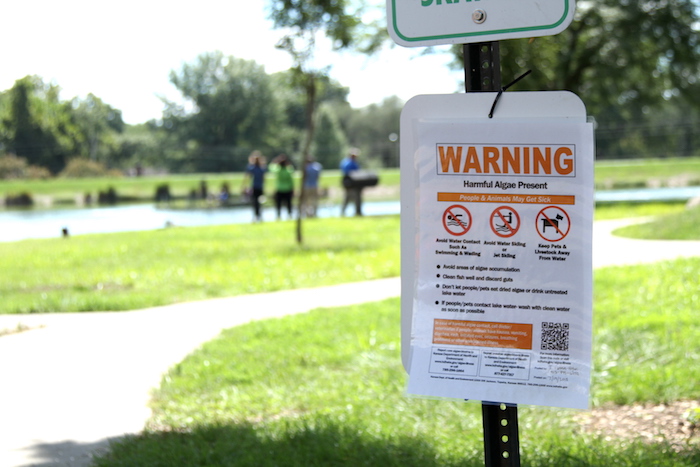
South Lake Park has had fewer harmful algae bloom warnings
Roberts said it’s “too early to point to a trend” when it comes to the success of the floating wetlands and their ability long term to improve water quality at city lakes.
“Improvement in water quality is a slow process because nutrients can be tied up in the sediment, and the amount flowing into the water varies depending on resident actions,” she said.
That being said, the number of harmful algae bloom warnings at South Lake Park each year has started to decline, Water Quality Specialist Cloey Adrian said in a written statement.
In 2024, there were no blooms recorded, and this year, there’s been just one as of late September.
Roberts also pointed to other benefits the floating wetlands offer, like providing shelter for fish and other animals that can hide in the root systems of the native plants.
They can also be a platform for water quality education. In South Lake Park specifically, there’s a sign posted by the lake that provides information about the floating wetlands and the types of water pollutants they’re intended to tackle.
Keep reading: Overland Park has replanted thousands of trees. Now, officials worry they aren’t getting the proper care.