Earlier this summer, the Post asked our readers what issues you wanted to hear candidates running for De Soto Board of Education to address leading up to the Nov. 4 election.
Based on that feedback, we developed a five-item questionnaire centering the issues most important to the USD 232 community.
Each day this week, we’re publishing the candidates’ responses to one question.
Today, we’re publishing candidates’ responses to the following question:
Artificial intelligence: Artificial intelligence is a new and rapidly evolving technology that proponents say can revolutionize many aspects of modern life, including teaching and learning. But many people in education worry about AI’s impacts and possible abuses, including facilitating cheating and making students’ and staff’s personal data less secure. How should your district approach establishing policies and protocols when it comes to the use of AI in schools?
Below are the answers the Post received from candidates on this issue:
Member 4
 Lucy Rumsey DeWitt
AI is a tool, and like any tool, we must learn how to use it in a correct and useful way. If we pretend like it’s not there, that is doing our children a disservice as this type of technology will continue to be a part of daily life. At the same time, research is starting to show that an over-reliance on AI is detrimental to critical thinking. This is where teachers’ expertise and professional development is going to be key. As a member of the School Board, it will be our job to provide opportunities for our teachers and staff to learn about how to harness the power of AI without over-relying upon it, and then they can then use those tools with the students in the classroom. It’s also important to note that AI is not always correct, and students need to use scrutiny and critical thinking with the results, making AI usage a great opportunity for media studies and internet awareness and safety lessons. Forming an AI policy is a great opportunity to collaborate with other districts in our area to learn more about their AI policy and whether it’s working. By working with other districts across the county and state, we can explore best practices and see what is and isn’t working in other schools.
 Nancy Moneymaker
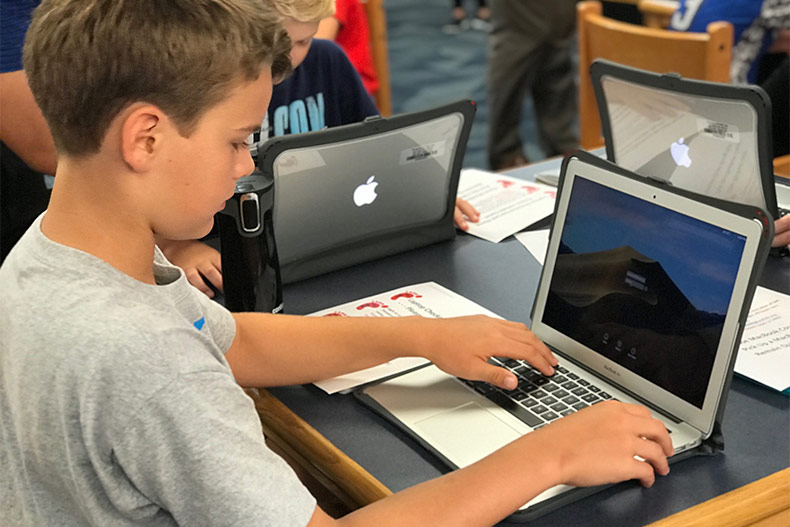
The De Soto School District has students sign the Acceptable Use Policy Governing Student Use of District Technology. While this policy does not specifically address artificial intelligence (AI), I would like to focus on the AI delivery aspect of technology use through personal and 1:1 devices.
Personal devices are reportedly managed at the classroom level under each teacher’s guidance. Approaches vary widely from requiring students to place their devices in a designated container outside the classroom, to allowing unrestricted use within class. This flexibility appears to apply primarily to upper grades, with teachers exercising their discretion based on their understanding of their students.
Regarding the district-issued 1:1 devices, I would encourage teachers to minimize classroom screen time or consider not issuing the devices altogether.
The only instance in which I see student use of technology as essential is in courses that teach advanced computer skills, including ethics, software, and hardware. Skills that can support future careers or lifelong learning. Additionally, students with Individualized Education Programs (IEPs) should, of course, be granted special accommodations as needed.
In any scenario involving AI or device use, I believe it is important to gather feedback from both teachers and students. Their insights would help evaluate whether these technologies enhance or detract from the core purpose of education, the teaching and learning of knowledge.
Member 5
Christian Amend
Did not provide the Post with a response.
 Calley Malloy (incumbent)
Our district recognizes that artificial intelligence is rapidly changing the way we learn, work, and live. We’re committed to helping students build the skills and confidence they need to navigate this new landscape responsibly and with integrity.
Our approach to AI integration is built around three core principles:
1. Inquiry – Learning starts with curiosity and original thinking.
2. AI Assistance – AI can be used as a tool to support creativity, exploration, and productivity.
3. Reflection – Every piece of work should end with human evaluation, ownership, and accountability.
This framework ensures that AI enhances, rather than replaces critical thinking, creativity, communication, collaboration, and ethical decision-making.
USD 232 is continuing to develop guidance for teachers and staff on the thoughtful and responsible use of AI. The Board of Education will stay engaged in this ongoing conversation as technology evolves and shapes our world. Together, we’re committed to using AI to enrich learning while upholding the values of integrity, human judgment, and student growth.
Member 6
 TJ Finan
Artificial intelligence is a powerful and rapidly evolving tool, and our district must be proactive in embracing it while also setting clear, responsible boundaries. We cannot afford to ignore emerging technologies. AI is part of our future, and we need to evolve alongside it to prepare our students for the world they will inherit.
Our approach should focus on balance. While AI can enhance teaching and learning by helping students access and understand information, we also need to ensure that students are building true knowledge and wisdom, not just relying on shortcuts. This means emphasizing hand-written assignments, grading in-class work, and using classroom discussions to assess genuine understanding.
Teachers should be supported in using a wide range of instructional strategies, including the use of AI as a tool to spark inquiry and deepen content understanding. At the same time, we must establish district-wide protocols that address concerns like data privacy, academic integrity, and appropriate use.
By combining innovative technology with strong foundational teaching practices, we can equip students with both the skills and the discernment they need to succeed in a tech- driven world. Responsible use of AI is not a threat, it’s an opportunity to rethink how we build knowledge and foster critical thinking.
 Brandi Jonasson (incumbent)
USD 232 understands that Artificial Intelligence (AI) is quickly changing how we learn, work, and connect with the world around us. As a district, we want our students to feel confident using these new tools while learning to do so responsibly and with integrity.
Our approach to AI is built around three ideas-
- Inquiry – Learning starts with curiosity and original thinking.
- AI Assistance – AI can be a helpful tool to spark creativity, explore new ideas, and
boost productivity. - Reflection – Every project should end with students taking ownership of their work
and showing their own understanding.
This approach helps make sure AI supports learning rather than replacing important human skills like critical thinking, creativity, communication, collaboration, and making good, ethical decisions.
Right now, USD 232 is developing guidance for teachers and staff on how to use AI responsibly in classrooms. The Board of Education will continue to stay involved as this technology grows and changes. Together, we’re committed to using AI in ways that enhance learning, protect integrity, and help every student thrive.