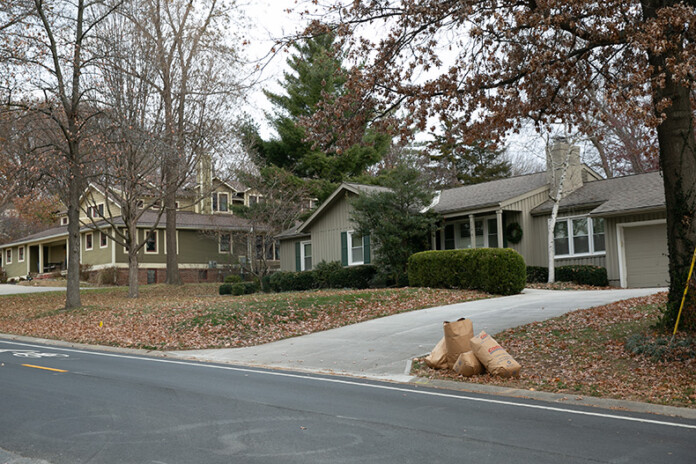
A program that gives property tax relief to eligible low-income homeowners in Johnson County is headed for a major expansion that is intended to open it up to more people next year.
County commissioners last Thursday voted to remove the 65-and-older age restriction and disabled veteran requirement while also increasing the maximum home value to qualify for the county property tax relief program.
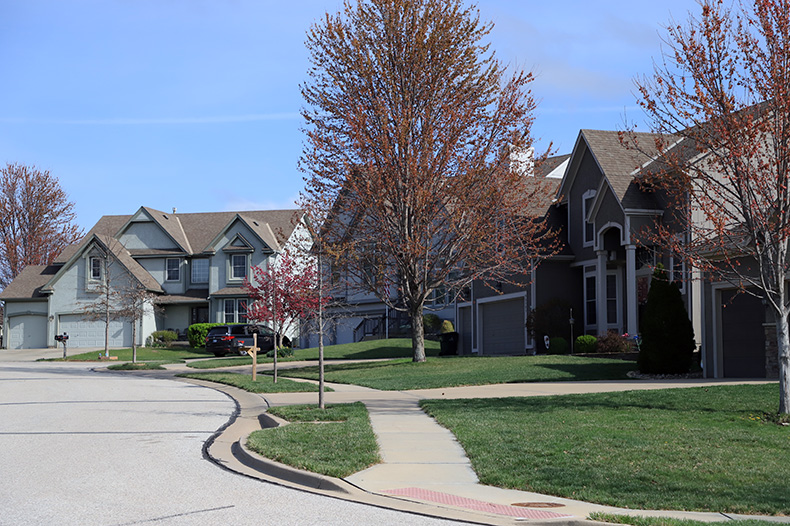
A qualifying home’s value can now be no more than $500,000 next year, an increase from $384,600 currently.
However, the income eligibility remains at or below the “very low” benchmarks set by the federal Department of Housing and Urban Development. Those income limits vary depending on the number of family members.
Read more about the program here.
The program provides payments only toward the county’s portion of the property tax bill. Schools, cities and other jurisdictions are excluded, although some cities have their own property tax relief programs.
The amount of payments depends on the number of qualifying applications received, but cannot be more than the amount of taxes owed.
The vote was 6-1, with Commissioner Michael Ashcraft voting against because of concerns about what would happen if the potential payouts exceeded staff projections and the fund balance.
How to qualify and participate
The application window for the program begins Jan. 15 and ends April 15. To qualify, applicants must:
- Own and occupy their home and be a resident of Johnson County
- Be current on property tax payments at their residence
- Have a home with a 2025 maximum appraised value of $500,000
- Be at or below HUD’s “very low” income limits. Those range from $39,000 for a family of one to $73,500 to a family of eight.
County leaders have been under pressure to rein in taxes
Commissioners have this year been debating the direction of the third year of the relief program, which is still considered a pilot.
County leaders have been under pressure to rein in the increasing tax payments that are the result of rising property values by decreasing the county’s mill levy, or property tax rate. At the same time, inflation and changes in the types of state revenue available to counties have put commissioners in a budget bind the past two years.
The county has done mill rate reductions for seven of the past eight years, but Chair Mike Kelly said the property tax relief program is more impactful because it targets the people struggling the most to stay in their own homes.
A taxing rate reduction is “top down” because the biggest benefits go to people in more expensive homes, he said. A two-mill reduction on a $500,000 home, for example, would save the homeowner about $115 a year but would cost the county $30 million in total revenue, he explained.
But someone eligible for the tax relief program in a similarly priced home could save closer to $1,000, he said.
“That’s the kind of meaningful relief that can help somebody remain in their home,” Kelly said.
Some people struggling to pay taxes fell through the cracks
The program was adjusted this year partly because commissioners were concerned that some residents fell through the cracks in eligibility.
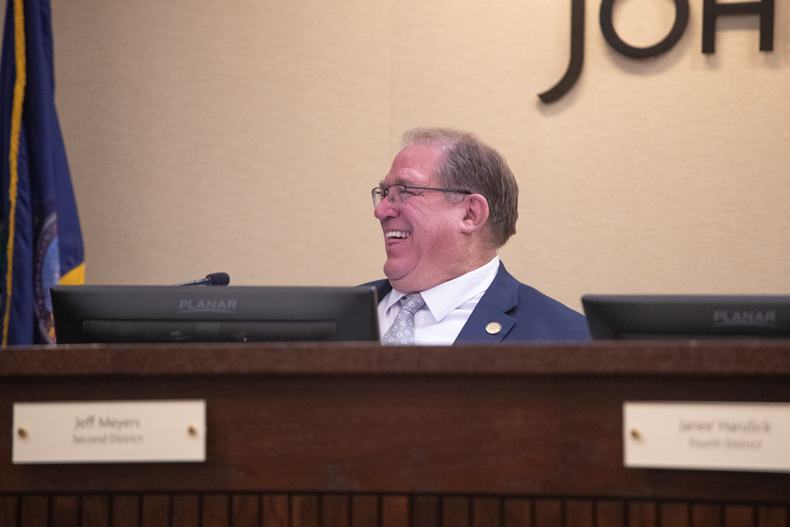
Commissioner Jeff Meyers said low-income people with disabilities who may be struggling could not take advantage of it if they were younger than 65. As home values have increased, the relatively low cap on valuation also left some people out.
The program began in 2024 with $500,000 from reserve funds and offered up to $200 to eligible homeowners. That year, about $41,200 was paid out to 207 applicants.
Once the $200 cap was removed in 2025, participation jumped to 359, with a payout of $184,700. The county also received some additional federal funding.
The current fund balance is $365,590.
Staff estimates the latest changes will prompt around 718 people to participate next year, with a payout of $369,463.
But that assumes adoption of the program will happen at the same rate among eligible homeowners as this year. Staffers also presented projections of what could happen with higher adoption rates, ranging from $702,000 to $7 million in the unlikely event that 100% of eligible people adopted it.
If the payout exceeds what’s left in the fund, then commissioners will vote on how to handle it. They could, for example, use reserves or structure the amounts to participants in some other way.
Any raising of the income eligibility could also have a major impact, bringing the potential payout to $14 million if HUD’s “low” income level is used, according to a staff report.
A majority of commissioners said they’d prefer to keep the income cap the same as this year to keep it close to budget and increase the possibility that the program becomes permanent in 2027. Kelly said he’d like to work toward raising the income threshold to HUD’s “low” designation, making it compatible with the rules in 10 Johnson County cities that offer their own programs.