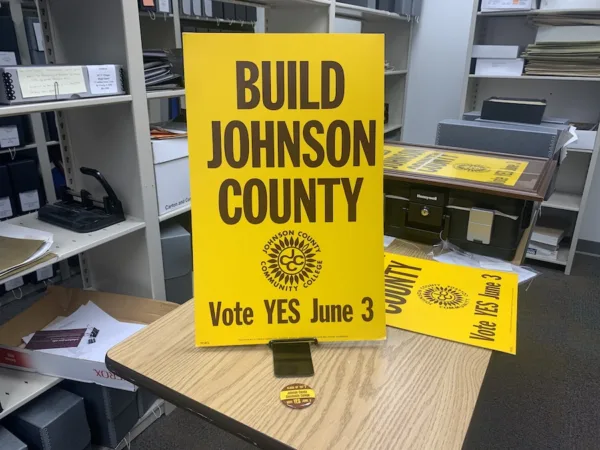
In the 1960s, residents of rapidly growing Johnson County began to consider creating a local college. Citizens formed a committee and, alongside the county school boards, circulated a petition requesting the formation of a community junior college district governed by a board of trustees elected at-large. A special, countywide election was held in 1967, and the proposed college initiative was approved 3-1.
In 1969, county residents voted to purchase more than 200 acres in Overland Park, which would turn the idea of a college campus in Johnson County into a reality. That fall, the first JCCC classes were conducted in leased facilities in Merriam. Initial enrollment was 1,380 students, who could choose from seven programs of study—including secretarial science and aviation.
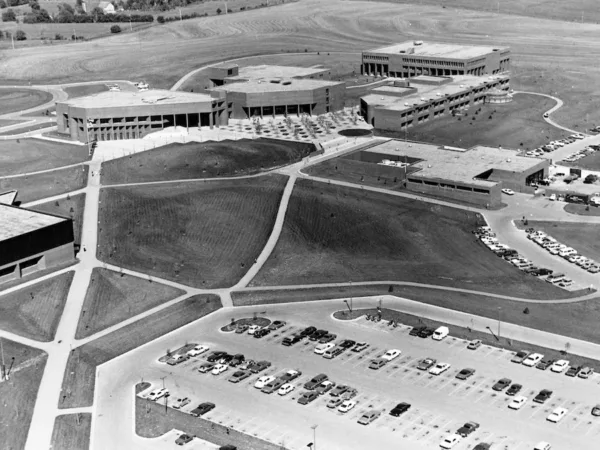
In the fall of 1972, all classes and operations were moved to JCCC’s campus at College Boulevard and Quivira Road. In the early days, students at JCCC could enroll in programs like business data processing, health professions, law enforcement, retail marketing management, and more.
1980s and ‘90s
The 1980s and ‘90s were a time of explosive growth for JCCC. The Arts and Technology Building—today the Welding, Construction, and Machining Technology building—was built in 1981, expanding JCCC’s academic offerings. The new building housed art studios and photography darkrooms, and classroom spaces for the automotive technology and heating, ventilation, and air conditioning programs.
In 1989, JCCC entered a unique partnership with the Burlington Northern Santa Fe (BNSF) Railway to build a national training center on JCCC’s main campus. Today, the National Academy of Railroad Sciences is still headquartered in the Industrial Training Center building on the south end of campus.
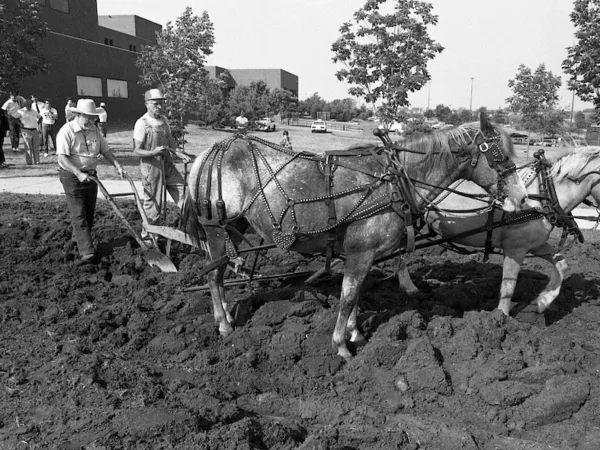
In the same year, JCCC broke ground on the Cultural Education Center—now the Midwest Trust Center. Since opening in 1990, the performing arts center has welcomed more than 2.3 million event attendees.
2000-2020
As JCCC enrollment reached an all-time high in the early 2000s, the College needed a building to support student success and provide a seamless enrollment experience. In the early 2000s, JCCC added a three-story Student Center on the west side of campus. It housed dedicated student spaces and staff offices for Admissions, Financial Aid, Counseling, Career Development, and Access Services. Much of this decade focused on ensuring academics reflected changing student interests, workforce demands, and enhancing student support services.
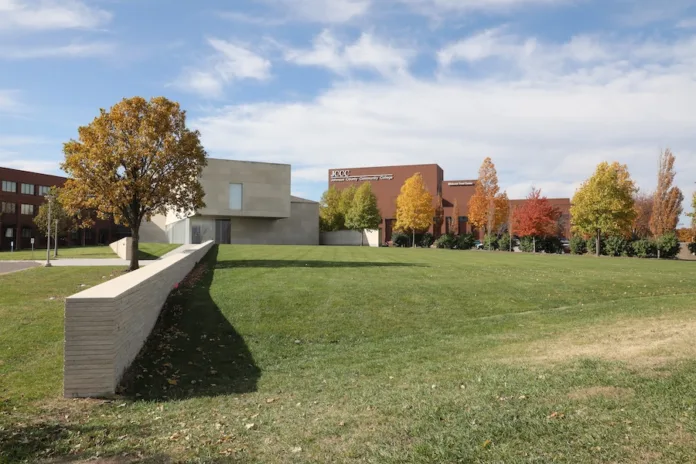
The Nerman Museum of Contemporary Art was constructed in 2007. At 41,000 square feet, it’s one of the largest museums dedicated to emerging and established contemporary artists and artworks. Today, the Nerman Museum presents many of the region’s most important exhibitions of cutting-edge contemporary art and offers dynamic educational programming for all ages.
From 2010 to 2020, JCCC expanded at the southeast end of its 245-acre campus with the Wylie Hospitality and Culinary Academy (WHCA) building and the Fine Arts and Design Studios (FADS) buildings. On the opposite end, the Hugh Libby Career and Technical Education Center was built in 2019 to increase student capacity for JCCC’s industrial trades programs.
Present day
Today, JCCC is the largest community college in Kansas and the Kansas City metropolitan area and supports the educational and career goals of more than 36,000 credit and continuing education students each year.
Currently, we’re planning for the next 50 years.
In June 2025, the JCCC Board of Trustees approved a new 10-year Facilities Master Plan for the main campus in Overland Park to ensure JCCC’s facilities continue to align with students’ needs and support their success.
Additional information about the 2025-2035 Facilities Master Plan will be posted to JCCC’s website as it becomes available.
Learn more at jccc.edu.