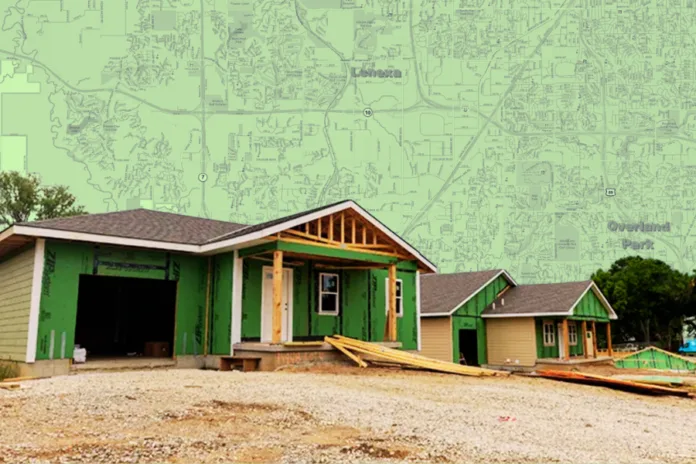
Surplus and underused county property may become the next frontier in the effort to create more affordable housing in Johnson County.
County commissioners last week approved a new policy that asks that wherever feasible, housing be included in the mix of possible uses for redevelopment of its underused properties. The policy emphasizes partnerships with other entities, public or private.
The new policy, approved 6-1 with Commissioner Michael Ashcraft dissenting, does not commit the county to any projects, nor does it require housing to be prioritized ahead of other uses.
Commissioners said the intent was to see if a housing element to development could be a way to expand affordable options and possibly generate revenue.
Of particular interest to commissioners was housing that could be affordable to someone earning at or below 60% of the U.S. Housing and Urban Development Area Median Income, or $46,860 for a single person and $53,520 for a couple. (HUD considers Johnson County to be in the Kansas City metro area.)
“To be clear, this policy authorizes the staff to begin pursuing an inventory and exploring partnerships. This is not about committing to one specific project,” said Erin Winn, the county’s government affairs coordinator.
Housing shortage, rising home values remain hot-button issues
Affordable housing has been high on the commission’s priority list for the past few years, as Johnson County residential values have continued to climb, pushing up homeowners’ annual property tax bills.
At the same time, homes at the lower end of the price range have become harder to find.
But since most housing development is in the county’s incorporated areas controlled by cities, county commissioners have had little say in the types of projects that get built.
Winn said publicly owned land, which is not on the tax rolls, could be sold or donated to a project to bring costs down.
The concept has already been tried with some success in Johnson County.
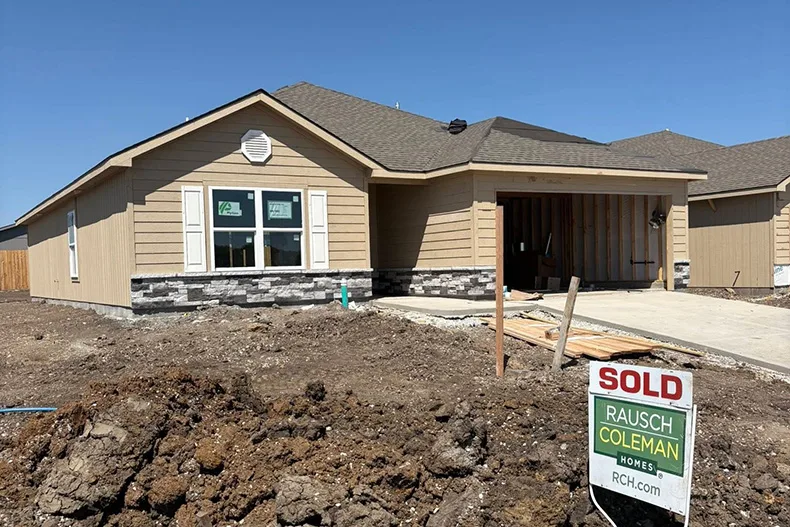
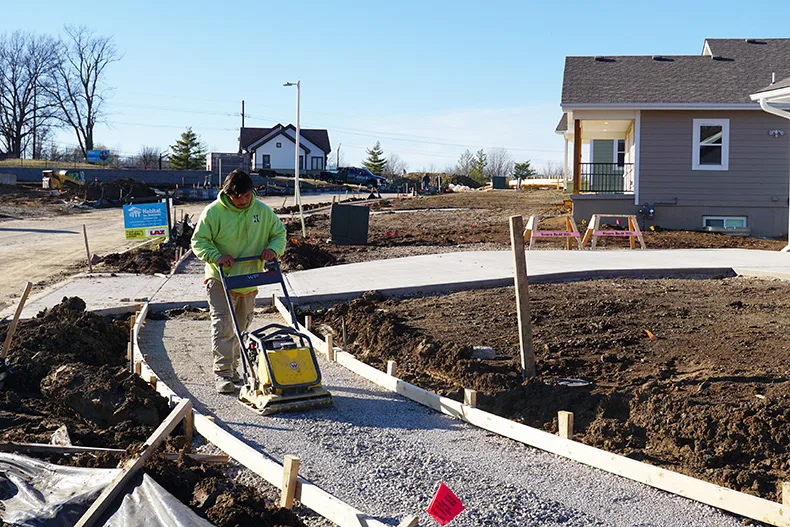
The Olathe Pathways project, consisting of 14 homes built by nonprofit Habitat for Humanity, began with the below-market sale of land by a church. Its first resident moved in earlier this year.
Overland Park officials also recently began considering a similar idea in which city property left over from road work could be converted into lots for 14 single-family homes or duplexes. That process is still in the very early stages.
For several years now, there has been an ongoing lack of housing in Johnson County that falls in the “missing middle” (a term that often refers to multi-unit housing types, like duplexes, fourplexes and bungalows), as well as single-family homes at lower price ranges.
The most recent county appraisal notice showed the availability of homes under $300,000 has significantly dropped from 2024 to 2025, while the number of homes valued at $500,000 or more continues to rise.
Meanwhile, property values of single-family homes increased by about 6%, on average, last year. For apartments, the increase was greater, at nearly 12%. The average value of a newly constructed home in Johnson County topped $700,000.
“Now it’s about action”
The new county Leveraging Assets for New Development, or LAND, policy comes from a recommendation by the new Ad Hoc Housing Work Group, which first met about two months ago.
That work group consists of County Chair Mike Kelly and Commissioners Julie Brewer and Jeff Meyers.
The idea is part of a national effort called Putting Assets to Work, which says local governments across the country are sitting on large amounts of real estate that could be used to meet community priorities without raising taxes.
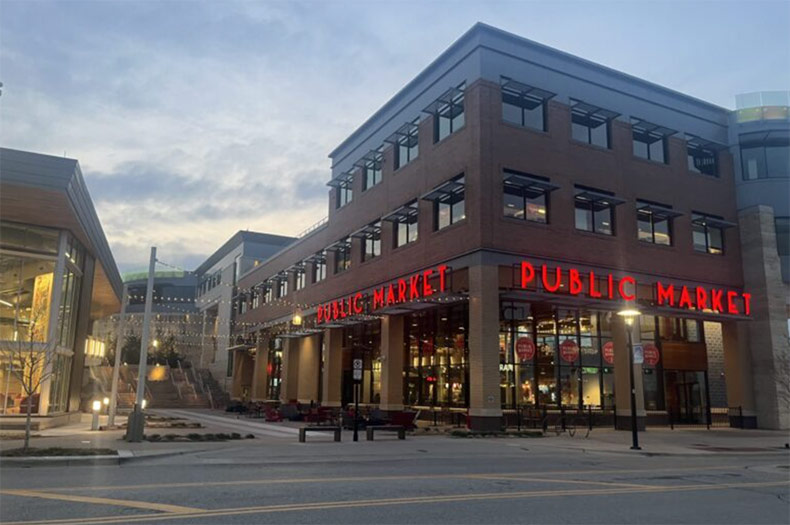
Winn cited other projects, including the Lenexa City Hall and Public Market, where cities have used partnerships to develop more than one use for a property. She also pointed out a project in Atlanta that would build nearly 300 residential units on top of an existing fire station.
The majority of commissioners supported the idea, saying something needs to be done about housing availability that will not break the budget. All emphasized that any future development would still have to go through the commission and other jurisdictions for approval.
Commissioner Becky Fast said the county should look at ways to use its easement parcels, scraps of land too small to build on that could be combined with other nearby public land.
Kelly said the policy “is not just about getting people around the table. We’ve created those tables. Now it’s about action.”
Ashcraft called the concept “an interesting notion” and generally supported putting unused property to work but voted against the measure because it did not rule out the possibility that the county could become a landlord in a future project.
What happens next?
The next step is for the staff to complete an inventory of county-owned land by Sept. 1 and evaluate how housing could be integrated into the county’s capital projects over the next three to five years.