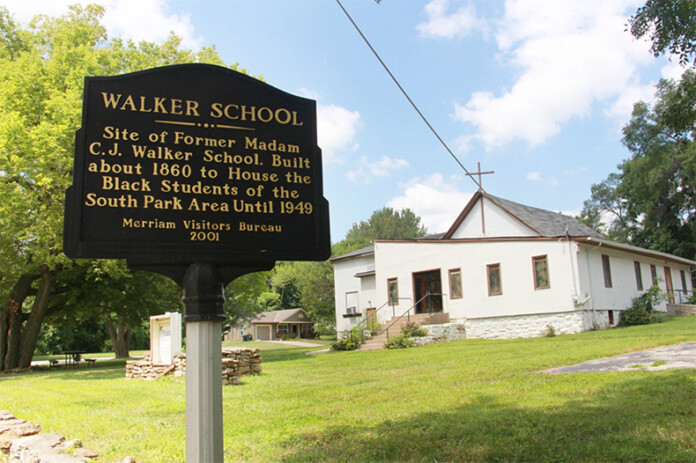
Tony Adams, a lifelong Merriam resident, is a benefactor of one of the most integral and “unknown American history stor(ies) ever.”
As a Black child in Merriam, Adams attended South Park Grade School only a few years after the families of a school half a mile away fought against student segregation in School District 90.
In 1948, families of the 44 Black students at the nearby, dilapidated Madam C.J. Walker School filed a lawsuit, Webb v. School District No. 90, in an effort to allow their children to attend the newly rebuilt South Park Grade School.
A year later, the Kansas Supreme Court upheld a state law that prohibited small communities like then-South Park from segregating schools — a ruling that let Black children like Adams attend South Park Grade School.
For historians and community members, Webb v. School District 90 is known as a precursor to Brown v. Board of Education, which desegregated schools nationally in 1954.
Now, 77 years after that landmark Kansas Supreme Court decision, the impact of the Walker School and its community is cemented in U.S. history with a recent designation on the National Register of Historic Places.
Over the past four years, Adams, now the program manager at Philadelphia Missionary Baptist Church in Merriam, which holds services inside the former Walker School, led the charge for the building to earn a spot on the National Register of Historic Places.
For Adams, this designation means the Webb v. School District No. 90 lawsuit is a step closer to its rightful place as a footnote in history books retelling the Brown v. Board of Education of Topeka decision.
Adams said Webb v. School District 90 “is something that changed the course of American education history in this country, and probably the world.”
“I don’t think that’s hyperbole either, because when education was desegregated in the U.S., it had an effect all over the world,” Adams said. “My little small neighborhood did something fantastic that nobody knows about, and that’s changing pretty rapidly.”
The recognition, certified on June 4, also opens up funding opportunities in a years-long effort to restore the building to the original schoolhouse, featuring an interpretive center telling the Walker School story.
How the school paved the way for Brown v. Board
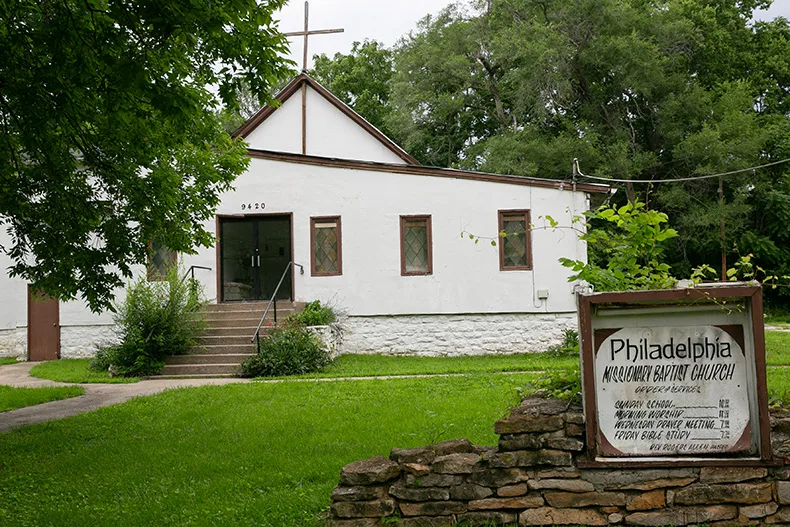
Built in the mid- to late 19th century, the Walker School started out serving both Black and white children until about 1900, when School District 90 built South Park Grade School for white children only, according to the city of Merriam.
Donna Rae Pearson, museum curator at the Kansas Museum of History, said state laws around segregation at the time prohibited communities of 15,000 people or less, such as South Park, from segregating schools.
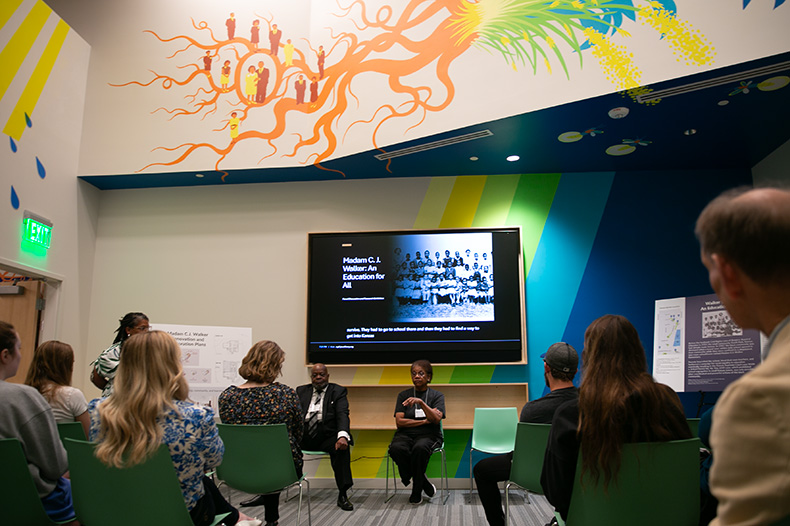
Last year, Pearson shared that same fact at an event in the Webb Family Meeting Room at the Merriam Plaza Library where Mid-America Nazarene University students were showcasing their research on the Walker School and the Webb v. School District 90 case.
While the Walker School continued to deteriorate for almost 50 years, School District 90 in 1947 rebuilt the whites-only South Park Grade School using taxpayer dollars.
Walker School families tried to appeal the segregation to the school and Johnson County Court to no avail. That’s when the families and local activist Esther Brown in 1948 filed what became known as Webb v. School District No. 90.
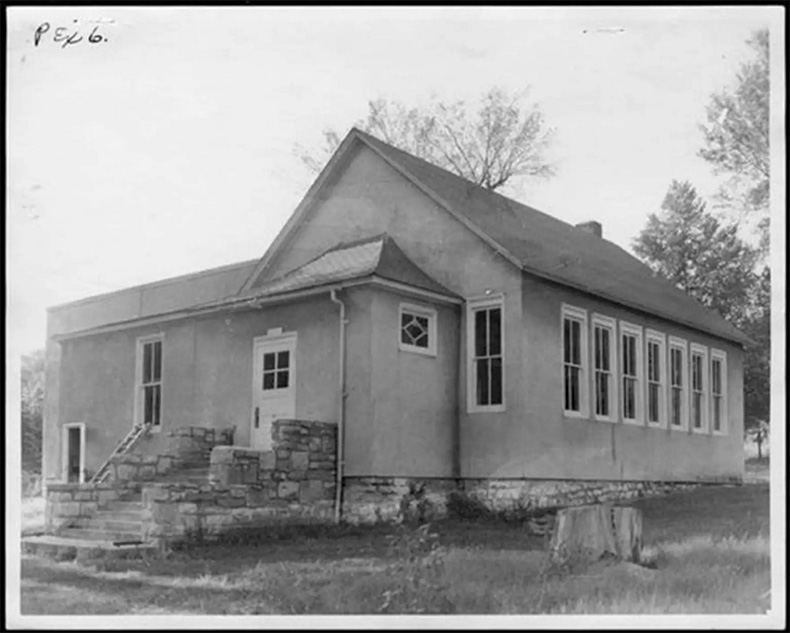
Mary Webb, whose family lent their name to the 1948 lawsuit, said her father, Alfonso, attended the dilapidated Walker School. Her family lived closer to South Park Grade School than the white students who walked through their neighborhood to get to class each day.
“My dad, when he did this, he wasn’t looking for recognition based on what’s happened today,” Webb said. “He was just wanting his kids to have what the other kids had.”
In 1949, a year after filing the lawsuit, the Kansas Supreme Court upheld existing law that prohibited smaller communities from segregating students.
This allowed Black children from the Walker School to attend South Park — a full five years before school segregation was ruled illegal nationwide under Brown v. Board of Education of Topeka.
Pearson said that people often forget efforts to desegregate schools were in progress before Brown v. Board. She said she hopes the recent designation for the Walker School is used to help remind the community about the fuller story.
“You’ve got a story in your own backyard that really talks about equality and education,” Pearson said. “I just hope they utilize that story to educate the entirety of the community and the entirety of Kansas.”
The designation is years in the making
Four years ago, when the Philadelphia Missionary Baptist Church needed a new roof, Adams said, he and other church leaders thought about applying for a grant given the site’s history.
Adams said that’s when the effort to share the Walker School’s history, and to get it on the National Register of Historic Places, all started.
The process to get a building on the National Register of Historic Places is typically an 18-month process, Pearson said.
First, a building must be at least 50 years old, Pearson said. Then, an applicant must submit what is effectively a 15- to 20-page history paper documenting the site’s location, condition and significance to a review board.
The review board determines whether the site qualifies for local, state or national designations, Pearson said.
Ciera White, communications specialist with the city of Merriam, told the Post in a Tuesday email that the city is “thrilled and could not be more proud” of the recent designation — noting that “this achievement did not happen overnight.”
“This is a remarkable piece of history right here in our own community,” White wrote. “The Madam C.J. Walker School represents an important chapter in our story as a city, and now the entire nation recognizes it.”
For her part, Webb said she and the rest of her family are happy for Adams.
Webb said Adams is the one who worked to get this recognition for the Walker School and the lawsuit, and did so “in the face of some really rough times that we’re in.”
Overall, Webb said she sees the recent designation as recognition that people cannot be excluded simply because of their race or ethnicity, “no matter how you try and pretend that that’s not what you’re doing.”
“I’m glad that it is recognized nationally as an event worthy of being remembered, because this was not easy, and it’s kind of like we’re facing the same issues again today — just in a different way,” Webb said.
Efforts turn toward fundraising for $4M restoration plan
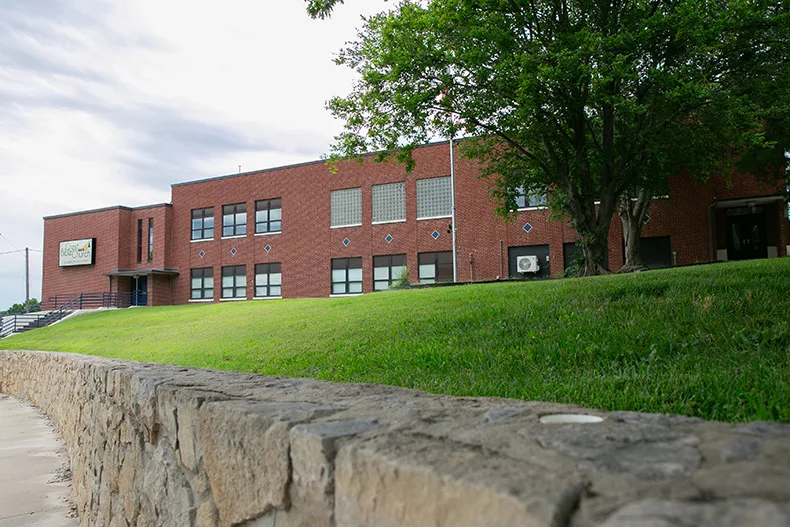
Adams said he thought he’d have to prove the Walker School’s history in those initial efforts to get grants to fix the church’s roof.
Instead, Adams said he quickly realized the impact of Webb v. School District No. 90 was “not unknown, it’s untold.” That’s when Adams shifted his focus to cementing the school’s place in history.
Now that the school is on the National Register of Historic Places, Adams said efforts are turning back toward a restoration plan, originally put together in 2024.
Adams said that before the Trump administration rolled back diversity, equity and inclusion funding from the National Park Service, he and others involved in the restoration plan thought that it would be completed by the time the FIFA World Cup came to Kansas City.
The $4 million restoration plan, created by MultiStudio, calls for the site to be restored to the 1905 schoolhouse featuring “a mini-museum,” Adams said.
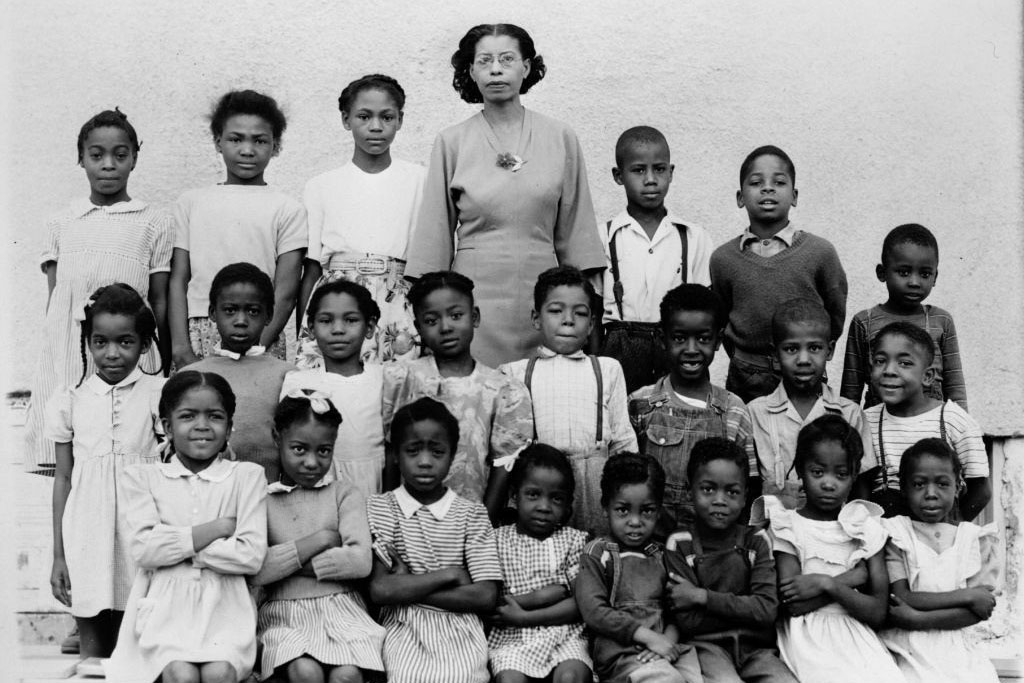
Under that restoration plan, Adams said the museum portion of the school becomes the church’s lobby.
Fundraising efforts to bring that restoration plan to fruition are starting soon, Adams said, with details to come on the church’s website.
While he thought the restoration would have been completed by now, Adams said, he is hopeful that the recent national designation gives the effort “a big boost.”
“Our history will be captured forever,” Adams said about the restoration plan. “It would be quite an accomplishment.”
Renderings of the restoration plan are included in the document embedded below, starting on page 15.
 Loading...

 Reload document
  Open in new tab
 Keep reading awards and honors news: ‘Stay strong in the wind’ — How a cherry tree in Prairie Village honors Sarah Milgrim’s legacy