Earlier this summer, the Post asked our readers what issues you wanted to hear candidates in contested races address leading up to the Aug. 4 primary election.
Based on that feedback, we developed a five-item questionnaire centering the issues most important to residents across Johnson County.
Each day this week, we’ll publish the candidates’ responses to one question. So far, we’ve published responses on property taxes and the county budget, and housing affordability and development.
Today, we’re publishing candidates’ responses to the following question:
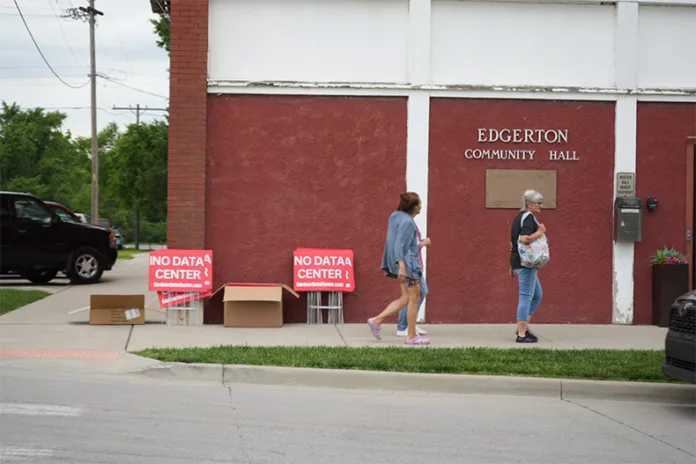
Readers repeatedly raised the issue of large data centers proposed across Johnson County and tied them to concerns about the county’s water use. Several readers asked whether you’d support a moratorium on data centers. How should the commission handle data center development and the broader growth on the county’s edges, and how would you protect the county’s water supply? Do you support a countywide moratorium?
Below are the answers the Post received from candidates on the issue:
Gene Senesac
 Data center development is likely the #2 issue for residents currently, falling only behind that of property taxes. Proposals for new data centers are primarily being presented to cities within Johnson County and not the unincorporated land within Johnson County. That said, those city governments are now charged with a decision making process, first of hearing and fully vetting proposals and then, most importantly, communicating that information to its residents to engage in public review. Water usage, electric demand and noise impact are all key components. The number one consideration should be the resource that we all require…water. Water is a resource which does not recognize boundaries. Multiple cities and unincorporated areas may rely upon the same water source. It even extends well beyond county borders. Data center impact on both water supplies and water cleanliness must be carefully examined. One city’s increased usage may impact another city’s/unincorporated area supply. If/when data center interest comes before unincorporated Johnson County land, commissioners must take the lead in setting the same priorities as city government. Properly done, the process can be lengthy, hence whether is called a moratorium or, similarly, a proper process followed, any consequential delays are irrelevant to the over-riding requirement in defining the impact. Bottom line…prioritize water supply and quality for all residents to ensure future availability for today’s community and future population growth.
Karen Crnkovich
 I support a temporary moratorium on new data center approvals until Johnson County has a comprehensive policy in place. That isn’t anti-growth. It’s pro-responsible growth.
I am unapologetically pro-development, pro-business, AND pro-citizen. Johnson County doesn’t have to choose between economic opportunity and protecting our communities. We can, and we must, do both.
Data centers have the potential to bring investment and jobs, but they also place significant demands on water, electricity, infrastructure, and public services. Before approving additional projects, we need independent analysis of their cumulative impacts and clear standards that protect taxpayers, our natural resources, and neighboring property owners.
Johnson County shouldn’t approve billion-dollar developments first and ask billion-dollar questions later. Growth should follow a plan, not outpace one. That’s the kind of disciplined leadership I’ll bring as County Chair.
Mike Kelly
 I’ve heard from residents who are concerned about the impact data center development could have on their environment and energy bills. These residents deserve real leadership – someone who will hold development accountable while allowing Johnson County to continue leading on innovation.
A “moratorium” is a tool of political convenience – it’s not leadership. It’s pandering. Leaders must evaluate any economic development project, including data centers, on a case-by-case basis. I believe in local control, allowing those you elect to evaluate each project and find the right balance. Economic development is important, as it brings jobs and lowers our reliance on residential property taxes, but when a project isn’t right for the community, its leaders should say no.
Water must be protected. Johnson County’s 1,800 miles of streamways are essential systems that support safe drinking water and wildlife habitats while helping cool our communities. We safeguard them through green infrastructure investments and data-driven monitoring. Streamways don’t stop at our County border. Neither do data center applications. Therefore, we should use forums like the Chambers of Commerce and KC Civic Council to align regionally on stringent, measurable standards to ensure responsible development, including:
– Meeting a community’s existing development plan.
– Generating sufficient power, ideally renewable, and not increasing costs for residential ratepayers.
– Using closed-loop water systems.
– Utilizing battery storage.
– Hiring local contractors and union labor.
– Executing a community benefits agreement to help our schools and fire departments.
– Demonstrating economic benefit to justify any incentive request.
Coming up:
Tomorrow we will publish the candidates’ responses to the following question:
Several readers asked county candidates directly whether local government and law enforcement in Johnson County should cooperate with federal immigration enforcement, including ICE and 287(g) agreements, which allow local authorities to partner with federal immigration agents on enforcement. What is your position on the county’s role in immigration enforcement?
 Thanks for reading! If you value having an independent news outlet keeping tabs on local government, schools and taxes, we're asking you to contribute to our Education Reporting Fund.