
For Kansas Sen. TJ Rose, addressing Kansas’ widening housing shortage and growing housing unaffordability is a family matter.
His son, Garrin, is a 24-year-old member of Gen Z who recently moved back to Johnson County. Rose worries that people in Garrin’s generation won’t ever be able to afford homeownership, something long considered a key tenet of the American dream.
That fear isn’t totally unfounded.
The median age of first-time homeowners in the U.S. has risen to 40 years old as the housing market squeezes more and more young people out entirely.
At the same time, as construction trends move toward more high-dollar housing with large single-family homes and luxury apartment complexes, starter homes have all but disappeared from the market.
Still, young adults like his son want to be homeowners, Rose said.
Rose has also heard from constituents who are concerned that their adult children are finding fewer economic opportunities, like homeownership, available to them than their parents or grandparents had.
All of that is what inspired Rose, a first-term Republican from Olathe, to pursue changes to Kansas state law to make it easier to build smaller single-family homes at a lower price point.
“That’s what really motivated me to put the different components of Senate Bill 418 together, so that we can make homeownership more attainable for the younger generations,” Rose told the Post.
That bill, which passed both chambers of the Kansas Legislature with bipartisan support, is now law in Kansas after Gov. Laura Kelly signed the measure.
The law removes some barriers that have made it harder to build “starter homes,” hopefully opening development in that vein, Rose said.
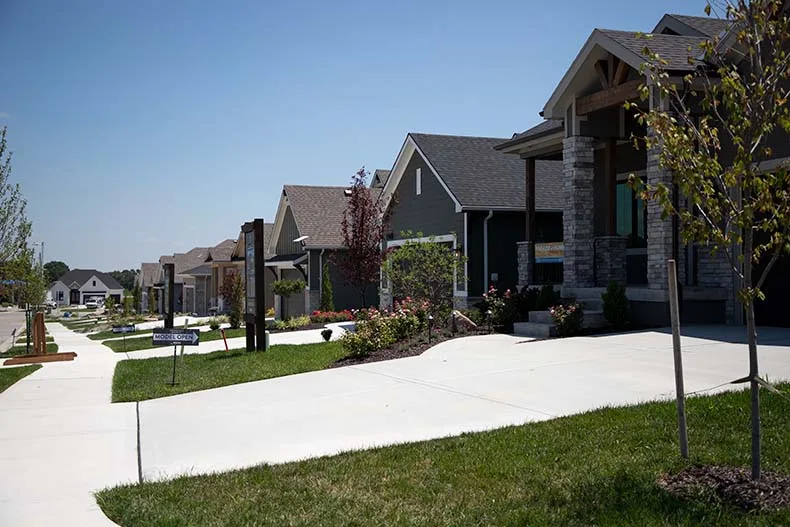
It also eliminates some administrative steps that can slow the process down and add costs to the price tag of a new home.
All of those reforms are designed to address both housing shortages and affordability concerns, Rose said.
“I really focused on the cost drivers that impact each individual house,” Rose said. “That is what has the most impact on bringing down costs and making homeownership more feasible.”
Some experts, like Will Ruder from the Homebuilders Association of Greater Kansas City, are skeptical that the law will have an immediate or dramatic effect on the housing market. Still, he and others are “cautiously optimistic” that it offers an important starting point.
Not every Johnson County community is on the same page about whether the law is a good thing, with some Johnson County suburbs testifying against the bill when it was being debated earlier this year.
Some communities, like Overland Park, were supportive, however.
Though initially on the fence about the bill in the early stages, city officials voiced support for the version that became law, and have already started the process of incorporating the new law into its development codes.
What does the new Kansas housing law do?
One of the biggest changes that Senate Bill 418 offers is its definition of what constitutes a single-family home.
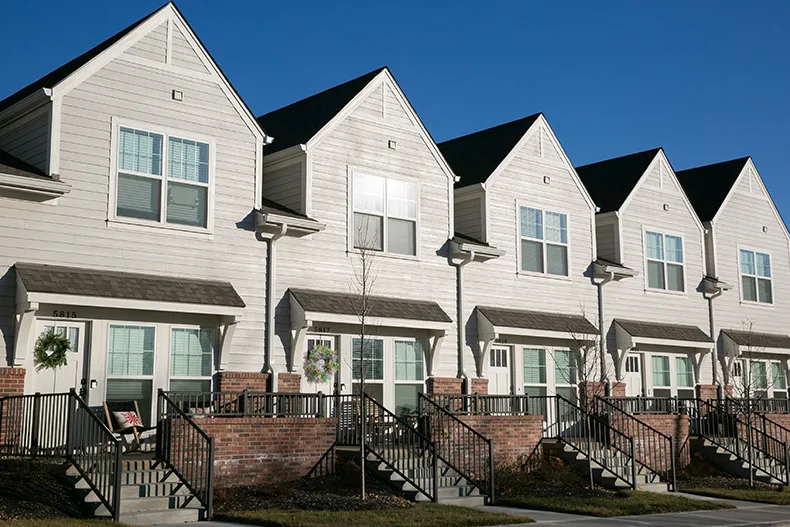
Typically, that term refers to a traditional detached house with its own yard and driveway. Now, state law considers some other housing types, like townhomes, to be single-family homes.
Historically, in cities like Overland Park, single-family homes were a distinct type of zoning district, and denser types of housing like townhomes or rowhouses were put in an entirely separate zoning category.
Under the new law, townhomes, duplexes and other types of housing traditionally considered to be multifamily could go next to single-family homes, potentially without a city having to rezone a property.
That change matters because the new housing law also requires single-family home developments to be streamlined through an abbreviated approval process.
Under the new law, housing proposals could be approved in as little as 30 days without approval from a city’s planning commission or city council, depending on their scale and other factors.
The law also removes some notification requirements on single-family developments, meaning neighbors may not need to be notified in writing of pending developments on nearby properties.
The law also takes away the right to file a protest petition against projects with single-family homes.
That could mark a big departure from the typical process, particularly in Johnson County, where neighboring residents frequently use protest petitions to oppose housing projects they don’t like.
Steve Horner, a senior assistant city attorney for Overland Park, pointed to a recent example of a case where neighbors submitted a protest petition against a single-family home project, where now they wouldn’t be able to under the new housing law.
That example was the Riva Ridge project, approved last year near 127th Street and Nall Avenue. It features seven prospective homes on an undeveloped lot near a couple of well-established neighborhoods, which strongly opposed the development and submitted a protest petition.
Those neighbors wouldn’t be able to submit a protest petition against that same project if it came up today, Horner told the Overland Park Community Development Committee in June.
Another change in the law requires cities to allow smaller lot sizes for homes that are less than 2,500 square feet, potentially freeing up more land on which smaller homes can be built. Those homes are subject to less strict building codes that would, in theory, make them less costly to build.
SB 418 also states that single-family home developments can be built in any district currently zoned for residential development, including apartments or potentially even districts intended for a mix of commercial and residential development, which could free up even more land for single-family homes to be built on.
New law could help with housing shortages and costs
After the conversation about housing with his son, Rose said he started talking to homebuilders, officials from various cities, real estate agents and others who all had a common interest in seeing more housing built at more affordable prices.
It became clear that one way to do that was to address regulations and standards that slow down the housing development process and can add costs to the end product, Rose said during his testimony for the bill at the statehouse earlier this year.
He told the Post recently that the idea is to make it easier to build new homes by speeding up the process and cutting down some regulations, specifically on homes with a smaller footprint that could be considered “starter homes.”

Ruder, the executive vice president at the local Home Builders Association, said this new law could very well aid in addressing that.
“Our current housing market is a policy choice,” he said, pointing to old standards that he says have limited development. “The housing policy of yesterday is going to get us the housing stock of yesterday, and if we need the housing stock of tomorrow … then we’ve got to modify some of these policy levers to provide for the opportunity to get those things built.”
Old rules, he said, added requirements and standards that created more high-dollar housing developments and larger single-family homes that are not attainable, particularly for people entering the market as first-time homebuyers, Ruder said.
He does think the law could go a long way to making it easier for homebuilders to construct “missing middle” housing options, more mid-sized, moderately priced housing like row houses, townhomes and duplexes that have become increasingly uncommon in the market.
Overland Park has started enacting the law
In Overland Park, where housing has been a hot topic as the city works on pilot programs and possible zoning reform, city officials were supportive of SB 418.
Before the law even took effect at the start of July, the city had already started the process of incorporating the new standards into its own development codes.
In June, the Overland Park Planning Commission voted 10-0 to notify the public that an update to the city’s Unified Development Ordinance — the collection of codes and rules that govern development and zoning — was imminent. That step allows the city to change its standards to match the new law.
Additionally, the Overland Park City Council adopted an updated residential building code, something the city does periodically to update the rules that govern how homes should be built.
However, this new code sets separate, looser standards for homes that are less than 2,500 square feet, which city staff said was a direct response to the new law.
While some councilmembers were dissatisfied with how permissive the new standards are for these smaller homes, particularly when it comes to energy efficiency and other sustainability rules, the code with two separate standards for smaller and larger homes passed.
Not every Johnson County city was on board with housing law
Some cities in Johnson County opposed the law for myriad reasons, ranging from architectural concerns to worries that the law hinders local control.
Attorney Anna Krstulic, who spoke on behalf of Mission Hills, told the Kansas House Committee on Commerce, Labor and Economic Development that the city opposed the law because it would limit the city’s “robust architectural review process.”
Mission Hills has an Architectural Review Board, which is tasked with enforcing design and aesthetic standards that Krstulic noted the city is well-known for in northeastern Johnson County.
“The city has spent significant time and resources developing zoning regulations to protect these values, as well as design guidelines to preserve the city’s design heritage and strong property values,” she said.
Leawood also opposed the bill in writing as it worked its way through the Kansas Legislature, citing several concerns, including a loss of control over development decisions historically provided to city councils and local governments.
The city also worried about specific provisions in the law that strike down some restrictions on things like minimum lot sizes and design standards.
In a joint letter to legislators, Prairie Village, Mission, Merriam, Roeland Park and Westwood Hills also opposed the bill, citing similar concerns as other Johnson County cities, calling SB 418 a “one-size-fits-all mandate.”
Those cities also highlighted the elimination of the protest petition process when a private property owner initiates a rezoning for a residential home project.
That “diminishes transparency and strips residents of a meaningful voice in decisions that directly affect their homes and neighborhoods,” the cities said.
“Progress” but not “a magic bullet”
Ruder said SB 418 probably won’t be enough to solve the housing supply crisis in one fell swoop. He said he sees it as “great progress” but not “a magic bullet.”
“We’re cautiously optimistic that this is going to have a beneficial response within the market,” he told the Post in a recent interview. “Whether or not it unleashes the ability to add that ‘missing middle’ housing kind of remains to be seen.
“Our housing market didn’t evolve into what it is because of one bill, and it will not be fixed with one bill.”
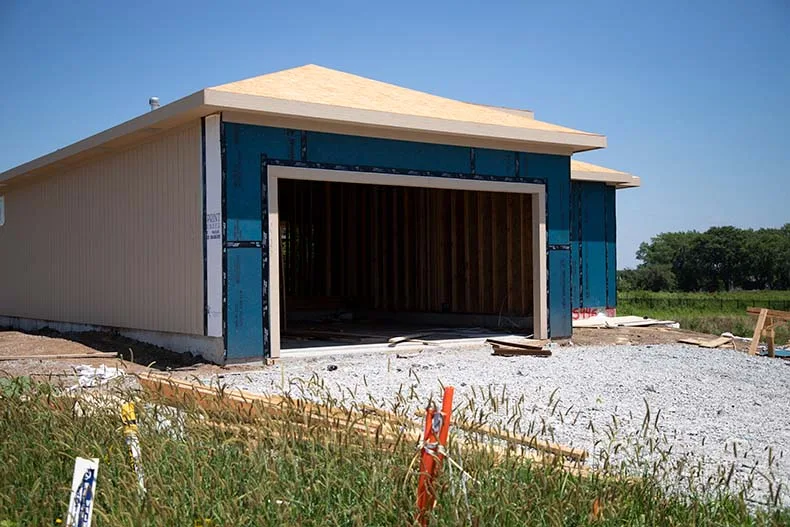
One potential solution Ruder sees is a better investment in education in trade fields that contribute to the physical construction of housing.
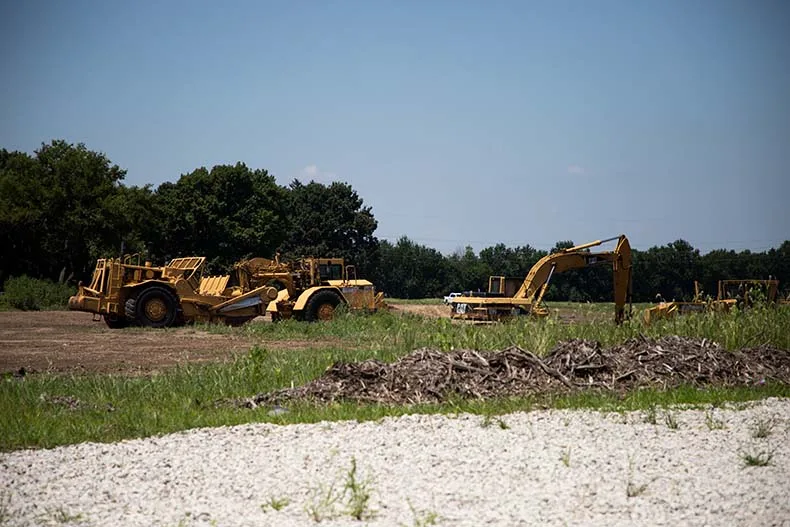
As it stands, there aren’t enough people going into that workforce, and a shortage of workers in those fields can make it hard to keep pace with demand for new housing construction.
“Computers can do a lot, but they can’t climb ladders, and they can’t swing hammers, and homes are still built by people,” Ruder said.
He thinks that’s one area the state could get involved in, too, with more investment in trades education pathways and apprenticeships.
Sen. Rose has ideas for follow-up legislation, too.
He hopes to introduce a bill during the 2027 legislative session focused on freeing up more land for new housing construction.
He also wants to work with local government officials to expand public incentive financing options for new housing as well. One idea is to potentially expand the Reinvestment Housing Incentive District statutes.
He’s interested in looking at other tools as well to help developers offset new infrastructure investment costs that are typically associated with new development.
The ultimate goal, Rose said, is to “unleash a new housing boom in the state of Kansas.”
Keep reading: ‘It’s a big deal’ — Overland Park ponders unprecedented zoning code overhaul